
Rail Baltica progress reaches 43% of first phase
Rail Baltica progress came under review in Brussels as representatives of European institutions, member states, the European Parliament, industry bodies, and the Rail Baltica community met to assess the project’s current status.
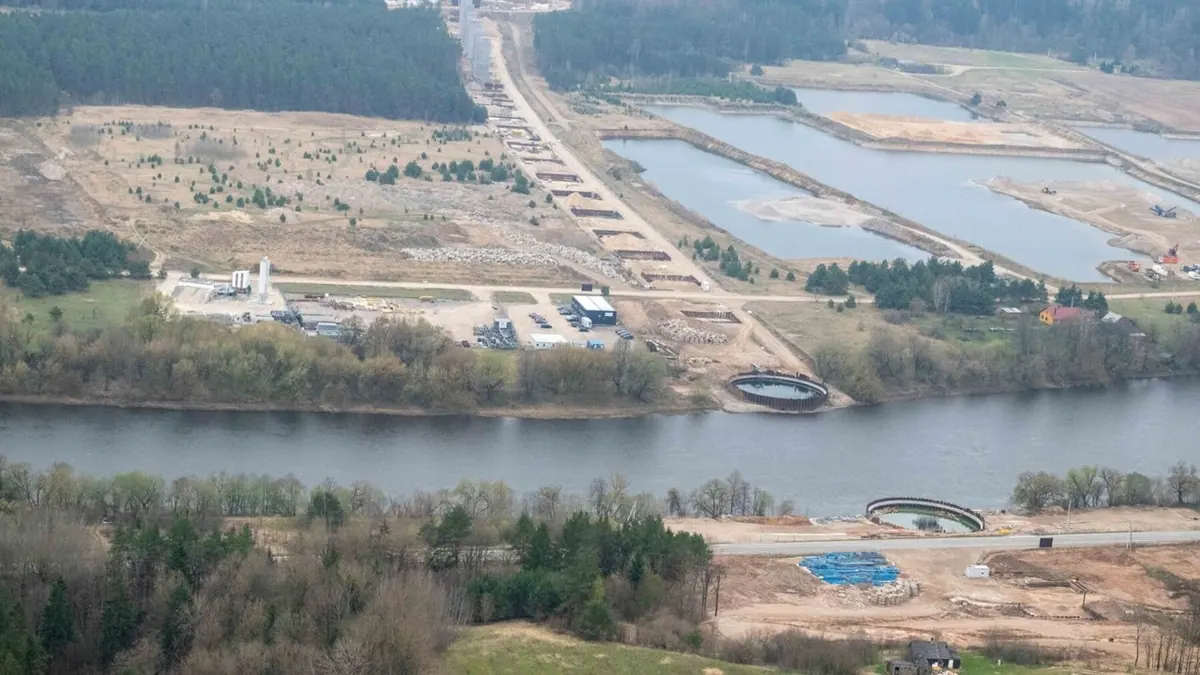
Figures presented at the meeting show work advancing in Estonia, Latvia, and Lithuania in parallel. At present, 267 km of track are ready for construction, which represents about 43% of the main route planned for the first phase of the project.
Rail Baltica progress across the Main Line
In Estonia, work on 107 km of the main line and the Ülemiste terminal is expected to be underway in 2026. Latvia continues construction activity on the priority southern section, while work is also moving ahead at Riga Central Station and the Riga Airport rail terminal. In Lithuania, the first rails have already been laid, and 114 km of the main line are under construction.
The country-level picture differs, but all three Baltic states are advancing key parts of the Rail Baltica Main Line.
In Estonia, more than 107 km of the main line are under construction. Major works are taking place at the Ülemiste terminal in Tallinn and on important sections in the direction of Pärnu.
In Latvia, contracts have been signed for more than 200 km of the Phase I main line outside Riga. Around 30 km are now under active construction. Work also continues at Riga Central Station and on the rail connection to the airport.
In Lithuania, 114 km of the main line are under construction, and the first rails have already been installed. Bridges, signalling systems, and other core infrastructure elements are also being developed along the corridor.
Military mobility and European funding
Military mobility was one of the main issues discussed in Brussels. Rail Baltica has been designed from the beginning to meet the defence needs of the European Union and NATO. The project will connect the Baltic states to the European standard gauge network and support the rapid movement of passengers, freight, and military equipment.
European funding remains essential for the project’s schedule. So far, Rail Baltica has relied mainly on the Connecting Europe Facility, which has covered up to 85% of eligible costs. This support has been combined with national contributions and funding allocated to military mobility. The project has received more than 4 billion EUR in CEF funding to date.
Marko Kivila, CEO of RB Rail AS, said:
“Rail Baltica is no longer a question of whether it will be built, but of how quickly Europe is willing to move forward. The infrastructure is already taking shape on the ground, and the project’s pace depends largely on the continuity and predictability of funding,”
Procurement plan and project scope
The procurement plan for 2026 has also recently been announced. It includes a tender for the construction of the southern section of the Ülemiste terminal, services and expertise for the line’s power system in Latvia and Lithuania, and other railway infrastructure works across the three Baltic states.
Rail Baltica is planned to be 900 km long. The corridor will cross 40 structures, including bridges, viaducts, and tunnels. It will also include seven international stations, along with 40 local passenger stations and freight terminals.


