Renfe and CP keep on-board ticket sales in Iberia
19.05.2026
On-board ticket sales will remain available on trains operated by Spain’s Renfe and Portugal’s CP. Their position contrasts with Belgium’s SNCB, which has decided to stop using this sales channel from July 1, 2026. Renfe and CP told Railway Gazette International that selling tickets on the train remains ‘a very important channel’ for passengers in Spain and Portugal. This is reported by the railway transport news portal Railway Supply.
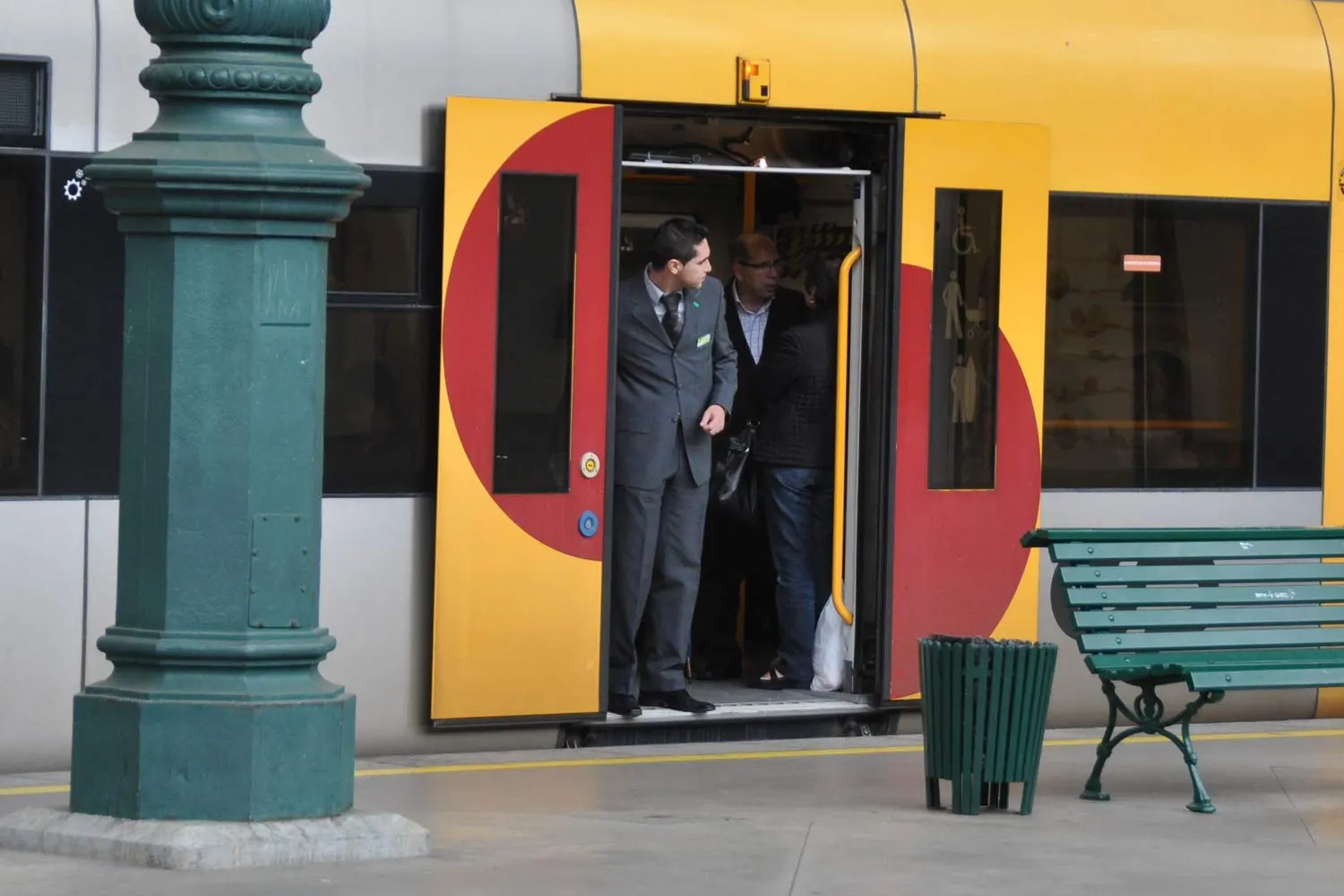
Although passengers can now use digital channels such as mobile apps and websites, not everyone relies on them. Some travellers still use station ticket offices to obtain access to rail services. This remains more common in some countries than in others. At many smaller stations, there are no ticket offices or vending machines. In many countries, that also means passengers cannot simply board and buy a ticket from the train crew.
Belgium’s SNCB is ending on-board ticket sales after an increase in aggression against staff. The operator recorded 2 602 cases in 2025. That equals about seven cases per day, compared with 2 103 cases in the previous year. On-board purchases also account for only 1.5% of SNCB ticket sales. In Spain and Portugal, by contrast, buying a ticket after boarding remains available. It is also not expected to disappear in the near future.
Renfe describes on-board sales on its website as ‘an exception’. Even so, the Spanish state operator regards the option as a ‘very important channel’. It cites ‘last-minute sales’ and service for ‘locations without any offices or machines’. The operator’s 1 700 conductors all use portable equipment that supports ticket sales on board.
Passengers can pay by bank card or in cash. Cash is specifically relevant in places with no internet connection. It also applies where the connection is unreliable. In 2025, Renfe sold about 1.8 million tickets on board. Card payments accounted for 51% of those purchases. Cash represented 49%. During the same year, Renfe carried more than 531 million passengers across its full range of services.
On-board ticket sales on Renfe trains
Renfe permits passengers to buy tickets on board every category of train it operates. This includes high-speed, suburban and regional services. In 2025, regional journeys, or Media Distancia services, made up almost three-quarters of its on-board sales operations, at 73%. Cercanías suburban services accounted for 20%. Long-distance trains represented the remaining 7%.
Also, the option applies to trains where seat reservations are mandatory. If no seats are available, Renfe says conductors may sell tickets without an assigned seat. That depends on their assessment.
Renfe states on its website that sales through the internet and mobile app do not create additional costs for the company. Other sales channels involve extra expenses. For this reason, the operator applies a 5.5% surcharge at ticket offices. It also applies a 3.5% surcharge for vending machines and phone sales. Tickets can also be purchased via travel agencies.
CP ticket sales and card-payment testing
In Portugal, CP allows passengers to buy tickets on board only in specific circumstances. According to the state operator’s website, this is permitted when the station and its surrounding area have no ticket offices or machines available. In such cases, ‘the passenger must meet the conductor immediately after boarding and before occupying a seat’. No surcharge is applied to the ticket.
At present, passengers need cash to buy a ticket on board CP trains. Without cash, the purchase cannot be completed. CP told Railway Gazette International that this is being addressed: ‘In 2025, we replaced all the conductor equipment, which have new functionalities. Right now, we are running a test project for payments with a bank card,’ the company said.
Standing tickets on long-distance services
In Portugal, ticket sales channels vary by service type. For long-distance Alfa Pendular and Intercidades trains with assigned seats, tickets are sold through CP’s website and mobile app. They are also sold at ticket offices, by phone, at vending machines in the Lisboa metropolitan area, through travel agencies and on the Omio platform.
Meanwhile, some stations served by Intercidades trains under the public service contract have neither ticket offices nor machines. At those stations, passengers must approach the conductor. The conductor can issue a ticket without an assigned seat. Since the €20 ticket was introduced in October 2024, there have been some issues with seat availability. These involve Intercidades services from stations without ticket offices, particularly in Alentejo.
On-board sales are falling in Portugal
The €20 ticket has also made travel easier for passengers, especially on regional services. Many stations and halts have no offices or machines. Before the monthly ticket became available, passengers needed to find the conductor in order to buy their ticket. Now, those using the €20 ticket only need the conductor to validate their journey.
At the same time, this has contributed to the lower share of tickets sold on board trains in Portugal in recent years. In 2025, on-board sales represented 1.2% of all tickets. That was slightly below the 1.3% recorded in 2019, the year before the Covid-19 pandemic. The share rose to 2% in 2020 and 1.9% in 2021. It then declined to 1.5% in 2022, 1.4% in 2023 and 1.3% in 2024.
Still, many passengers are not yet used to online sales channels. For that reason, on-board ticket sales will continue to be available from the state railway operators in the Iberian Peninsula for the next few years. That position differs from the direction being taken elsewhere in Western Europe.
News on railway transport, industry, and railway technologies from Railway Supply that you might have missed: