Railcare Vacuum Maintenance Set for Sweden’s 2027 Framework
SWEDEN: Railcare has signed a new framework agreement with the Swedish Transport Administration that will keep its vacuum-based railway maintenance method available for call-off construction and maintenance work from 1 February 2027.
The agreement runs for three years, with two possible one-year extensions. Rather than assigning one fixed package of work, Trafikverket will place individual orders through call-offs. The scope covers preparatory work ahead of maintenance measures, including ballast replacement in switches and on bridges, cable management, test pits and other precision tasks in constrained track environments.
Vacuum Method Targets Constrained Track Work
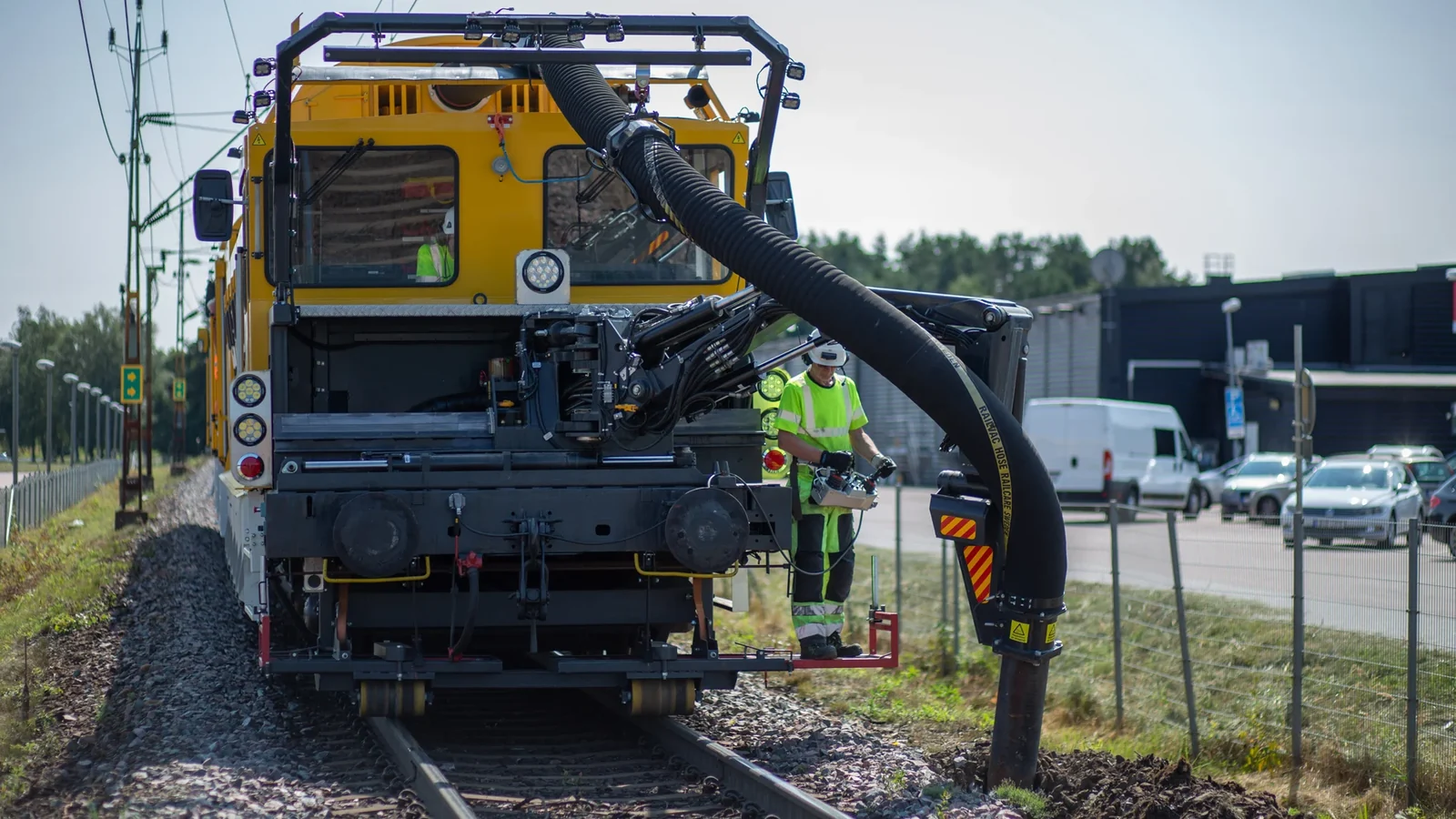
Railcare says its Railvac vacuum machines can remove ballast and other material by suction, lower cables, clear mud deposits and work in tunnels while allowing rails, sleepers and cables to remain in the embankment. That makes the method relevant to locations where conventional excavation is difficult to use around existing railway assets.
The new framework also accommodates Railcare’s electric and battery-powered machines, but the agreement does not guarantee that such equipment will be used on every assignment. The actual method and machinery will depend on the call-offs placed after the framework starts.
Don’t miss…DP World completes first Zeebrugge–Aiud vehicle rail move
Seven-Bridge Job Shows the Method in Practice
A recent Swedish project shows how Railvac can be used where access is restricted. In May 2026, Railcare reported ballast replacement on seven Malmbanan bridges using Railvac and a Ballast Feeder over five nights. Railcare said traditional machine solutions could not be used on those bridge structures, and the work exposed the bridge troughs for inspection before new ballast was placed.
That project predates the new framework and is not presented as a call-off under it. It is relevant as a practical example of the constrained bridge work for which Railcare uses vacuum excavation.
Call-Offs Will Define the 2027 Workload
The timing of the framework also follows a year of heavy track-renewal activity. In its first-quarter 2026 report, Railcare said Trafikverket had prioritised a large number of track renewals and that some preparatory work ahead of those renewals would move into the following year.
That does not establish a guaranteed workload for the new agreement. The commercial outcome will depend on the level and timing of Trafikverket call-offs after 1 February 2027.
News on railway transport, industry, and railway technologies from Railway Supply that you might have missed:


