Stadler to provide obsolescence support for ageing CapMetro GTW fleet
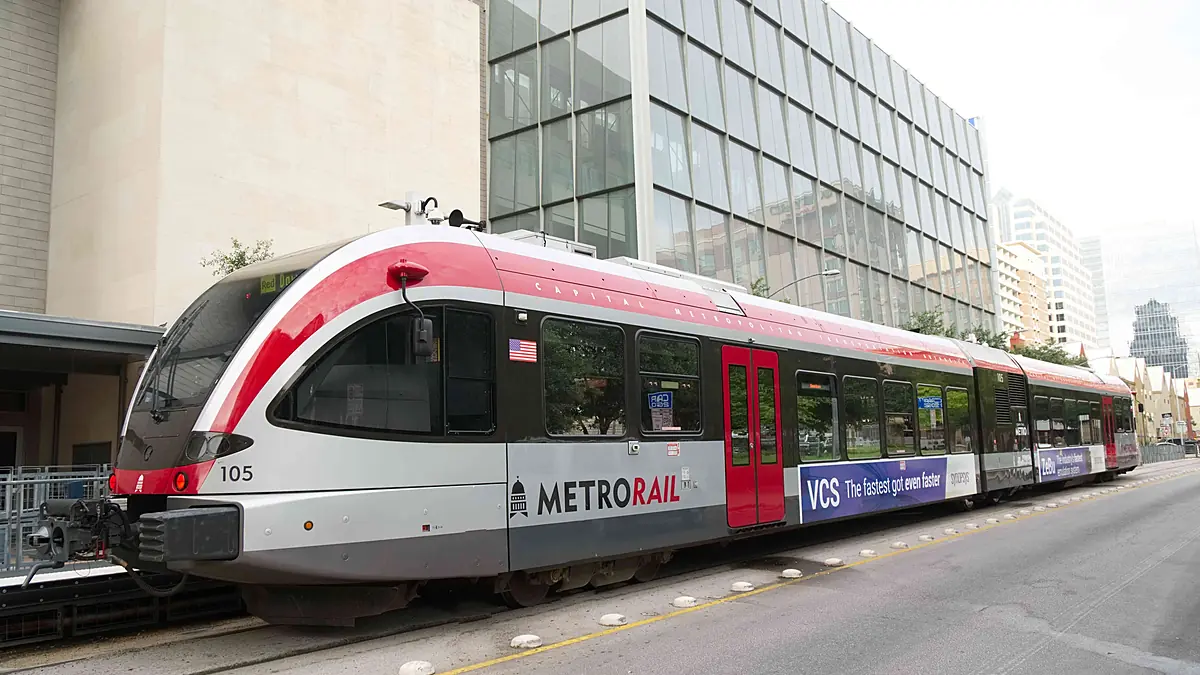
In the United States, Stadler will support the ageing CapMetro GTW fleet from January 2027 through a three-person Austin team focused on engineering, spares and obsolescence. That team gives the agency direct access to the builder of the ten diesel railcars that work the Red Line.
Moreover, the deal has room to run. The five-year base term starts in 2027 and runs into 2032, while two one-year options could extend the agreement through 2034.
The agreement covers a defined support role. Under the service agreement, Stadler will supply on-site technical support, engineering expertise, training and spare-parts management. It will also advise CapMetro on spare-parts sourcing. The agreement includes obsolescence support, such as identifying replacement solutions for ageing components and helping to keep critical spares available over a long horizon.
Martin Ritter, president and CEO of Stadler North America, tied the contract to earlier work for the agency.
“With this agreement we are building on our long-standing relationship with CapMetro.”
A fleet that is no longer young
The CapMetro GTW fleet was not bought in one go. An internal audit released by the agency in December 2025 records two generations of vehicle. CapMetro bought six GTW1 units in December 2007, ahead of the Red Line opening in March 2010. Four GTW4 units followed in September 2017, expanding the fleet and lifting service frequency. Peak service needs six of the ten cars, which leaves four spares, or 40 per cent of the fleet.
| Batch | Units | Purchase and service evidence | Position in January 2027 |
|---|---|---|---|
| GTW1 (G1) | 6 | Bought December 2007; Red Line opened March 2010 | About 19 years since purchase; just under 17 years of passenger service |
| GTW4 (G4) | 4 | Bought September 2017 for fleet expansion | About nine years and four months since purchase; service-entry date not established by the audit |
The ten railcars covered by the support deal were bought in two batches a decade apart, so Stadler inherits two different ages of equipment. Elapsed periods are an editorial calculation from the purchase dates to January 2027, rounded to whole years and months; they describe time since purchase, not time in passenger service. Batch sizes, generation labels and dates come from CapMetro internal audit 25-18, Inventory Controls: Rail Parts, dated 17 December 2025.
Age is part of the problem, while parts availability is the immediate operational concern. The auditors pointed to both generations of vehicle, and they found that the agency can no longer obtain many components easily. Some, in addition, have to go out to third-party firms for refurbishment. Long delivery times follow, and the audit ties those delays to a potential effect on service reliability. Stadler’s new spares and obsolescence brief therefore lands on a problem the agency has already documented in its own reporting.
What Stadler already does elsewhere in Texas
Austin is the company’s fourth service contract in the state, yet the earlier ones do not all look alike. In Denton County, for example, Stadler maintains an A-train GTW fleet directly. The DCTA board approved that handover in October 2020. Rio Grande Pacific holds the prime contract there for operations, track, signalling and dispatch. It retained Stadler for the rolling stock. That arrangement took effect on 31 October 2020, when Rio Grande Pacific assumed what was left of an existing nine-year fixed-price agreement, five years at that point. The deal also carried an option to extend by a further five.
In Austin the division of labour looks different. The December 2025 audit says Herzog manages the rail fleet under an operations and maintenance contract awarded in July 2015, supplying the parts and the labour that keep the DMUs running at the North Operations facility. Stadler’s team therefore adds manufacturer engineering, spares and obsolescence support on top of that arrangement. Whether CapMetro’s wider operations and maintenance structure changes after January 2027 is not addressed in the documents now available.
Support through the Red Line’s rebuilding years
The contract window also coincides with a long run of engineering work on the corridor. CapMetro is planning transit enhancements alongside TxDOT’s I-35 Capital Express Central project. Work began in June 2025 on a drainage tunnel where the line meets Airport Boulevard and 4th Street, and it should finish in mid-2029. Construction of a new railroad bridge at IH-35 and 4th Street is scheduled to begin in late 2027.
Further work comes after that bridge. Construction of a temporary shoofly track is expected to begin in summer 2029, while full realignment of the railroad should start in summer 2030. Meanwhile the agency is designing a double-tracked section at Plaza Saltillo. It is also building a new regional rail station at Uptown ATX with Brandywine Realty Trust.
| Work | Start | Completion |
|---|---|---|
| Drainage tunnel, Airport Boulevard / 4th Street | June 2025 | expected mid-2029 |
| New railroad bridge, IH-35 / 4th Street | late 2027 | not stated |
| Temporary shoofly track, IH-35 / Airport Boulevard | summer 2029 | not stated |
| Full railroad realignment | summer 2030 | not stated |
Four separate jobs on the corridor overlap the support period, and three of them have no published end date. Dates are taken from the agency’s own Red Line improvements page and describe planned schedules rather than completed work.
All of that lands while ten railcars keep a Monday-to-Saturday service moving over 32 miles and ten stations. For passengers, therefore, any benefit would come through fleet availability and service reliability rather than through a visible change on the platform.


