NSW seeks builders to replace about 25% of Sydney Trains’ suburban fleet
New South Wales has invited manufacturers to express interest in building Tangara replacement trains, the first fleet planned under its $12 billion program to restore train building in the Hunter.
Manufacturers have until November 10 to respond. The call, opened by the NSW Government on September 25, covers the design and construction of the state’s next suburban passenger trains. Respondents from Australia and abroad will face the same condition: the government’s 50% local content requirement for rolling stock contracts.
The Tangara fleet due for replacement
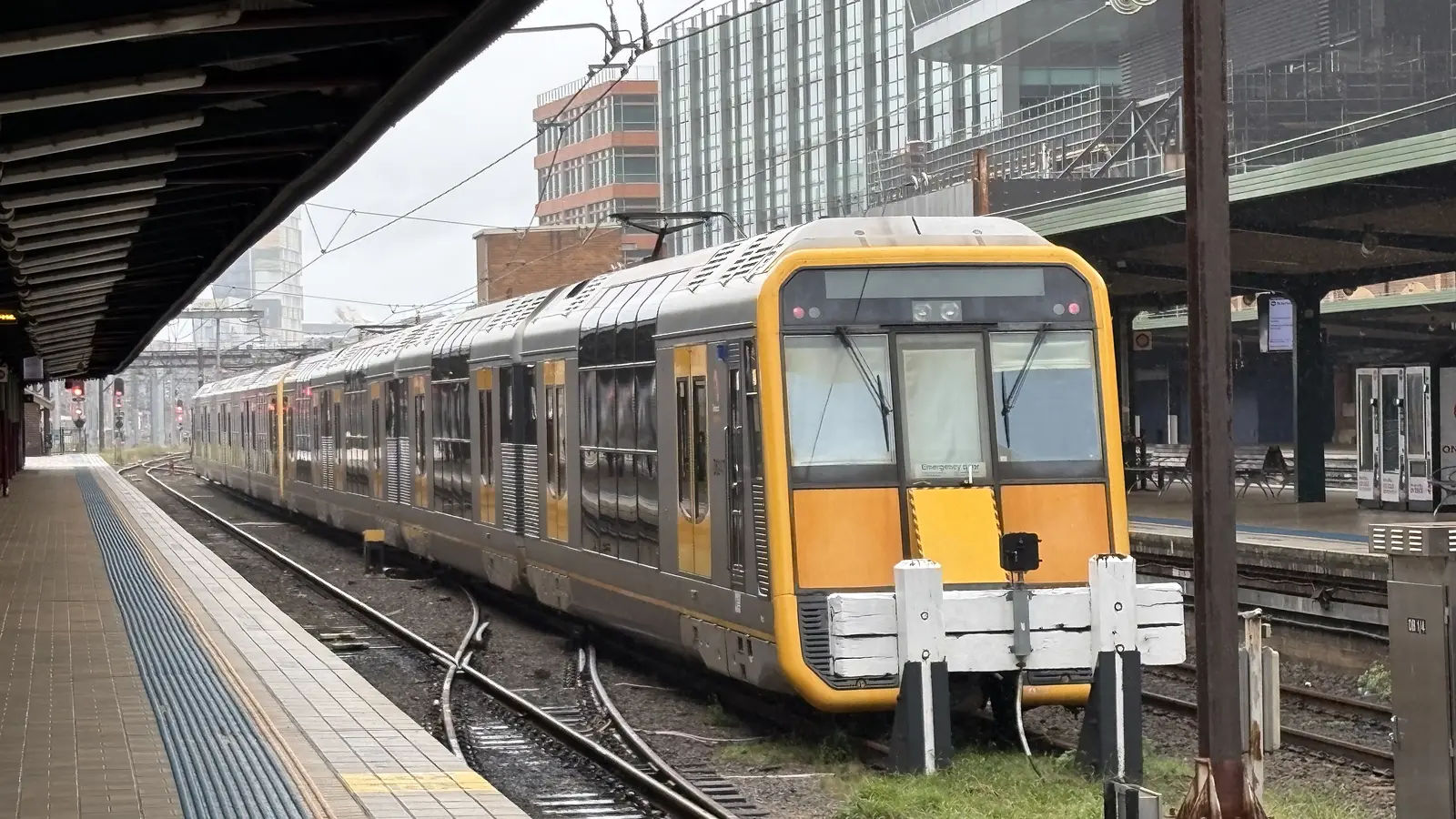
The new trains are meant to take over from the Tangaras. According to the Transport for NSW Future Fleet Program listing, there are 55 eight-car sets, and the fleet has been in service since 1988. They now account for roughly 25% of Sydney Trains’ suburban fleet.
The Tangara replacement opens a longer sequence. Under the government’s plan, the Millennium and OSCAR fleets are next in line for the 2040s, followed by the Waratahs in the 2050s. The new trains are due to carry next-generation control and communications systems, remote diagnostics with fleet monitoring, improved accessibility and real-time journey information for passengers.
The government expects the first locally built suburban trains to be running in the early 2030s. Sydney Trains Chief Executive Matt Longland gave a slightly wider window:
“The first of these new suburban trains are expected to enter service in the early to mid 2030s, providing passengers with a modern fleet that is more reliable, accessible and comfortable.”
Longland also pointed to maintenance. With the fleet designed, built and serviced within the state, he said, Sydney Trains could use local expertise and keep parts support within reach for the life of the fleet.
Suburban fleets lined up for replacement
The Tangaras come first in a Transport for NSW replacement plan that covers 1,758 suburban cars in five fleet groups through the 2050s.
| Fleet | Replacement planned | Cars |
|---|---|---|
| Tangara | 2030s | 445 |
| Millennium | 2040s | 140 |
| OSCAR | 2040s | 221 |
| Waratah A | 2050s | 624 |
| Waratah B (Series 2) | 2050s | 328 |
| Total | 2030s–2050s | 1,758 |
Source: Transport for NSW industry flyer, November 2025. Car numbers are the agency’s indicative planning figures, not order quantities. The total is a Railway Supply sum of the five rows. Transport for NSW’s Future Fleet Program listing describes the Tangara fleet as 55 eight-car sets.
Two Hunter sites for the state-owned factory
The $12 billion program dates from July. At that point, the NSW Government said it would combine a new state-owned manufacturing facility, run by a private manufacturer, with a rolling stock pipeline spanning 15 years. The government expects the plant to keep the region building trains for more than 30 years.
Two locations remain under assessment. One is a Teralba site that was once a coal mine. The other is the Broadmeadow Locomotive Depot, close to where, according to the government, the original Tangara fleet was manufactured between 1986 and 1998. The government expects to make a final choice before the end of 2026. Teralba would also require further talks with Glencore and its partners about acquiring the land.
The government expects the program to support up to 780 construction jobs and about 550 ongoing positions at the facility and in its supply chains. Work on the existing fleet is already under way at Cardiff and in Sydney, where the $447 million Tangara Life Extension program employs 100 qualified workers and 20 apprentices.
When the first contract could be signed
The expression of interest is an early procurement step, not a contract. A Transport for NSW industry flyer from November 2025 predates the $12 billion commitment. It placed the start of procurement in 2026–27, subject to a government investment decision. It pencilled in 2027–28 for awarding the contract for the first trains and supporting infrastructure. The September announcement did not give a contract date.
The program has also become a political dividing line. The government’s announcement said One Nation’s NSW leader Mike Newman had attacked the $12 billion investment and was backing a different approach built on overseas technology partners and financing from foreign states.
Queensland’s train factory program at Torbanlea
Queensland is further along with its own state-funded train building program. Its $9.5 billion Queensland Train Manufacturing Program covers 65 six-car trains from a new factory at Torbanlea on the Fraser Coast. The package also includes a maintenance and stabling facility at Ormeau and upkeep of the fleet. Downer received the design, build and maintain contract in June 2023, and construction of both facilities started later that year. Queensland’s Department of Transport and Main Roads expects the first train to carry passengers in 2027 and all 65 to be in service by 2032, dates it describes as indicative.


