Western Australia plans short-term ownership after any freight rail buyback
If Western Australia’s freight rail buyback proceeds, state ownership would be short-term before a reorganisation that may use corridor land rights of up to 99 years, the transport minister says.
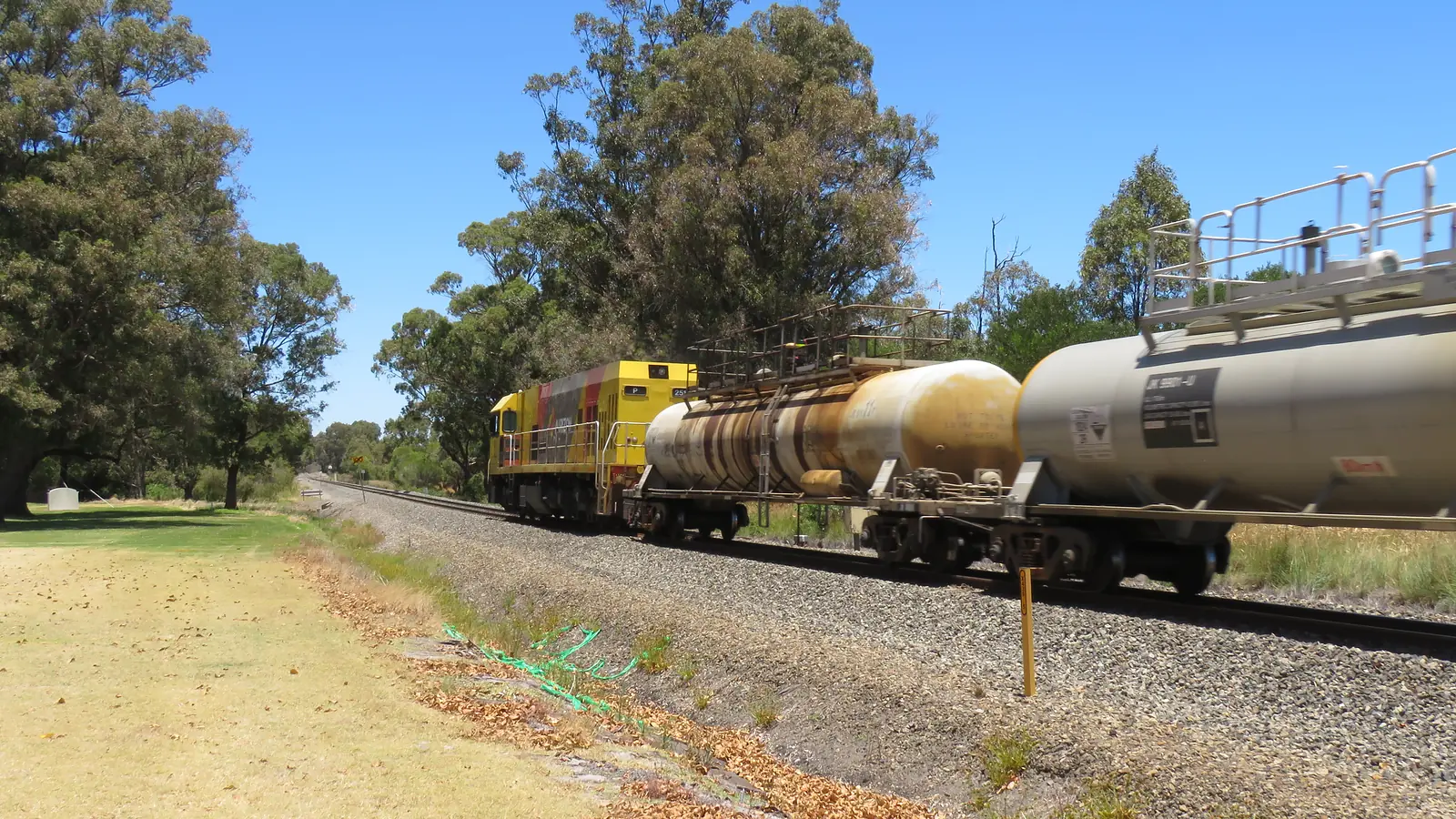
Rita Saffioti, the Minister for Transport and Major Infrastructure, set out the intended structure on 16 September when she introduced the Rail Freight System (Acquisition and Reorganisation) Bill 2026 in the Legislative Assembly. The bill itself does not commit the state to a deal, and talks with Brookfield are continuing. Network manager Arc Infrastructure is owned by Brookfield Infrastructure Partners.
How the buyback would work
The bill as introduced lets the minister issue an order authorising the Public Transport Authority (PTA) to acquire what it calls the below rail freight business on the state’s behalf. That business covers providing and maintaining the track and other assets used to carry freight by rail, along with related operations and income.
The legislation fixes no particular deal structure. Saffioti said the current working assumption is that a PTA subsidiary would buy the business through a share purchase agreement and could keep operating through its existing corporate structure, with its own board.
On how long the state would hold the business, she told the house:
“Although the bill does not impose a fixed timeframe for this interim holding phase, the policy intent is that it would be a short-term arrangement before any subsequent reorganisation or disposal.”
If the government later chose to keep the business long term, separate legislation would be prepared to align its governance with the model used for government trading enterprises, she added.
What a reorganisation could involve
A reorganisation under the bill can mean selling the acquired business, or part of it, to one or more non-government entities. It can also mean arrangements under which such entities run the business, invest in it or take part in it in another way, with the PTA able to keep a continuing role. Any proceeds are paid to the PTA.
The bill also lifts the 50-year limit that the Rail Freight System Act 2000 sets on interests in freight rail corridor land. For a reorganisation, those interests can be granted or extended for up to 99 years. According to the minister, the change is meant to give long-term certainty for investment while keeping the corridor land in public ownership and avoiding an outright freehold sale.
Other clauses exempt the transactions from state taxes and block compensation claims against the state arising from the law, apart from payments agreed in a transaction. Transfer orders need the consent of every private party named in them. Acquisition and reorganisation orders need the treasurer’s agreement, unless one person holds both posts; Saffioti is currently both transport minister and treasurer.
| Step or issue | What the bill provides | Clause |
|---|---|---|
| Acquisition | The minister can order the PTA to buy a below rail freight business for the state, either itself or through businesses in which the PTA takes part or holds shares. Any type of deal structure is allowed. | 6, 7 |
| Ways to acquire | Taking over shares, taking over assets and liabilities, or receiving leases, licences or other rights over the assets of an entity involved in the business. | 7 |
| Running the business | Once a purchase is completed, the PTA runs the business until any reorganisation. | 28 |
| Reorganisation | Selling all or part of the business to non-government entities, or deals under which they operate it, invest in it or are involved in another way. The PTA can keep a role. | 9, 10 |
| Corridor land interests | For a reorganisation, terms can go beyond the current 50-year limit, to a maximum of 99 years. | 11 |
| Proceeds | Money from a reorganisation goes into the PTA’s statutory account. | 13 |
| Approvals | Acquisition and reorganisation orders need the treasurer’s agreement, unless the same person also holds the minister’s post. A transfer order needs the agreement of every private party to it. | 15, 44 |
| Tax and compensation | No state tax on transactions under the bill. The state pays no compensation arising from the law, other than the price and other payments agreed in a deal. | 41, 42 |
| Confidentiality | A private party that leaks deal information in breach of a confidentiality duty commits an offence, with a fine of $200,000. | 25 |
| Infrastructure planning | Part 3 of the Infrastructure Western Australia Act 2019 does not cover the PTA’s running of an acquired business. | 30 |
| Start date | The law takes effect on royal assent. | 2 |
The bill gives the state powers for two steps, a purchase and a later reorganisation, but the explanatory memorandum states that it does not oblige the state to go ahead with either. Source: Rail Freight System (Acquisition and Reorganisation) Bill 2026, as introduced, Parliament of Western Australia.
Why the government wants public control
The roughly 5,500 km network was privatised in 2000 by the Liberal-National government under a 49-year lease that expires in December 2049. Arc says it carries an average of 60 million tonnes of freight a year and has more than 500 employees.
Saffioti told parliament that the long private lease had made it harder to manage the state’s interests through market swings, extreme weather, regulatory reform and the lessee’s commercial objectives. She added that record grain harvests and other factors had pushed overall demand on the network to unprecedented levels. The government argues public control would bring clearer oversight of access and pricing and better planning for freight growth.
She was explicit about where the deal stands:
“Let me be clear: no final investment decision has been made.”
The government would go ahead only if a deal represented value for money and was in the best interests of Western Australians, she said.
Links with ARTC and the national network
Saffioti also told parliament that the state was working with the Commonwealth government and the Australian Rail Track Corporation (ARTC) on ways to integrate its freight network more closely with the national interstate network. She cited severe weather disruptions to interstate rail in recent years and singled out the east-west corridor as a matter of state and national significance. During the 2025 federal election campaign, federal Labor promised $2.5 million for ARTC to work with the state on due diligence and a feasibility study, including whether the Commonwealth could take direct control of the Kalgoorlie to Fremantle line. The minister did not say in her speech whether that option remains under consideration.
Talks with Brookfield and the next step in parliament
The state government announced in January 2025 that it had written to Arc to open negotiations and was open to options including a staged return to public ownership. Bringing the network back under public control was a Labor commitment at the 2025 state election.
Debate on the second reading was adjourned after the minister’s speech. The law would take effect on royal assent. Neither the bill nor the government’s statements put a price or timetable on a transaction, and Arc continues to run the network under its existing lease.