
Mumbai-Ahmedabad Bullet Train project moves ahead
24.05.2026
Mumbai-Ahmedabad Bullet Train project has reached another tunnelling milestone, with large Tunnel Boring Machines being readied for the underground section of the Mumbai-Ahmedabad High-Speed Rail corridor. This is reported by the railway transport news portal Railway Supply.
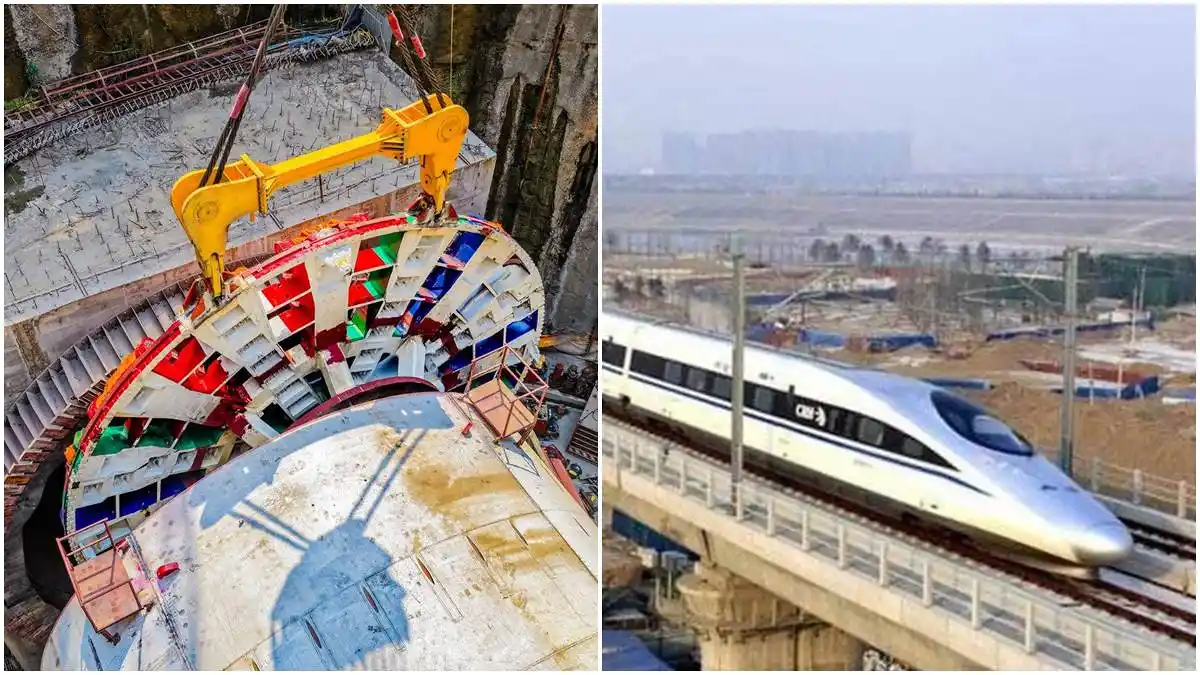
In an update shared on X on Saturday, the Railway Ministry said the cutterhead of the second TBM had been lowered at Sawli, near Ghansoli in Maharashtra. The ministry referred to the work as part of the “precision engineering” behind the project.
The equipment is intended for the 21-km underground stretch of the Mumbai-Ahmedabad High-Speed Rail, or MAHSR, corridor. This latest step follows the lowering of the first TBM cutterhead at Vikhroli in Mumbai earlier in the same week.
Mumbai-Ahmedabad Bullet Train project prepares TBMs
The National High Speed Rail Corporation Limited, which is implementing the project, said in an official update published by the Press Information Bureau that the cutterhead is 13.6 metres in diameter and weighs about 350 tonnes. With the cutterhead in place, the main shield of the TBM has completed its primary assembly stage.
NHSRCL said the second TBM is scheduled to begin excavation from Sawli, near Ghansoli, and move towards Vikhroli. Before that, both machines will go through final assembly and commissioning trials. Their initial tunnelling drive is expected in the first week of July 2026.
Don’t miss…Palemonas Military Mobility Terminal Starts In Lithuania
The cutterhead is central to the tunnelling setup. It has been designed to bore one large tunnel that can accommodate both the up and down railway lines of the high-speed rail corridor.
How the Bullet Train tunnel TBM will work?
NHSRCL said the cutterhead is fitted with 84 cutter discs, 16 bucket lips and 124 scrapers. Together, these components cut through soil and rock and help remove excavated material during underground construction.
Two TBMs have been brought in for this section of the India first bullet train tunnel works. TBM-1 weighs 3,080 tonnes, while TBM-2 weighs around 3,184 tonnes.
Both machines are Mix Shield, or slurry-based, TBMs. According to NHSRCL, this tunnelling method is generally used in difficult ground, in water-bearing conditions, and in densely built urban areas.
MAHSR corridor and Japanese Shinkansen technology
Each TBM measures 95.32 metres in length. The machines include the main components needed for excavation, including the cutter wheel, erector, main shield, jaw crusher, main bearing, tail shield and four specialised gantries.
NHSRCL said the TBMs can operate at a maximum cutterhead speed of 4 revolutions per minute. They can also excavate at up to 49 millimetres per minute. The machines have been designed to keep tunnelling controlled while maintaining safety during underground work.
The Mumbai-Ahmedabad High-Speed Rail corridor is being developed as India’s first bullet train line. The NHSRCL project overview identifies it as India’s first bullet train project, while Japan’s official government portal notes the role of Japanese Shinkansen technology. The project will connect Mumbai in Maharashtra with Ahmedabad in Gujarat through a high-speed rail network intended to significantly reduce travel time between the two cities.
News on railway transport, industry, and railway technologies from Railway Supply that you might have missed: