Merced to Madera extension RFQ approved in California
28.06.2026
The Merced to Madera extension has advanced toward the RFQ stage after the California High-Speed Rail Authority Board of Directors approved issuing a Request for Qualifications for the civil works contract.
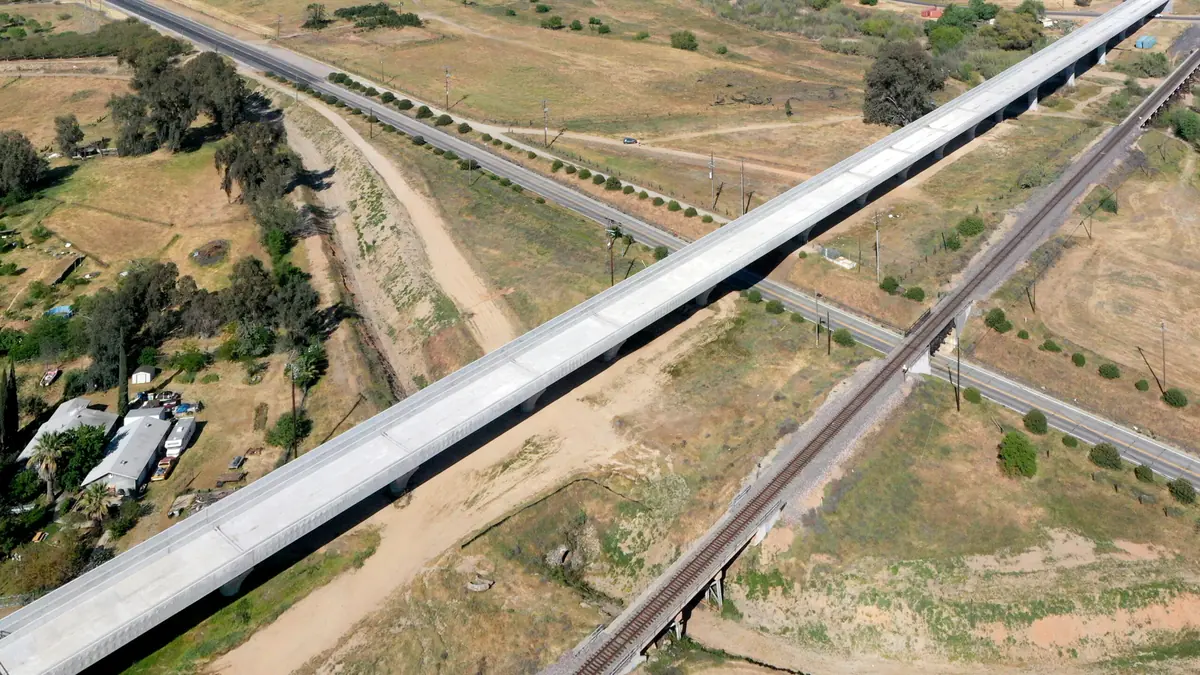
The contract will use a collaborative design-build model to support the system’s extension toward Merced County. The Authority described the procurement as part of a broader expansion of active construction on what it calls the nation’s first high-speed rail system.
Authority CEO Ian Choudri said:
“With this action, we’re accelerating the work needed to bring clean, electrified high-speed rail to more of the people of California – starting with Merced. Delivering an operating Central Valley segment is a key step toward ultimately connecting California’s major population centers in the north and south. As we prepare to begin track installation later this year and launch the next phase of construction, Californians will begin to see the system take shape. By advancing this link and pursuing new clean energy public-private partnership opportunities, we’re building momentum and strengthening the long-term financial sustainability of high-speed rail.”
Merced to Madera extension procurement
The Merced to Madera package covers major civil works on the segment, including grading, construction of structures, and roadway improvements. It follows 119 miles of high-speed rail construction already underway and forms the next stage in extending the system north through the Central Valley.
The collaborative design-build process will bring the Authority and bidding teams together during project development before a final contractor is chosen. The process is intended to refine the design, reduce risk, and improve certainty around cost and schedule.
The solicitation will be issued this summer. Two teams will be shortlisted by the end of 2026, after which early collaboration will begin shortly thereafter. Major construction on the new segment is expected to run from late 2027 to 2030, and the contract is estimated at about $2.4 billion.
Clean energy public-private partnership
The Board also received an update on a separate solicitation for the Cal CLEAN Partnership Agreement. The long-term initiative is focused on securing reliable clean power for future high-speed rail operations and assessing ways to create additional value from Authority-owned assets and infrastructure.
The Authority said the effort supports its statutory requirement to deliver a system capable of operating without ongoing taxpayer subsidy. It also complements the recently executed rail infrastructure Co-Development Agreement with Momentum Alliance Partners LLC, which is evaluating options to accelerate project delivery and increase private-sector participation in the programme.
Under the solicitation, the selected public-private partner will spend six months identifying possible clean energy and commercialization concepts at no cost to the Authority. Any future development agreements would be considered only after that exploratory phase.
The review will look at opportunities connected with future system power needs, stronger energy resiliency, and greater value from public infrastructure investments. Statements of Qualifications are expected this summer. A recommended partner is expected to be identified in August, and an initial project identification agreement is targeted for September 2026. That agreement would begin the first phase of a longer-term effort linked to California high-speed rail’s future energy and operational requirements.
California high-speed rail progress
Daily work continues across the California high-speed rail project. The Authority said 171 miles are now under design and construction between Merced and Bakersfield.
More than 80 miles of guideway have been completed. The project also includes 61 fully completed major structures, while another 30 structures are under construction across Madera, Fresno, Kings, and Tulare counties.
At the statewide level, 463 miles of the planned 494-mile San Francisco to Los Angeles/Anaheim system have been fully environmentally cleared and are construction-ready.
Since construction began, the project has created nearly 19,200 good-paying jobs, most of them filled by Central Valley residents. The Authority also said the programme has generated nearly $25 billion in economic impact and growth across California. Up to 1,700 workers are present on high-speed rail construction sites each day.
Context
The Merced to Madera procurement concerns a defined section of the Central Valley build-out. The Authority’s procurement page describes the package as approximately 30.3 miles of new high-speed rail guideway, extending from just south of Mission Avenue in Merced to the southern project interface at Construction Package 1 in Madera County. It sits within the wider Central Valley programme, where construction already spans 119 miles and the Authority plans to extend that segment into Merced and Bakersfield. The official Central Valley project page also says testing of the initial electrified high-speed rail line is planned to begin in 2028.