BVLOS drone trial planned for Romford rail network
28.06.2026
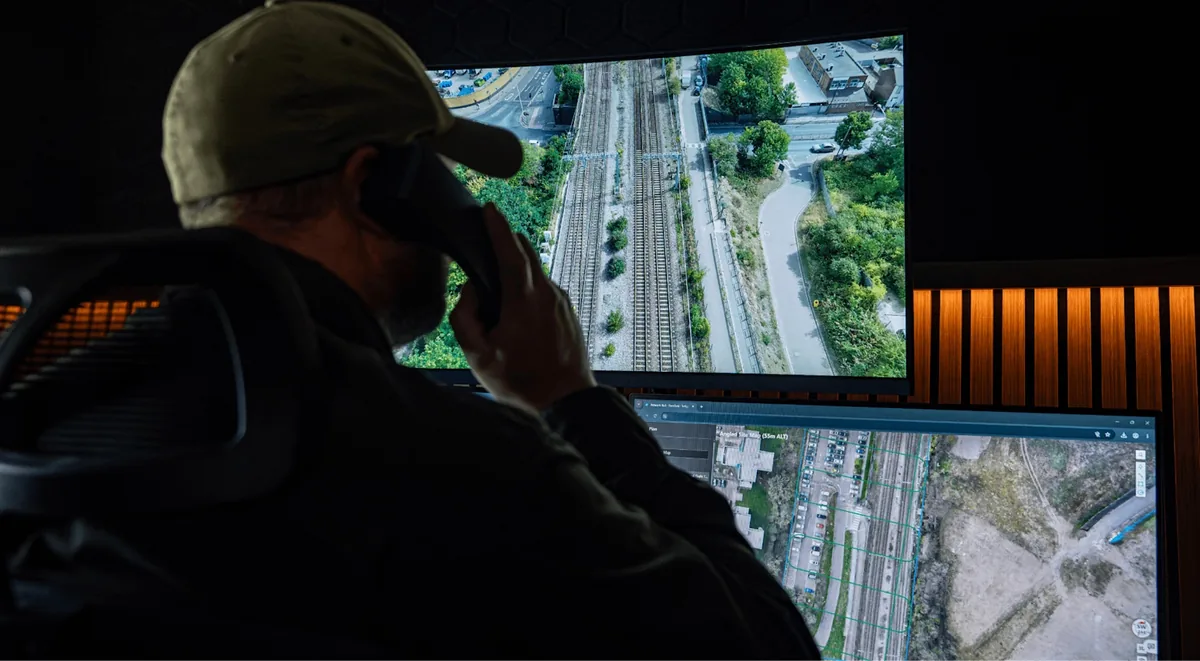
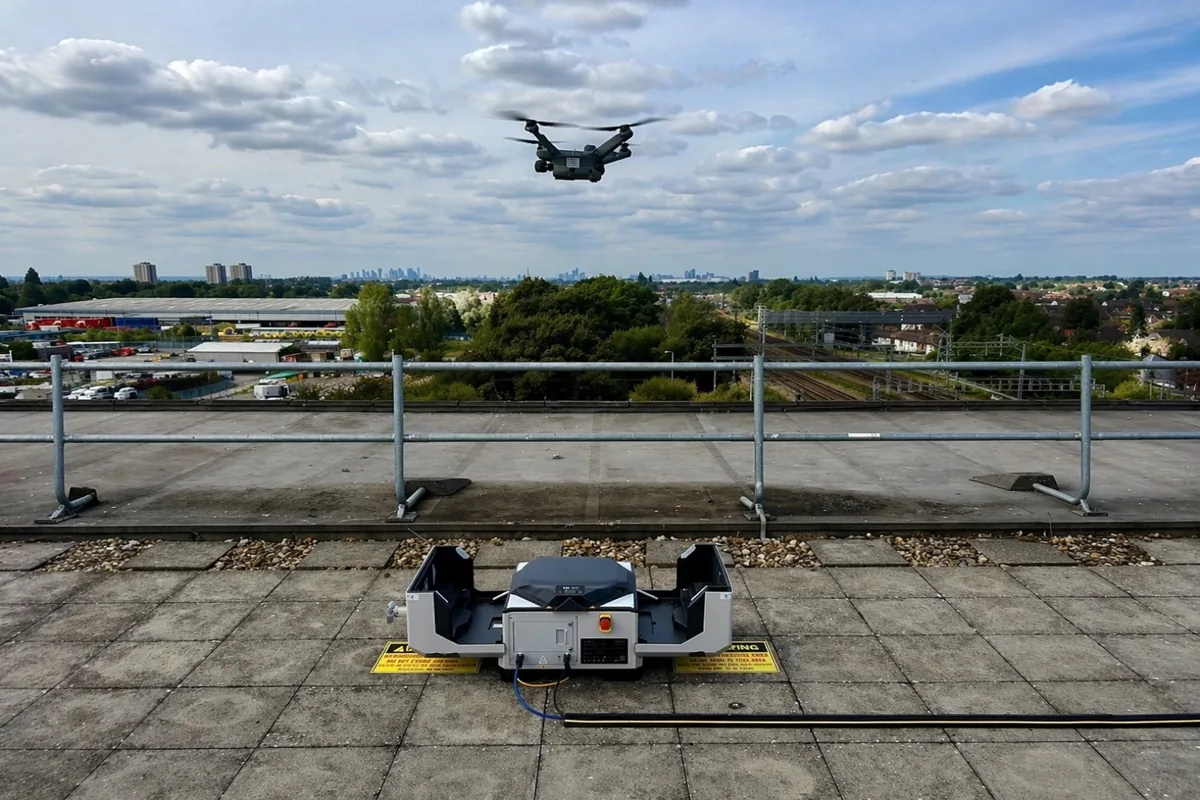
The BVLOS drone trial planned for Romford will see GBR Anglia test beyond visual line of sight drone operations to help Network Rail respond faster to trespass incidents and identify infrastructure problems sooner.
BVLOS drone trial approved for Romford
Scheduled for late summer, the trial has been approved by the Civil Aviation Authority. It follows 16 months of development work and will be carried out by Heliguy, a specialist supplier operating the drones on behalf of Network Rail.
Network Rail teams will be able to access live aerial coverage from up to 400 m around the Romford Rail Operating Centre. That coverage is intended to provide information more quickly than standard drone systems and reduce the need for staff to enter higher-risk areas.
Thermal imaging to support infrastructure checks
The drones will be equipped with high-resolution thermal imaging cameras to help detect early signs of wear or damage affecting track, drainage, structures and lineside equipment before such issues develop into faults.
Network Rail aims to extend BVLOS drone operations to strategic locations across Anglia, with future flights reaching distances of up to 4 km.
In the UK, BVLOS drone operations fall within the Civil Aviation Authority’s Specific Category when they are not covered by standard permissions. The CAA says such flights require a UK SORA-based operational authorisation, and its guidance lists flying beyond visual line of sight as one of the operation types covered by that process. For multi-location BVLOS operations, the regulator also requires each location to be identified with defined operational volumes, ground risk buffers, adjacent areas and airspace.
Richard Barke, route crime and security manager for Network Rail’s Anglia route, said:
“‘Trespass, vandalism and cable theft are some of the biggest causes of delay for passengers across the east of England.’”
“‘The learning from Romford will help us understand how this technology could support faster and more effective incident response across the Anglia route in the future. That means better co-ordination between route crime teams, operations and response teams, so we can deal with incidents more quickly and keep disruption to a minimum for passengers.’”
A parallel trial will also take place in Gloucester on Network Rail’s Western route.