Bullet train design standards set for India corridors
28.06.2026
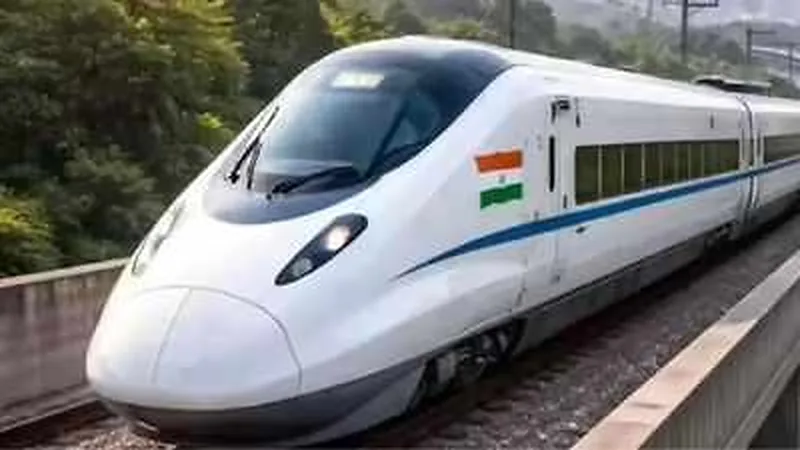
Bullet train design standards are being prepared in India for the next phase of high-speed rail corridors, covering bridges, elevated sections, tunnels and stations for projects planned with a 350 kmph design speed.
Civil works under bullet train design standards
The National High Speed Rail Corporation Limited, or NHSRCL, has issued a global tender for detailed and standard designs covering permanent components and works under the Bharat High Speed Rail Programme. The programme covers seven corridors with a combined length of about 4,000 km.
The preparations are intended to support planning and execution of the next group of high-speed rail projects. Instead of relying on foreign design standards, India plans to use its own standards for the civil structures included in these corridors.
According to NHSRCL, detailed project reports for four of the seven corridors have already been sanctioned, while surveys are under way for the remaining three. The agency is also carrying out alignment validation and pre-tender geotechnical investigation work.
NHSRCL linked the design approach to the large volume of planned work and the need to proceed at a fast pace.
“Therefore, to take up such a large volume of work at a fast pace, it is envisaged to adopt the best design and construction practices as adopted in Mumbai-Ahmedabad High Speed Rail corridor with further advancement,”
Corridors, tunnels and design speed
The bid document also sets out corridor-specific details. On the Delhi-Varanasi corridor, the project will include an underground station at Jewar airport in Noida and a 9.4 km tunnel.
For the Bengaluru-Chennai corridor, the project will include three underground stations at Chennai, Whitefield and Baiyappanahalli. The same corridor will have three tunnels with a total length of 15.9 km.
Officials said the railways are examining changes to alignments so that high-speed rail links can reach central areas of cities.
The tender specifies that the design should support safe, reliable, comfortable and cost-effective operation of double-track high-speed rail at 320 kmph, while allowing for a design speed of 350 kmph. It also requires consideration of site-specific conditions, including environmental, ground and material factors.
The Mumbai-Ahmedabad High Speed Rail corridor is the reference point for the new standard-design work. NHSRCL describes it as India’s first bullet train project, spanning 508 km between Maharashtra and Gujarat, with a largely elevated alignment, bridge works, tunnel sections and 12 stations. Its scope also includes a 21 km tunnel section with India’s first 7 km undersea rail tunnel under Thane Creek. This helps explain why the new tender focuses on repeatable civil designs for bridges, elevated sections, tunnels and stations across the next group of corridors.