Maroona–Portland line receives first sleepers for 23-tonne axle loads
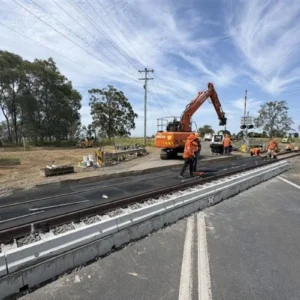
Concrete sleepers for the Maroona to Portland rail upgrade have begun arriving in western Victoria, the first of about 250,000 that will replace ageing timber sleepers along the 173-kilometre line.
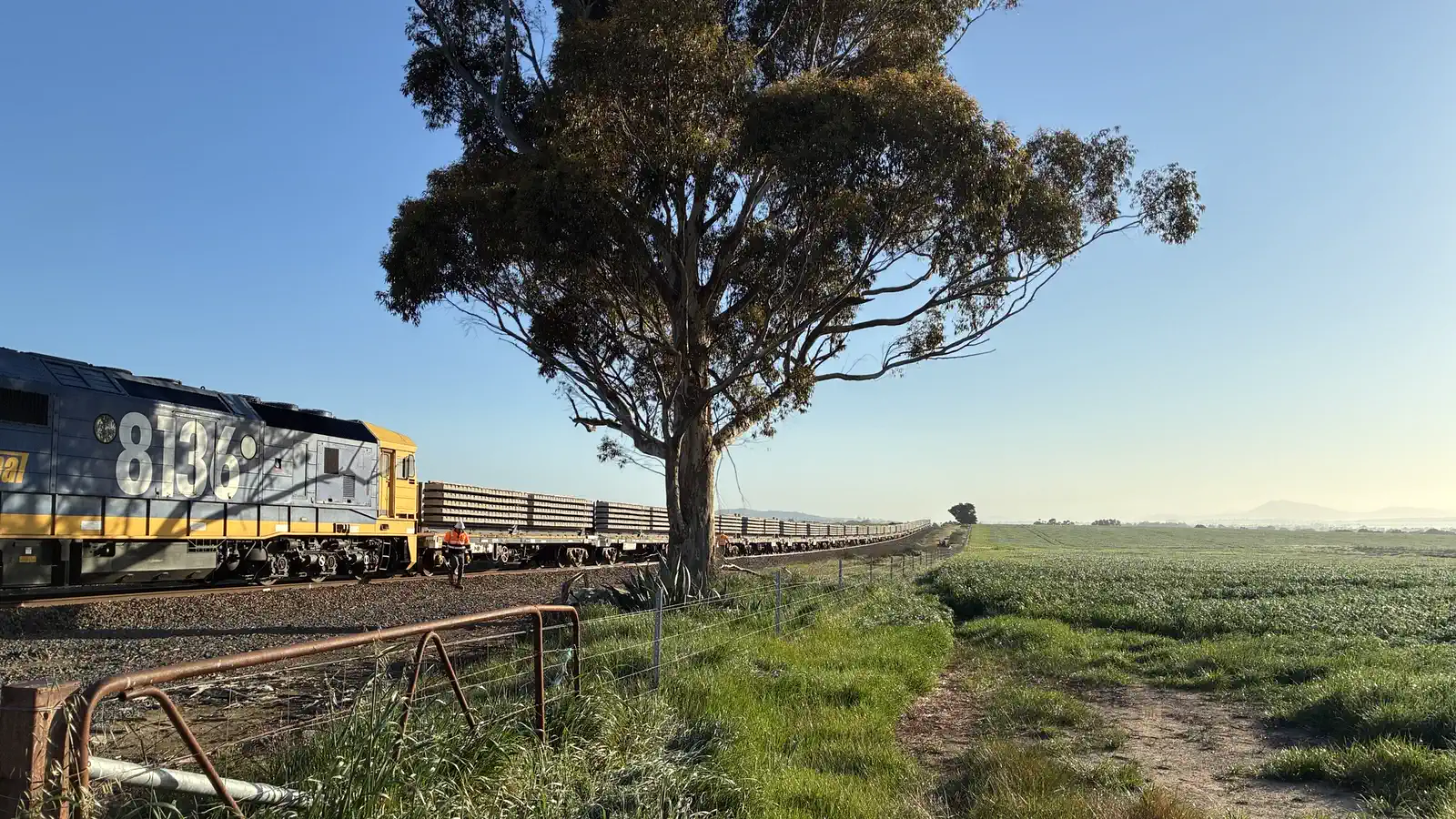
The Australian Rail Track Corporation (ARTC), which manages the freight line, is delivering the work with the Australian Government. ARTC said the first deliveries reached the corridor after months of planning, site preparation and early works along the route. Katya Moskvina, ARTC Senior Project Manager, described the arrival of the sleepers as a milestone for the project and for communities along the line.
What the new sleepers change on the line
After the sleepers go in, ARTC plans to remove temporary speed restrictions, restore line speeds and raise the maximum axle load from 19 to 23 tonnes. The company expects freight transit times between Maroona and Portland to fall by more than one hour.
Vossloh, which makes the sleepers, put the current limits in February at 19 tonnes per axle instead of the usual 23 tonnes, and 40 km/h instead of 80 km/h.
The line connects the interstate network with the Port of Portland. ARTC says the work will complement the Murray Basin Rail Project on the route from western and north-western Victoria to the port. It will also carry traffic from south-western Victoria and south-east Australia. Grain and mineral sands are among the goods regional producers move to market by rail.
How the sleepers reach the corridor
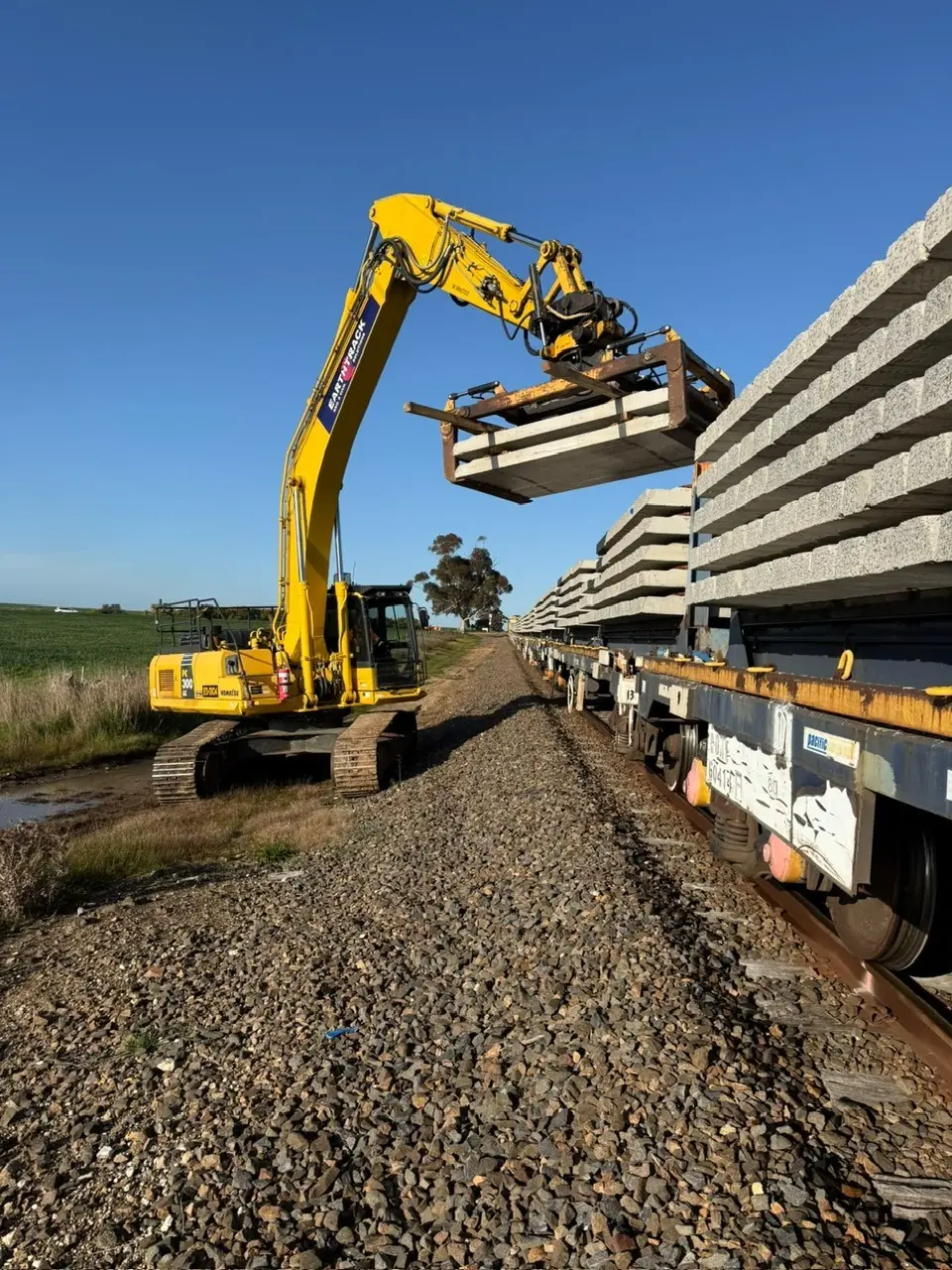
Vossloh is producing the sleepers at its Wagga Wagga plant in New South Wales. Pacific National is carrying them to site in 40 dedicated sleeper trains. Under the supply contract signed in February, about 220,000 sleepers come from Wagga Wagga and a further 30,000 from the company’s Geelong facility in Victoria.
Deliveries start at Maroona and work southwards for the rest of 2026. In 2027 they restart at Portland and move north, with some sleepers taken to Hamilton by road. ARTC expects deliveries to run until October 2027.
Five-month line closure planned for main works
ARTC issued the Main Works tender on 1 September 2026, and bids close on 23 November 2026. After talks with rail operators and industry, ARTC aligned the main construction with a planned closure of the line from 1 October 2027 to 29 February 2028.
When the line reopens, ARTC will raise speeds and axle loads in stages. Before then, from early October 2026, ARTC will lay a new cable route between Julia Street and Kalari sidings in Portland. The new route replaces cables that have worn out, and the work is due to finish in December 2026.
| Date | Step |
|---|---|
| 10 February 2026 | ARTC announces its contract with Vossloh Australia for 250,000 concrete sleepers |
| February 2026 | Vossloh starts sleeper production |
| 1 September 2026 | ARTC issues the Main Works tender |
| Late September 2026 | First sleepers arrive, starting at Maroona |
| October–December 2026 | New cable route laid in Portland |
| 23 November 2026 | Main Works bids close |
| August 2027 | Vossloh’s scheduled end of production |
| October 2027 | Sleeper deliveries end |
| 1 October 2027 – 29 February 2028 | Line closed for main construction |
Dates after the first deliveries in late September 2026 are planned and may change. Sources: ARTC project page, ARTC delivery notice, ARTC contract announcement, Vossloh.
A $166 million project inside a larger programme
The project now costs $166 million: $150 million from the Australian Government and up to $16 million in additional funding from ARTC. When ARTC signed the sleeper contract in February, it described the project as a $150 million, government-funded investment.
The work forms part of ARTC’s Network Investment Program, run jointly with the Australian Government. The programme now covers almost $2.8 billion of investment over seven years to 2032. In February, ARTC put it at more than $1 billion over five years to 2030.