Hydrogen in rail transport faces a major safety test
03.06.2026
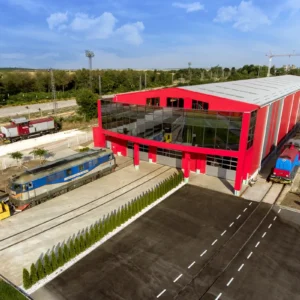
Hydrogen in rail transport now has a clearer safety framework after UIC set out the final conclusions of the Hydrogen RISKS project. The closing conference was held on May 26, 2026, at the ADIF Railway Technology Center in Málaga, Spain.

The event brought together railway experts, infrastructure managers, operators, and institutions working on the development and assessment of hydrogen technologies in railways. According to UIC’s final conference note, the main question was both practical and strategic: how hydrogen-powered systems can be introduced into the railway environment without weakening railway safety standards.
UIC Hydrogen RISKS project sets out safety priorities
The Hydrogen RISKS project focused on the hazards linked to hydrogen use in railway applications. Its purpose was to shape a structured method for identifying, assessing, and managing those risks, especially as hydrogen trains move from testing toward broader operational use.
One of the project’s main results is a UIC document with guidance for the safe introduction of hydrogen technologies in the railway sector. The guide is designed to support a common industry approach, rather than leaving individual operators or infrastructure managers to build separate safety practices.
ADIF, Spain’s railway infrastructure manager, hosted the conference at its technology center in Málaga. Technical input came from several UIC members, including ADIF, RFI, Italy’s railway infrastructure manager, and SNCF, France’s national railway operator.
The discussion moved through the experience collected by the project partners and the technical and operational challenges that come with hydrogen use in rail transport. Participants also looked at the next steps needed to support implementation of these technologies in real railway conditions.
Experience from ADIF, RFI, SNCF, ERA and FNM
On the day before the conference, participants visited the National Hydrogen Center in Puertollano. There, they saw part of a hydrogen train prototype, giving the group a practical view of the technology and the challenges connected with this energy solution.
Hydrogen RISKS partners also took part in the conference, including Ferrovie Nord Milano and the European Union Agency for Railways. Their contribution included a presentation and the moderation of a discussion session focused on the project’s findings.
UIC also pointed to the presence of a Korean delegation. The delegation included a presentation by the Korea Railroad Research Institute and representatives from Korail, South Korea’s national railway operator. Their participation showed that interest in hydrogen applications for railways is extending beyond Europe.
The event attracted approximately 45 participants on-site, while another 20 joined online. That format reflected the technical focus of the conference and the wider international attention surrounding hydrogen technologies in railways.
How hydrogen in rail transport will be assessed?
The main project deliverable is the public document “UIC Hydrogen Risks – Guidelines for the Safe Introduction of Hydrogen Technologies in Railways”. It is dedicated to risk assessment methodology for hydrogen-based railway energy systems and the analysis of safety measures.
The guide gives the sector a shared basis for understanding risks, defining procedures, and integrating hydrogen technologies into railway operations. This matters because hydrogen is viewed as a potential solution for non-electrified lines, but it also creates specific requirements for storage, refueling, operation, and incident response.
For the European rail sector, the project comes as several countries test or introduce hydrogen trains as an alternative to diesel traction. Railway Supply has also previously covered hydrogen train projects in this context. UIC stresses that wider deployment will depend not only on technical performance, but also on clear methods for risk assessment and operational acceptance.
Hydrogen trains remain promising under strict conditions
Hydrogen trains are most relevant for regional or secondary routes where full electrification is difficult or costly. In such cases, hydrogen can reduce local emissions and cut dependence on diesel, but it also requires dedicated refueling infrastructure and adapted safety procedures.
Through the Hydrogen RISKS project, UIC aims to provide a common technical framework for these solutions. The guide can help harmonize practices across operators and infrastructure managers, reducing uncertainty around safety requirements and practical deployment.
The conference’s message was that hydrogen in rail transport remains a serious decarbonization option. At the same time, its implementation must be gradual, well documented, and supported by robust safety assessments before it can be accepted more widely across the railway industry.