Hungary’s rail freight sector faces a hard squeeze
03.06.2026
Hungary’s rail freight sector is under growing strain in 2025, with falling volumes, rising costs and less room for operators to compete with road transport.
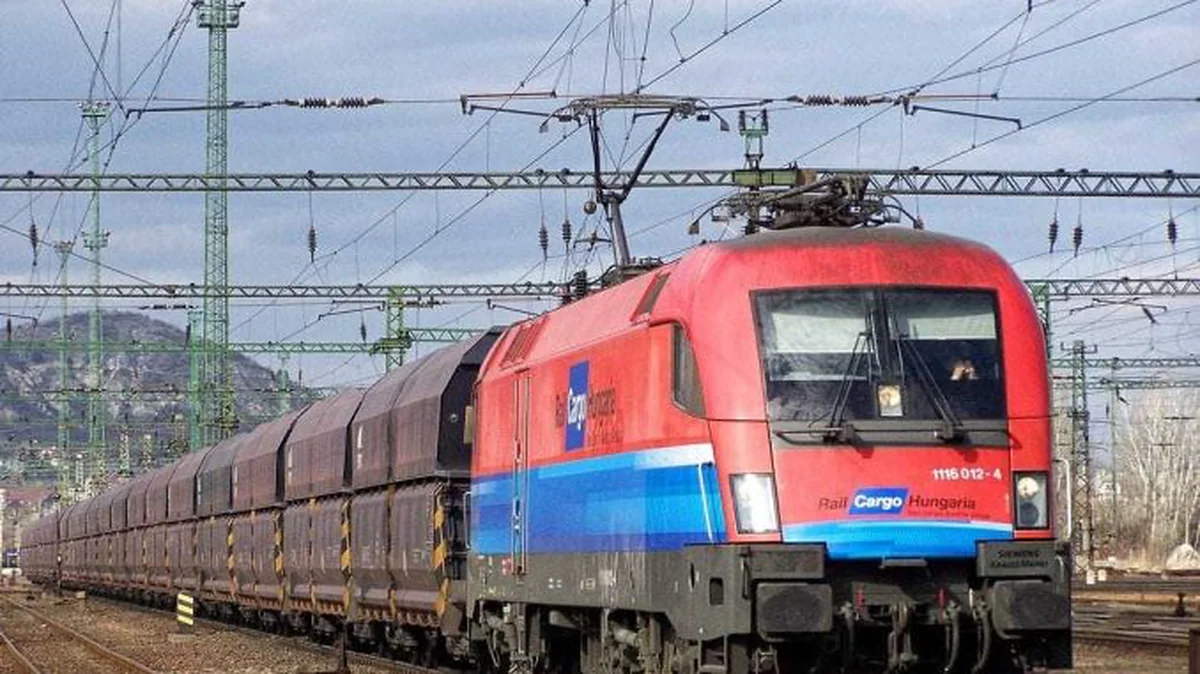
Hungary’s rail freight market weakened further in 2025, as transport performance dropped by 11% year-on-year in ton-kilometer terms, according to figures released by HUNGRAIL, the Hungarian railway association. The organization says this is not just a short-term fall in demand. It points to deeper structural weaknesses affecting the competitiveness of rail freight transport in Hungary.
HUNGRAIL stresses that rail freight still has a strategic role in the Hungarian economy, especially in an open and strongly export-oriented country. The sector supports heavy industry and the energy sector, and it also fits into national goals linked to more sustainable transport. But the same market is now being squeezed by higher costs, infrastructure problems, traffic restrictions and weaker industrial activity.
Hungary’s rail freight sector loses ground as demand falls
A steady rise in operating costs sits at the center of the problem described by HUNGRAIL. Energy price volatility, higher infrastructure usage fees and growing labor expenses have all reduced the margins available to rail freight operators.
Network conditions have also affected service quality. Construction works and traffic restrictions are frequent enough to make rail services less predictable. For customers, that weakens the appeal of rail compared with road transport, which can usually adapt more quickly when demand changes.
Demand has shifted against rail at the same time. HUNGRAIL reports that Hungary’s foreign trade volumes fell significantly in the previous year. Activity also declined in sectors that normally generate large freight flows, especially construction and heavy industry. Taken together, these factors reduced the need for transport services and put heavy pressure on the Hungarian rail freight market.
Rail freight cost index shows a widening gap
In 2025, unit costs for Hungarian rail freight operators rose by 11.8% compared with 2024. The calculation is based on moving one ton of freight over one kilometer. In the fourth quarter alone, costs per gross ton-kilometer were 5% higher than in the same period a year earlier.
Higher operating and handling expenses were the main drivers of the increase. HUNGRAIL says operators could not offset this pressure, even after strict internal measures such as administrative cost reductions, restructuring programs and layoffs.
Freight tariffs moved much more slowly than expenses. In 2025, unit rates in rail freight rose by only 2% in nominal terms compared with the previous year. Set against average services inflation of 6.7%, that means a real decline of 4.7%. By the final quarter, the pressure had become even clearer, as rates charged by rail freight operators fell by 1.4% in nominal terms.
HUNGRAIL says the growing gap between costs and tariffs has pushed operators into an increasingly difficult financial position. To cover the cost growth from 2025, companies would have needed an additional 9.8% tariff increase. They were unable to pass that pressure on to customers.
The main limit is road transport competition. When demand is already falling, rail operators have little room to raise prices without losing business. For HUNGRAIL, that is why the current situation looks like a structural competitiveness problem, not simply a short downturn in the economic cycle.
Lajos Hódosi, CEO of HUNGRAIL, said the latest cost-index data show that the sector’s problems go beyond a normal slowdown.
“The figures from the rail freight cost index for 2025 clearly show that the Hungarian rail freight market is no longer facing merely a cyclical economic downturn, but deeper structural competitiveness issues,” said Lajos Hódosi.
He added that companies have already taken major internal steps to keep services running, including cost reductions, reorganizations and layoffs. Still, higher energy prices, infrastructure usage fees and operating costs, combined with falling volumes, are narrowing the options available to operators.
“This situation could end up jeopardizing the stability of the entire domestic logistics chain,” warned the director of HUNGRAIL.
HUNGRAIL seeks support for rail freight transport in Hungary
According to HUNGRAIL, stopping the decline in rail freight transport will require government measures and financial support. The association says Hungary needs a renewed transport policy and financing framework that deals with infrastructure quality, competitive disadvantages and the strategic role of rail freight.
Lajos Hódosi said that every shipment lost by rail adds pressure to the road network, increases exposure to imports and weakens Hungary’s industrial competitiveness.
“Hungary’s export-oriented economy cannot be competitive in the long term without a stable, predictable, and sustainable rail logistics system,” he said.
Through the VÁGTA program, HUNGRAIL has proposed several short-term steps to stabilize Hungary’s rail freight sector. These include relaunching the support scheme for single-car rail transport, reviewing infrastructure usage fees in Hungary and adjusting them to improve competitiveness, and introducing a Hungarian support system for combined transport.
The association also points to industrial connections and last-mile rail links. HUNGRAIL says Hungary should encourage the reactivation of industrial sidings, because fewer than half of the country’s approximately 944 such connections are currently used in rail logistics.
Fuel pricing is another issue raised by the association. HUNGRAIL wants the protected fuel price to be extended to the rail sector. It says a regulatory anomaly currently prevents both passenger and freight rail companies from buying fuel at the protected rate.
For traction electricity, HUNGRAIL is calling for lower system usage fees and the recovery of amounts linked to the KÁT scheme, Hungary’s mandatory renewable-energy feed-in tariff. According to the organization, these charges create an additional annual burden of 3–5 billion forints for the rail freight sector alone. HUNGRAIL also notes that traction electricity prices remain three times higher than they were before the 2022 price surge.
Short-term outlook remains weak
The near-term outlook for rail freight operators in Hungary remains negative. HUNGRAIL warns that global tensions and higher energy prices could add further cost pressure, while inflationary pressure and logistics uncertainty may further reduce transport demand.
The rail freight cost index is published quarterly by HUNGRAIL. It was created to show cost developments in the sector more clearly and to support public policy decisions. The index is based on a representative survey of rail freight operators and tracks both cost changes and the gap between expenses and tariff-based revenues.