Hugh L. Carey Tunnel receives ASCE landmark status
16.05.2026
Hugh L. Carey Tunnel has received ASCE landmark status. ASCE is the American Society of Civil Engineers. The designation names it a New York Metropolitan Historic Civil Engineering Landmark. This is reported by the railway transport news portal Railway Supply.
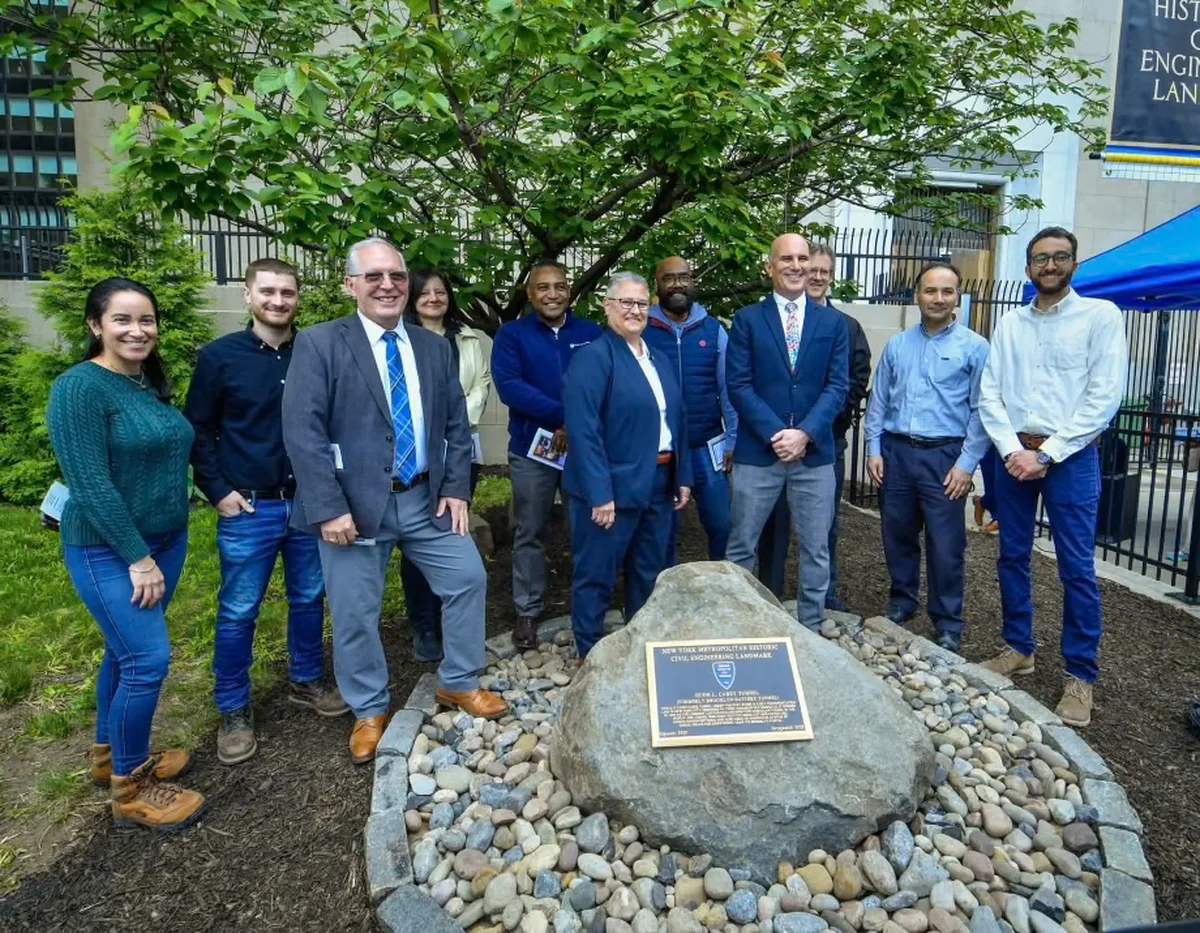
New York’s Metropolitan Transportation Authority said the tunnel is the fourth such MTA-owned property. Also, a plaque has been installed outside the tunnel ventilation building on the Manhattan side.
The plaque states:
“This 9,117-foot-long tunnel under the East River is a key transportation link in New York City. Designed by Chief Engineer Ole Singstad, it opened in 1950 as the world’s longest continuous underwater vehicular tunnel. The tunnel was constructed using cut-and-cover and shield-driven methods and also used an innovative system of radial wells for dewatering near its Brooklyn portal.”
MTA Bridges and Tunnels President Catherine Sheridan welcomed the recognition, saying:
“Today’s dedication is a welcome recognition of the innovative engineering that went into the construction of this tunnel, a critical link in the City’s vehicular transportation network,”
Hugh L. Carey Tunnel joins other MTA landmarks
The Carey Tunnel joins three other MTA-owned properties previously recognized by the ASCE. In addition, the earlier recognitions involved subway, bridge, and terminal infrastructure.
For example, the first New York City subway segment was recognized in 1977. It ran nine miles from City Hall to 145th Street and Broadway. It was named a National Historic Civil and Mechanical Engineering Landmark.
The Triborough/Robert F. Kennedy Bridge Project received National Historic Civil Engineering Landmark status in 1986. Grand Central Terminal followed in 2012.
The tunnel has twin tubes carrying four traffic lanes in total. It connects Brooklyn and Manhattan and serves more than 60,000 vehicles each weekday. Also, it carries 30 express bus routes between Manhattan and Staten Island or Brooklyn.
Brooklyn-Battery Tunnel history
Construction began after President Franklin D. Roosevelt presided over groundbreaking ceremonies on October 28, 1940. At the time, the project was still called the Brooklyn-Battery Tunnel.
The work had been expected to take four years. Still, labor and material shortages during World War II extended completion to 10 years.
The tunnel opened to traffic on May 25, 1950, Metro Magazine reported. At the time, the one-way toll was 35 cents. The current one-way toll is $12.03, or $7.46 with E-ZPass.
Upon opening, the Brooklyn-Battery Tunnel became New York City’s fourth major vehicular tunnel. It followed three earlier vehicular tunnels:
• the Holland Tunnel in 1927;
• the Lincoln Tunnel in 1937;
• the Queens-Midtown Tunnel in 1940.
Separately, the tunnel was renamed in 2012 for Hugh L. Carey. He was a former New York governor and congressman who died in 2011.
The Hugh L. Carey Tunnel is 1.7 miles long. Still, it remains the longest continuous underwater vehicular tunnel in the United States. Globally, it ranks second to Japan’s 14.5-mile Seikan Tunnel.
News on railway transport, industry, and railway technologies from Railway Supply that you might have missed:
Don’t miss…REDI Sites program expands across NS network