Hiawatha expansion grant seeks Madison Amtrak route
26.06.2026
A Hiawatha expansion grant request for $218.2 million has been submitted to the U.S. Department of Transportation for a proposed westward extension of Amtrak’s Hiawatha service.
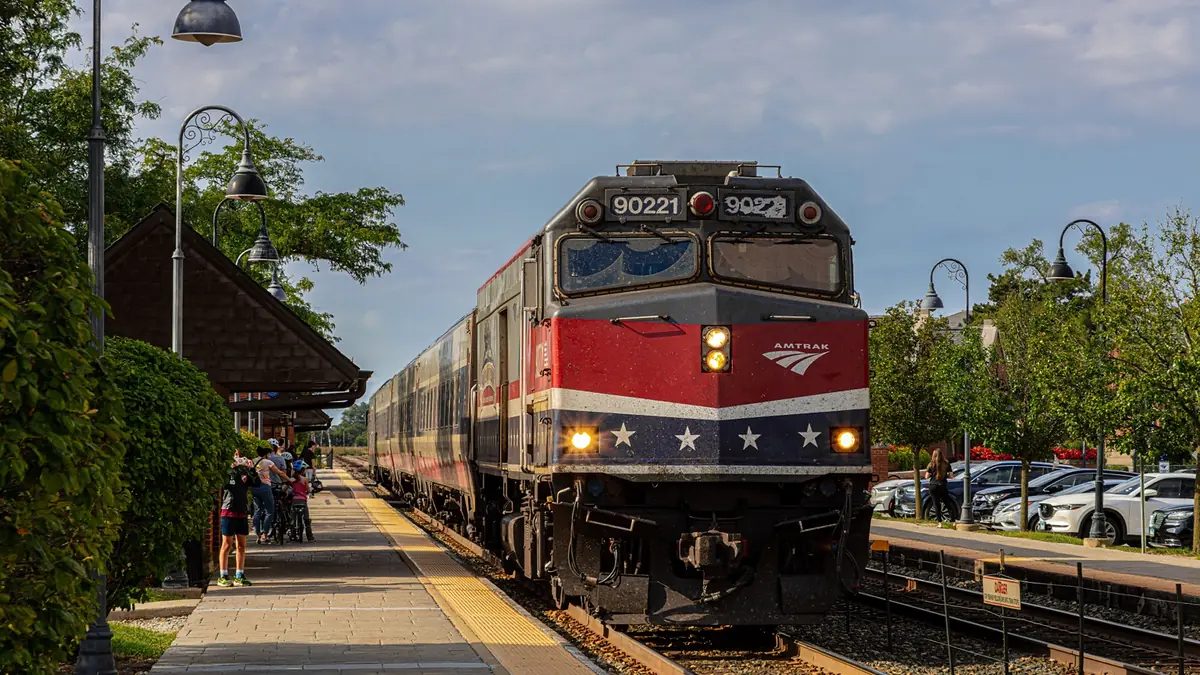
Governor Tony Evers announced the application on June 25, as rail advocates and southeast Wisconsin leaders gathered at Milwaukee’s Oriental Theatre for the “Think BIG About Wisconsin Passenger Rail” conference.
The request covers the federal share of a project estimated at $272.8 million. A spokesperson said by email that the application seeks 80 percent of the cost from federal sources, while Wisconsin would provide $54.6 million and support the route with a $2.5 million yearly operating subsidy.
“The opportunity to expand passenger rail has haunted Wisconsin for a generation because of a short-sighted political stunt—that decision cost our state dearly, and we want to right that wrong,” said Evers in a press release.
Hiawatha West line and planned stations
The proposed route, known as the Hiawatha West line, would begin with as many as two round trips per day. Stations are planned in Pewaukee, Watertown, and Madison. If funding is awarded and engineering studies proceed as expected, Amtrak estimates that service could start in 2030.
Current Hiawatha service carries about 681,600 passengers a year. Amtrak expects the extension to add around 260,000 annual trips.
Evers said the Trump administration would decide on the grant application “in the coming months”.
Wisconsin passenger rail and earlier Madison plans
The Madison-Milwaukee corridor has been part of Wisconsin passenger rail debates for decades. Around 20 years ago, it was identified for a possible high speed rail route. In 2009, then-Governor Jim Doyle reached an agreement with Spanish train manufacturer Talgo for two new trains intended for the Madison-Milwaukee service. The project had also been earmarked for $810 million in federal funding under the Obama administration.
After winning election in 2010, Governor Scott Walker rejected the grant. The trains later ended up in Nigeria after a years-long legal battle. Wisconsin paid Talgo $9.7 million in 2015, in addition to the original $42.2 million cost of building the trains.
Passenger rail planning in Wisconsin drew renewed attention in 2024, when Amtrak launched the Borealis service between Chicago and the Twin Cities, including several Wisconsin stops. At the time, Amtrak Director of Network Development Arum Rao said Wisconsin was being heavily targeted by the Corridor ID plan for future rail projects.
That Federal Railroad Administration initiative, created in 2021 under the Biden administration, has also shaped recent discussion around Hiawatha expansion. Local officials in Milwaukee, Cudahy, Racine, and Kenosha have pointed to the same process as the preferred path for advancing the proposed MARK Rail Line.
The MARK proposal would link those four cities using rail owned by Union Pacific and would follow the pattern of earlier lakeshore routes.
Passenger trains have not served the Milwaukee-Racine-Kenosha corridor since 1971. A previous proposal for that route, the KRM line, ended in 2011 after the Wisconsin Legislature’s budget committee repealed legislation that allowed regional transit authorities to exist.
The grant request is tied to a practical infrastructure package, not only to future service planning. The official proposal describes the Hiawatha West extension as using existing railroad infrastructure while funding bridge rehabilitations, track and crossing upgrades, and ADA-accessible temporary station platforms in Madison, Watertown, and Pewaukee.
Madison has also been preparing for a possible return of Amtrak service. The city’s Passenger Rail Station Study, completed in November 2025, evaluated six corridors and eight potential station sites and identifies a future station location as part of the planned Hiawatha route extension.
Passenger rail conference in Milwaukee
The Milwaukee conference also included comments from transportation engineer and planner Hayden Clarkin, known online as “The Transit Guy”. Event moderator Kristin Brey of WTMJ referred to him as a “transit evangelist”.
“Wisconsin hasn’t fallen behind the future, Wisconsin has fallen behind the past”, said Clarkin, referring to earlier high speed rail plans in the state that projected trains running up to 185 miles per hour but were never completed.
Other participants included Lafayette Crump, Commissioner of the Milwaukee Department of City Development; Jeff Stone, Vice President of engineering consulting firm Kapur; and Scott Rogers, Chair of the West Central Wisconsin Rail Coalition. They joined Brey for a panel discussion on a broader passenger rail vision for Wisconsin.
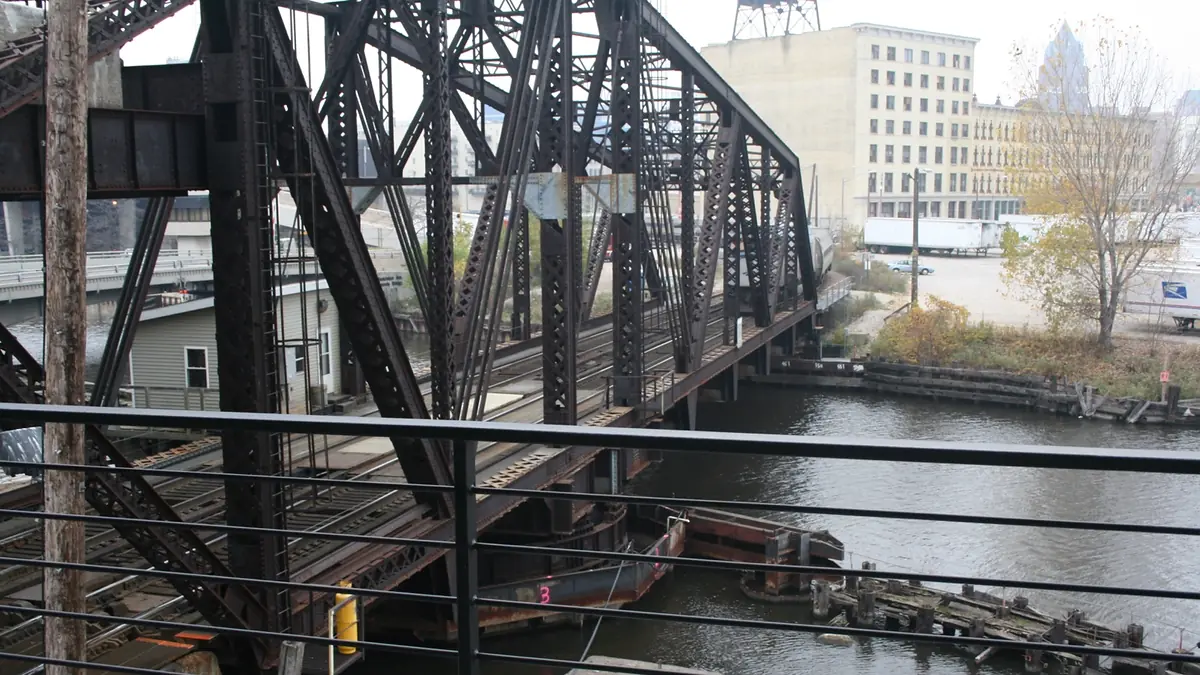
Rick Harnish, Executive Director of the High Speed Rail Alliance, discussed the rollout of the Brightline rail system in Florida. Racine Mayor Cory Mason, who chairs the MARK Rail Commission, also spoke at the event.
Milwaukee Mayor Cavalier Johnson attended and gave opening remarks before leaving the conference.
“Yes the Hiawatha is doing a great deal servicing between Milwaukee and Chicago, but it could be doing so much more,” said Johnson.
Several speakers said passenger rail funding should be included in the next Wisconsin state budget, which will be prepared under a new governor next year. Republican candidate Tom Tiffany has previously opposed most passenger rail expansion proposals and supported highway investment instead. None of the six Democratic candidates has made rail a major focus of their 2026 campaigns.