Half of Everett Link’s segments lack a preferred option as comments open
Sound Transit’s draft environmental impact statement for the Everett Link Extension is open for public comment until Nov. 2 without a board-preferred alternative in four of eight route segments.
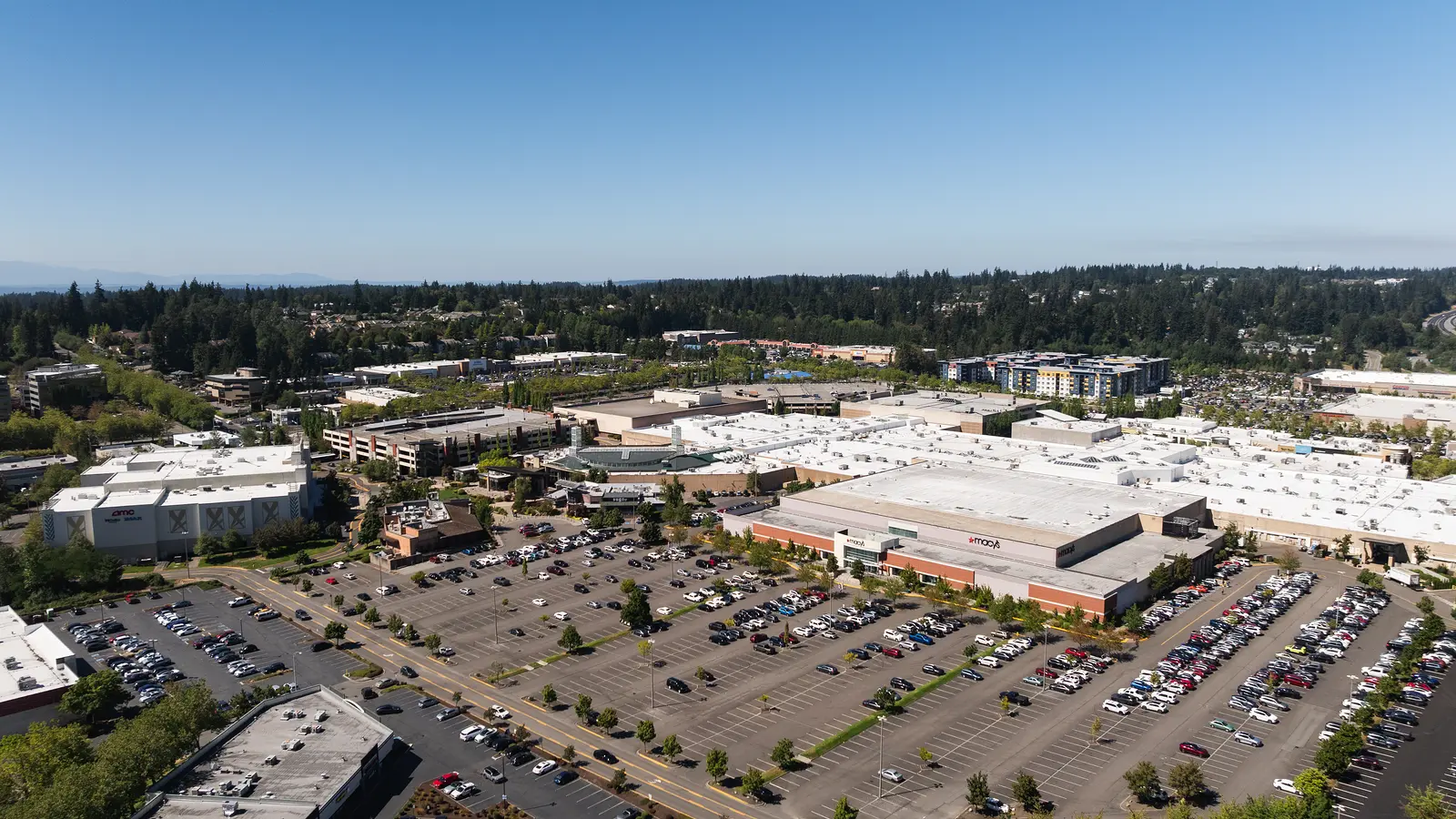
The Sound Transit Board has named preferred options for the West Alderwood, SW Everett Industrial Center, Broadway/I-5 and Everett Station segments. It has not yet done so for Ash Way, Mariner, SR 99/Airport Road and SR 526/Evergreen, and it has not chosen among the three sites studied for the Operations and Maintenance Facility (OMF) North, the executive summary of the draft EIS shows.
The Federal Transit Administration (FTA) and Sound Transit released the document on Sept. 18, opening a 45-day review. Comments can be sent online, by email, by voicemail at 425-243-6255 or by post. A virtual hearing is set for Oct. 6, with in-person sessions in Everett on Oct. 13 and Oct. 15 and in Lynnwood on Oct. 21, Sound Transit said.
Stations, service and ridership forecasts
The extension would run about 16 miles north from Lynnwood City Center to the Everett Station area, mostly on elevated guideway and with no road or pedestrian crossings at track level. Six stations are funded: West Alderwood, Ash Way, Mariner, SW Everett Industrial Center, SR 526/Evergreen and Everett Station. A seventh, at SR 99/Airport Road, is provisional: money covers its environmental review, but not its final design or construction.
Across eight geographic segments, the draft weighs 17 route alignments and 18 possible station locations. Sound Transit’s project page lists trains every 4 to 6 minutes at peak times and every 10 to 15 minutes otherwise, with trips of 33 minutes from Everett to Lynnwood City Center and 60 minutes to downtown Seattle.
Everett Station is forecast to draw about 10,700 daily boardings, the most on the line. Ash Way and Mariner are projected at about 4,600 each, SR 526/Evergreen at 2,900, West Alderwood at 1,900 and SW Everett Industrial Center at 1,500, or roughly 26,200 across the six funded stations. The provisional station would add about 900.
Segments without a preferred alternative
Where the board has stated a preference, the draft points to Alternative ALD-2D at West Alderwood, SWI-1A near the Boeing Everett Production Facility and BI-1 on the Broadway/I-5 stretch. At Everett Station the board backed two options, EVT-2C and EVT-3D. Both would put the terminus closer to downtown Everett but displace more businesses along McDougall Avenue and Broadway than the option nearer the existing transit hub.
A preferred alternative signals which option the agency leans toward and does not commit it to building that option. In the open segments, the trade-offs are sharper. At Mariner, Alternative MAR-1B would mean 300 residential and 68 business displacements, including a Safeway and the Mariner Library. MAR-2D would mean 287 residential and 45 to 46 business displacements, among them several buildings of the HUD-assisted Windstone Apartments.
At SR 526/Evergreen, a station at location EGN-B would require demolishing the Casino Square shopping center. Alternative EGN-1A would cause fewer displacements, 58 residential and 5 business, but would require building a pedestrian crossing above SR 526, which would remove some Casino Square shops and parking.
| Segment | Board-preferred alternative | Forecast daily boardings | Cost range, $ million (2025 dollars) |
|---|---|---|---|
| West Alderwood | ALD-2D | About 1,900 | 920–1,110 |
| Ash Way | None yet | About 4,600 | 980–1,230 |
| Mariner | None yet | About 4,600 | 910–1,370* |
| SR 99/Airport Road (provisional station) | None yet | About 900 | 680–780 |
| SW Everett Industrial Center | SWI-1A | About 1,500 | 800–990 |
| SR 526/Evergreen | None yet | About 2,900 | 900–1,150 |
| Broadway/I-5 | BI-1 | No station | 740–930 |
| Everett Station | EVT-2C or EVT-3D | About 10,700 | 800–960* |
Four of the eight segments have no board-preferred alternative yet, and Everett Station accounts for about two-fifths of forecast boardings at the six funded stations. Cost ranges run from the cheapest to the most expensive option studied in each segment, design options included. They are opinions of probable cost for comparing alternatives, not the project budget. *Excludes parking. Source: Everett Link Extension draft EIS executive summary, Sound Transit and FTA, September 2026.
Three candidate sites for OMF North
OMF North would maintain, store and deploy more than 150 light rail vehicles, and its completed site would cover about 50 to 70 acres within project limits of 80 to 100 acres, the agency’s OMF North overview shows. The draft schedules the facility to open in 2034, before passenger service on the extension begins.
The three candidates differ sharply. Site F would bring 189 residential and 68 business displacements and potential adverse effects on 11 historic properties. Site E would have the largest wetland impact, 5.2 acres, and Site B would fill a stream that could not be replaced on site. Opinions of probable cost run from $1.72 billion to $1.94 billion for Site E to $2.31 billion to $2.61 billion for Site B with its design option, in 2025 dollars and for comparison only.
| Site alternative | Displacements (residential / business) | Wetlands (acres) / streams (linear feet) | Cost range, $ billion (2025 dollars) |
|---|---|---|---|
| Site F | 189 / 68 | 0.3 / 100 | 2.03–2.28 |
| Site F with design option | 186 / 62 | 1.2 / none | 2.11–2.38 |
| Site E | 49 / 13 | 5.2 / 850 | 1.72–1.94 |
| Site B | 0 / 16 | 1.1 / 1,950 | 2.31–2.60 |
| Site B with design option | 90 / 13 | 1.3 / 2,650 | 2.31–2.61 |
No site has been named as preferred. Site E has the lowest cost range and the largest wetland impact, while Site F brings the most displacements. Costs are opinions of probable cost for comparing sites, not the project budget. Source: Everett Link Extension draft EIS executive summary, Table ES-9, Sound Transit and FTA, September 2026.
Funding, deferred parking and the 2037–2041 timeline
The project kept its construction funding when the board adopted Resolution R2026-11 on May 28, rebalancing the Sound Transit 3 program against a projected $34.5 billion shortfall through 2046. The plan lists Everett Link phase 1 at $6.1 billion, phase 2 at $3.4 billion and OMF North at $2.1 billion in year-of-expenditure dollars. Everett Link parking moved to the list of projects deferred until resources are identified.
The draft still analyzes parking for 550 vehicles at Mariner and 1,000 at Everett Station, assuming it opens in 2046. Construction is expected to start in 2030. Service from Lynnwood City Center to SW Everett Industrial Center is planned for 2037. SR 526/Evergreen and Everett Station, the last two stops at the northern end, would follow in 2041.
That two-step schedule is not new. In a 2021 project fact sheet, Sound Transit said that unless it closed an affordability gap of about $600 million, its financial assumptions allowed trains to reach SW Everett by 2037 but Everett Station only in 2041. The extension would continue north from Lynnwood City Center, the end of an 8.5-mile segment with four stations that began service on Aug. 30, 2024.
Steps after the comment period
Once comments close, the board will weigh them with the draft’s findings and input from Tribes and agencies to identify, confirm or change preferred alternatives in all eight segments and for OMF North. A Final EIS answering substantive comments is expected in late 2027 or early 2028, and the FTA’s Record of Decision, a condition for federal funding, is anticipated in early 2028. After the Final EIS, the board is expected to pick the project to build.
Sound Transit board member Cassie Franklin said:
“The Draft EIS gives us a much clearer picture of the benefits, impacts and tradeoffs of the different alternatives.”