Great British Railways faces a test of rail memory
03.06.2026
Great British Railways is being told that Britain’s rail future may depend on how clearly it understands the lessons of British Rail.
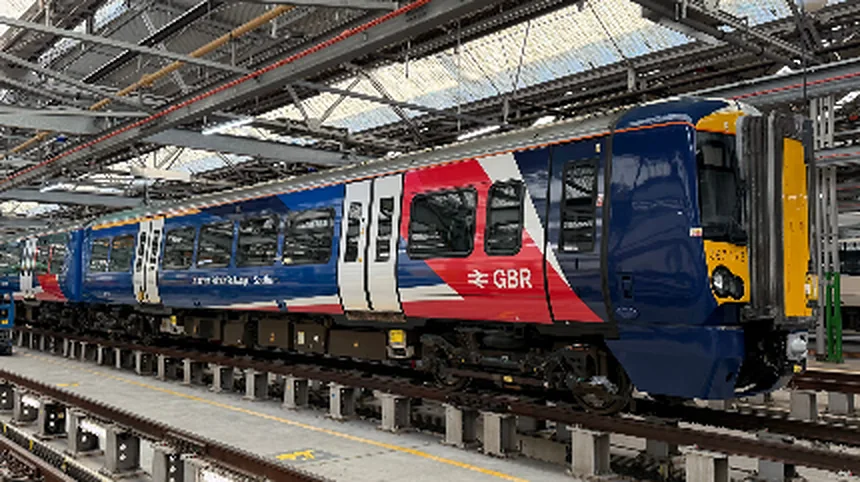
Campaign for Better Transport has published Track Record: What Great British Railways can learn from British Rail, a report built around the experience of former British Rail figures and current railway professionals. The point is not to treat the past as nostalgia. The report presents it instead as a practical reference point for rail reform.
The work is based on two roundtable discussions organised by Campaign for Better Transport. One involved senior figures who worked within British Rail during important periods of change. The other brought in current and emerging rail sector leaders, who examined which parts of that experience still matter for today’s railway.
Ben Plowden, Chief Executive of Campaign for Better Transport, said:
“Our roundtable participants had decades of experience in British Rail from the frontline to the boardroom and an extraordinary wealth of first-hand knowledge to share. That knowledge can and should be harnessed to maximise the success of Great British Railways. Much has changed since British Rail’s days, but many of the same key challenges remain – from operating with constrained funding, to recruiting staff and fostering their talent, to embracing and scaling up new technologies, all while managing the needs of a plethora of stakeholders and making sure the trains run on time.”
What Great British Railways can learn from British Rail?
British Rail operated most railway services in Great Britain between 1948 and 1997. Since then, the industry has changed in structure, technology and passenger expectations. Even so, the report argues that several core pressures are still recognisable.
Those pressures include constrained funding, recruitment, staff development, new technologies, stakeholder demands and the need to keep services reliable. For Campaign for Better Transport, British Rail’s experience matters because GBR is being shaped during another major period of rail reform.
The report sets out five observations for those developing and leading the new organisation. They cover culture, decision-making, competing priorities, workforce skills and innovation.
The first point is adaptability. Campaign for Better Transport says GBR should not be designed around a fixed model, because the railway will need to respond over time to changing political, financial and customer demands.
The report also puts emphasis on organisational culture and long-term vision from the start. Participants said the government should give the rail industry clear objectives, so decisions across the organisation remain aligned with those goals.
National oversight and local decision-making
A second theme is the balance between national oversight and local decision-making. The report says decisions affecting passengers and freight customers should be made as close as possible to the point where services are delivered.
At the same time, a nationally integrated railway still needs central coordination. Network-wide priorities and consistency require national oversight, so the challenge for Great British Railways will be to combine local flexibility with effective central direction.
The report also points to the continuing issue of competing priorities. Rail leaders are likely to face tensions between different objectives and stakeholder interests, and not every decision will satisfy every party.
For that reason, participants said GBR should use transparent processes when explaining how decisions are made. Clearer reasoning would help show how different priorities have been weighed, even when stakeholders disagree with the final outcome.
Rail sector workforce and future talent
The fourth observation concerns skills development in the rail sector. The report says many former British Rail employees who joined the discussions began in frontline operational roles before moving through structured training and management programmes.
Participants warned that industry fragmentation in recent decades has reduced opportunities for staff to gain experience across different parts of the railway system. The report suggests that GBR should strengthen recruitment and invest in career development.
Workforce diversity is also identified as an area requiring attention. According to the report, women currently account for around 19 percent of the rail sector workforce.
Rail reform and innovation at scale
The fifth observation focuses on innovation. The report says the rail industry already has access to many technologies and operational practices that could influence its future development.
Participants argued that the issue is not only how to create new ideas, but how to apply proven innovations across the network. Successful pilot projects often fail to move beyond limited use, which reduces their wider impact.
Britain’s railways are undergoing significant structural reform, with Great British Railways expected to bring track and train operations together under a single publicly owned organisation. The UK Government describes the programme on Great British Railways and public ownership, while Railway Supply has also covered the wider reform context in its article on Great British Railways and UK rail modernisation. Campaign for Better Transport says the knowledge of former British Rail leaders could offer practical support as the new body takes shape.



