EU military mobility should include private rail sector
24.06.2026
EU military mobility measures should include private rail operators, freight companies, and rolling stock leasing firms on equal terms with state-owned companies, three European rail organizations say.
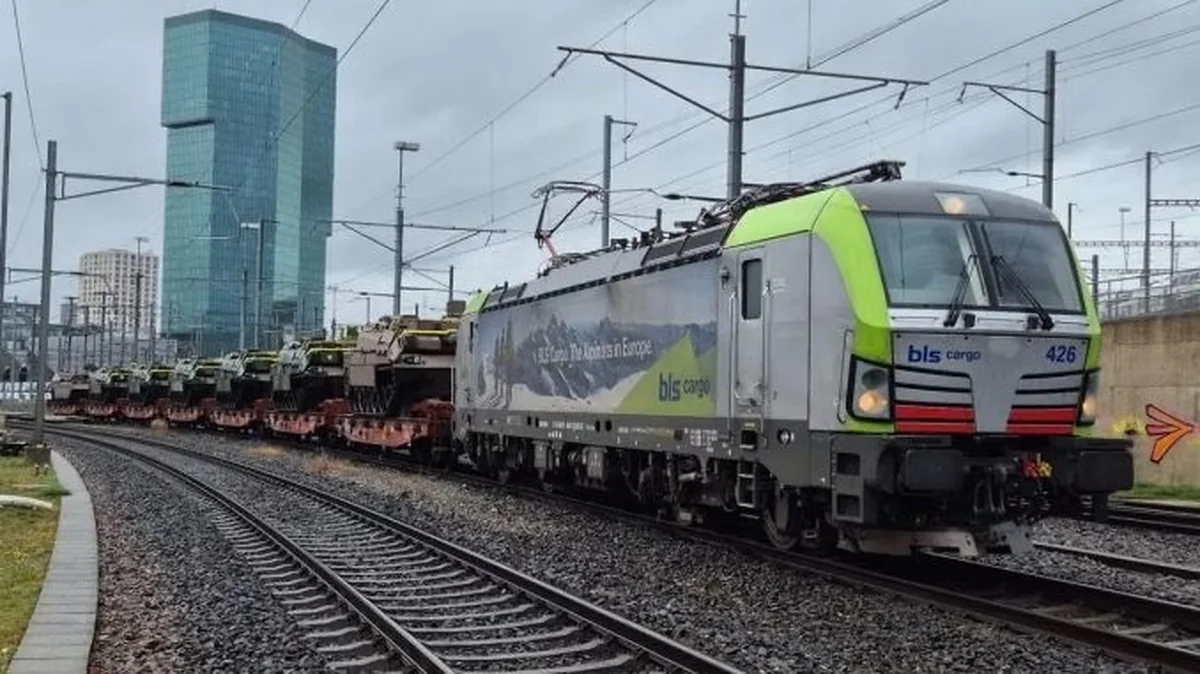
AERRL, ALLRAIL, and ERFA have issued a joint position calling on the EU to keep military mobility policy aligned with internal market rules. The organizations say future measures should be transparent, non-discriminatory, and open to the wider rail sector rather than limited to incumbent operators.
AERRL represents rolling stock leasing companies in Europe. ALLRAIL speaks for new passenger rail operators, while ERFA represents private and independent rail freight operators.
The three organizations welcomed the military mobility package presented by the European Commission and the High Representative for Foreign Affairs and Security Policy. At the same time, they warned that the planned measures should reinforce the European rail system without creating competitive distortions.
EU military mobility and private rail access
In their joint position, AERRL, ALLRAIL, and ERFA state that military mobility initiatives must be based on transparency, fair access, and a level playing field.
They point to the possibility that strategic contracts or financial support could mainly benefit established state-owned operators if the rules are not designed openly.
The document refers to the agreement between PKP Cargo and Poland’s Ministry of National Defense on cooperation for the transport of military equipment. The agreement is linked to dual-use applications and to reducing pressure on road infrastructure.
The organizations regard such agreements as positive for rail, but they argue that military mobility tasks should not be assigned only to state-owned companies such as DB Cargo or PKP Cargo.
According to the joint position, independent rail operators can also provide capacity for military transport when required.
Tenders should cover the whole rail market
AERRL, ALLRAIL, and ERFA are calling for tenders related to military logistics services to be made available across the full rail market.
The organizations say the private rail sector is expanding and can add to existing capacity by supplying rolling stock and services for European defense requirements.
Rolling stock leasing companies are presented as an important part of that capacity. The document states that these companies invest around 800 million euros each year in new rolling stock, with annual investment expected to reach about 1 billion euros by 2027.
The organizations describe this private capital as important for fleet availability, cross-border rail operations, and the deployment of interoperable vehicles compatible with ERTMS, the European Rail Traffic Management System.
Where public money is used for military mobility programs, AERRL, ALLRAIL, and ERFA argue that eligibility rules, allocation processes, and governance should be clear and non-discriminatory.
Compensation and Solidarity Fund rules
The joint position also addresses the possible impact of emergency measures on regular commercial rail traffic.
In a crisis, the European EMERS system could allow military transport to receive rapid priority at EU level. This may disrupt traffic that has already been scheduled and could also limit the use of rolling stock or available transport capacity.
AERRL, ALLRAIL, and ERFA say operators and leasing companies affected by such measures should have access to fair and transparent compensation or loss-mitigation mechanisms.
They argue that compensation arrangements should be clearly defined, proportionate, and predictable. In their view, this would give railway undertakings and rolling stock owners greater legal and operational certainty.
The organizations also support the use of pre-arranged emergency timetables where this is possible. Such schedules should help distribute disruption more evenly and support efficient capacity allocation.
The document also examines the proposed Solidarity Fund, a European mechanism that could provide additional transport capacity during crisis situations.
AERRL, ALLRAIL, and ERFA say the fund could strengthen European resilience, but only if it operates under clear rules. They call for public procurement procedures, transparent contracts, legal certainty, and predictable governance.
Participation in the mechanism should be available to all interested rail operators in Europe, according to the organizations.
They also want private assets to be explicitly included. This would cover rolling stock owned by leasing companies or independent operators, provided that the assets are mobilized through clear contracts and compensation arrangements.
The joint position also proposes a link between the Solidarity Fund, the future digital military information system, and the European Vehicle Register.
ERTMS implementation and vehicle authorization
Interoperability is another major element of the joint position.
AERRL, ALLRAIL, and ERFA argue that effective military mobility depends on a European rail system that is interoperable and operationally harmonized.
For that reason, they say military mobility policy should speed up ERTMS implementation in Europe.
According to the organizations, ERTMS investment would support cross-border interoperability, improve the use of network capacity, and benefit both military preparedness and civilian rail operations.
The three organizations support making ERTMS deployment eligible for funding under the military mobility component of the Connecting Europe Facility.
They say this funding should apply to both track-side and on-board equipment, because the full benefits of ERTMS require coordinated implementation.
The document also says strategic dual-use infrastructure should explicitly cover signaling, traffic management, and communications systems used by the rail sector.
AERRL, ALLRAIL, and ERFA also identify a role for the European Union Agency for Railways.
They propose that ERA define criteria for vehicles suitable for military transport and introduce simplified authorization procedures for rolling stock that could be used in these operations.
The aim is to allow suitable vehicles to enter service quickly and efficiently when needed for military transport.
The document also welcomes work by the European Defense Agency and EU member states to standardize authorization procedures for cross-border movements.
At the same time, the organizations call for clear guidance on future provisions regarding customs procedures for military transport. They say the rules should be understood and applied consistently.
EU–NATO coordination and rail-market rules
The joint position supports further coordination between the European Union and NATO in the field of military mobility.
AERRL, ALLRAIL, and ERFA say this coordination should prevent duplicated requirements and avoid the creation of parallel or conflicting rules.
They call for regulatory consistency, clearer operational arrangements, and the avoidance of fragmented implementation by individual member states.
The organizations say particular attention should be given to interoperability, technical specifications, and operational rules.
They also support alignment and mutual recognition of equivalent requirements. In their view, this would reduce administrative burdens and make implementation easier for the European rail sector.
The main position of AERRL, ALLRAIL, and ERFA is that Europe’s resilience will be strengthened if military mobility policy remains open, inclusive, competitive, and consistent with the principles of the European rail market.
Context
The European Commission describes military mobility as the ability to move troops, military equipment and supplies quickly, including through civilian companies contracted by the military. The policy was launched in November 2017, and the first dedicated military mobility budget under the Connecting Europe Facility 2021–2027 amounted to about EUR 1.7 billion, supporting 95 dual-use transport infrastructure projects in 21 Member States. This context explains why the debate over private rail operators, leasing companies and ERTMS is linked not only to defence logistics, but also to the use of Europe’s civilian rail infrastructure. (defence-industry-space.ec.europa.eu)
The organizations say they are ready to cooperate with European institutions and other relevant stakeholders to ensure that military mobility supports both Europe’s defense readiness and the long-term resilience, interoperability, and competitiveness of the rail sector.