DOT-111 tank car removal urged after CPKC derailment
12.06.2026
DOT-111 tank car removal should move faster, the National Transportation Safety Board said after completing its investigation into the July 5, 2024, CPKC derailment and fire in Bordulac, North Dakota.
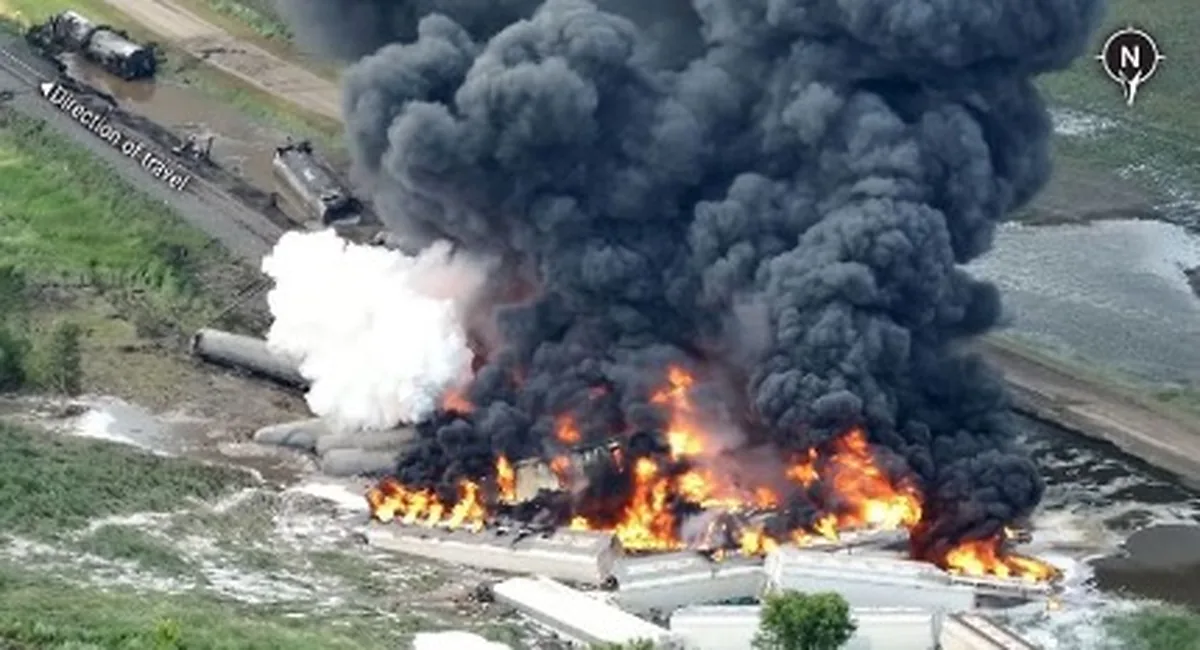
The final report also raised safety questions about DOT-117R tank cars, which are rebuilt versions of DOT-111 cars, and recommended changes to the placement of hazardous materials cars within freight train consists.
Bordulac derailment findings
According to the NTSB, the derailment was caused by the failure of the subgrade beneath the track structure. Investigators said erosion had weakened the subgrade after culvert segments separated, and that the problem went undetected because CPKC’s culvert inspection requirements were “insufficient.” About 2 inches of rain fell the day before the incident.
The train derailed at about 3:36 a.m. while traveling eastbound at around 45 mph. It had two locomotives and 151 cars, including 84 cars carrying hazardous materials. No injuries were reported, although one nearby residence was evacuated. Damage was estimated at $3.6 million.
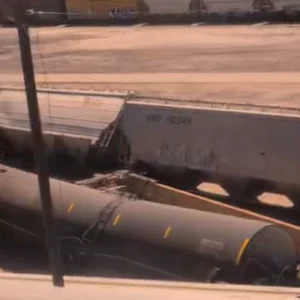
Twenty-nine cars left the track, including 17 tank cars loaded with hazardous materials. Methanol escaped from five of the derailed cars and led to a fire that released anhydrous ammonia, a poisonous gas, from other cars. Nine hazardous materials tank cars were breached during the incident.
DOT-111 tank car removal and DOT-117R concerns
The NTSB said the severity of the accident was increased by the inadequate thermal performance of the anhydrous ammonia cars. It also cited the use of DOT-111 and DOT-117R tank cars, along with manway gaskets that were susceptible to heat damage.
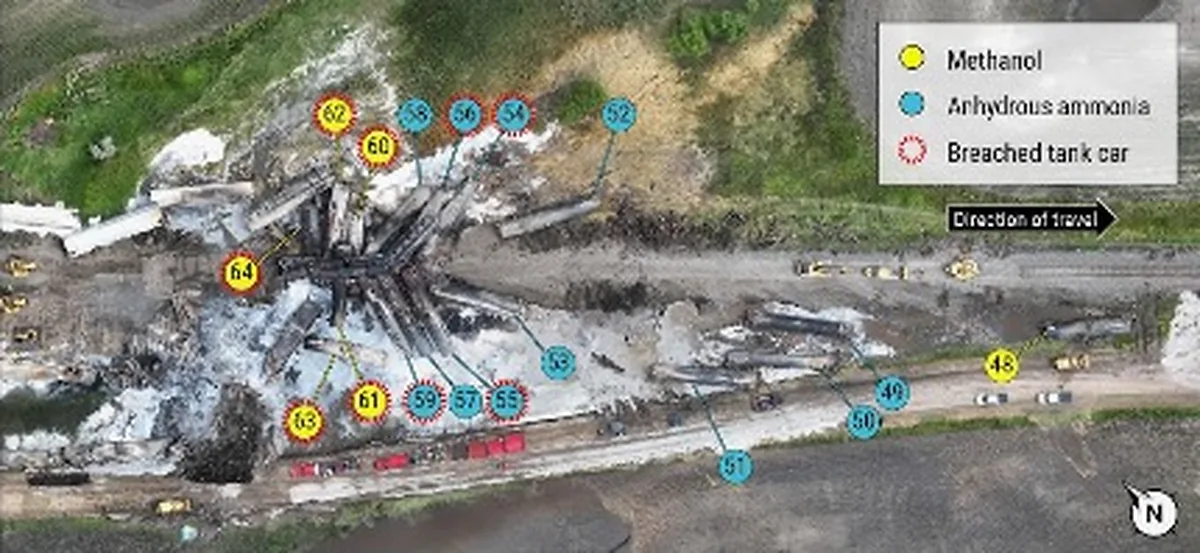
The Bordulac investigation found that DOT-117R tank cars do not provide the same safety benefits as newly built DOT-117J tank cars. In a press release, the agency said its investigations have “long shown that DOT-111 tank cars are dangerously inadequate, particularly because they are highly vulnerable to puncture during derailment.”
The NTSB first called for faster DOT-111 tank car removal from hazardous materials service after the February 2023 derailment in East Palestine, Ohio. The current deadline for ending their use in that service is 2029.
Following the East Palestine accident, the agency also recommended a timetable requiring tank cars used for hazardous materials to go beyond DOT-117 specifications. The Pipeline and Hazardous Materials Safety Administration agreed with the recommendation, but said congressional action would be needed. That action remains pending.
Hazardous material car placement recommendations
The Bordulac report produced 11 new recommendations. One asks the PHMSA and the Association of American Railroads to establish criteria for separating cars carrying poisonous inhalation hazard materials, including anhydrous ammonia, from cars transporting flammable materials. The aim is to reduce the risk that poisonous-material cars will be exposed to fire after flammable-material cars are breached.
The NTSB also recommended that CPKC revise its culvert inspection procedures. It asked the AAR and the American Short Line and Regional Railroad Association to urge their members to review their own culvert inspection guidance.
Additional recommendations call for the PHMSA to provide guidance on the optimal pressure relief device for tank cars carrying poisonous inhalation hazard materials, and to develop new thermal performance standards for those cars. The NTSB also recommended that the AAR update its tank car specifications to address thermal performance and pressure relief issues.