Open access rail competition tests UK rail reform
26.06.2026
Open access rail competition is being put forward as one answer to Britain’s return to state operation of passenger rail, as the policy faces questions over service quality, costs and the lack of a clear plan to increase ridership.
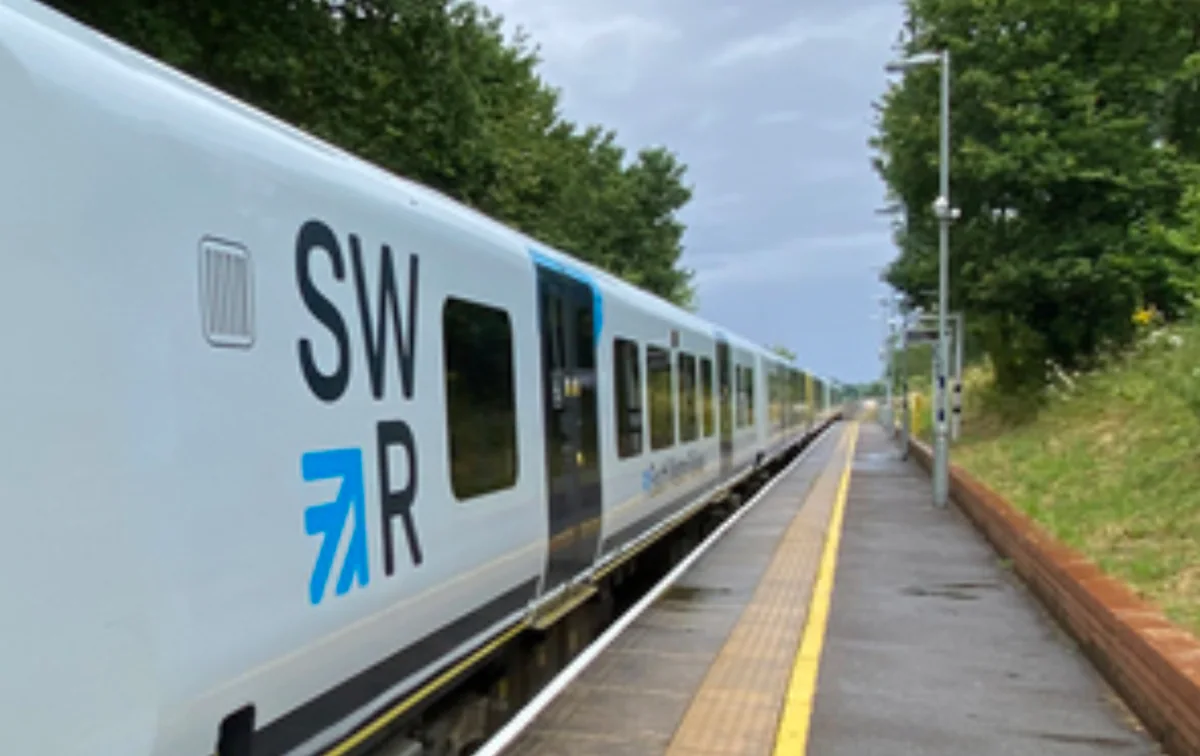
Transport Secretary Heidi Alexander acknowledged the problems at South Western Railway in a Commons response earlier this month.
“‘I accept that over the last year, performance at South Western Railway has not been up to scratch…we will leave no stone unturned in making sure that his constituents have a better travel experience in future,’”
Her answer followed a question from Will Forster, the Liberal Democrat MP for Woking, who challenged the government over what he called ‘horrendous delays and cancellations’ on the recently nationalised South Western services. Forster said that ‘nationalisation has not gone to plan.’
Great British Railways and state-run train performance
The new state-run structure remains at an early stage, but the first signs are weak. Great British Railways has still not been formally created in law, with the Railways Bill still moving through Parliament. Eighty years since Clemet Attlee created British Railways, later known as British Rail, Labour is again moving to remove most private sector involvement from passenger train operations. The result would be one of Britain’s largest public sector employers, behind only the NHS and the armed forces.
Labour’s current nationalisation programme does not include a passenger growth target or safeguards to control costs. That raises the risk of GBR being exposed to Whitehall micromanagement and political direction. The old British Rail Board frequently had to seek ministerial support for additional subsidy to operate loss-making services, and the question is whether an “independent” GBR ‘Fat Controller’ would really be free from civil service intervention.
The privatisation introduced under John Major in the early 1990s had a difficult start, and separating track from train was a serious mistake. Even so, removing civil servants from the direct running of heavily subsidised train services also brought major gains. It helped increase capital investment, encouraged innovation, improved rolling stock and safety, and shifted the focus toward what passengers wanted rather than what British Rail chose to provide.
Before COVID, the privatised railway placed a much stronger emphasis on passenger growth than the nationalised system had done. British Rail had overseen a long fall in passenger numbers, from about 1 billion journeys in 1950 to 750 million in 1992. After privatisation, that decline was reversed, and ridership rose to 1.7 billion in 2019.
Service cuts and the risk for passenger growth
If passenger growth is not treated as the main measure of success for GBR, the outlook becomes troubling. A stated aim of improving reliability could become a way to justify cutting services. That would amount to masking failure by state-run Network Rail and GBR rather than solving it.
Avanti on the West Coast Main Line, Britain’s busiest route, points to that risk. The operator is due to be nationalised and has already been instructed by Whitehall to remove one in seven services in order to save money. Govia Thameslink was nationalised in May and was told by the Department for Transport to take hundreds of services out of the timetable.
The wider concern is that ministers, in trying to reduce rail subsidy, are choosing cuts instead of following a strategy for growth. Yet a different model is already available. It has been tested for 25 years on the East Coast Main Line, one of Britain’s most competitive and popular intercity routes.
Open access rail competition on the East Coast Main Line
New Transport Focus data gives the government a ready-made example of how to increase ridership, offer better value fares, expand services and attract private funding for new trains.
The figures show that the strongest overall satisfaction scores among long-distance train operators are found on the East Coast Main Line. There, state-run LNER competes with three unsubsidised private open access intercity operators: Hull Trains, LUMO and Grand Central. Hull Trains recorded a 94% satisfaction rating, while LNER achieved 93%, suggesting that competition is helping keep the state operator under pressure to perform.
Those scores are well ahead of other operators. On value for money fares, satisfaction ranged from just 49% for nationalised Great Northern to 75% for the private open access operator LUMO. Within the long-distance sector, LUMO scored 75% and Hull Trains 73%, both far above Avanti’s 50%.
The figures point to a clear option for the government and GBR. If the aim is to attract more passengers, reduce dependence on taxpayer subsidy, improve services and deliver better value fares, then state-run operations should face more open access rail competition from subsidy-free operators, especially on long-distance intercity routes.
What changes for passengers?
When South Western Railway moved into public ownership on 25 May 2025, the official transfer statement said planned journeys, tickets and timetables were not affected, and existing tickets remained valid. The wider public ownership programme places SWR at the start of a staged handover of DfT-contracted operators before Great British Railways is created, with c2c, Greater Anglia, West Midlands Trains and Govia Thameslink Railway already following, and Chiltern Railways and Great Western Railway scheduled next in 2026. That places the debate over service quality and competition within a broader passenger rail transition, rather than only a South Western Railway issue.
The evidence from the East Coast Main Line is already visible. The question is whether ministers will accept it and build a GBR model that serves both the national interest and passengers.



