Bridge strike detection trial starts at Ipswich bridges
15.07.2026
Queensland Rail’s bridge strike detection trial is testing a mobile vehicle-height system in Ipswich, with the aim of reducing collisions between over-height vehicles and railway bridges.
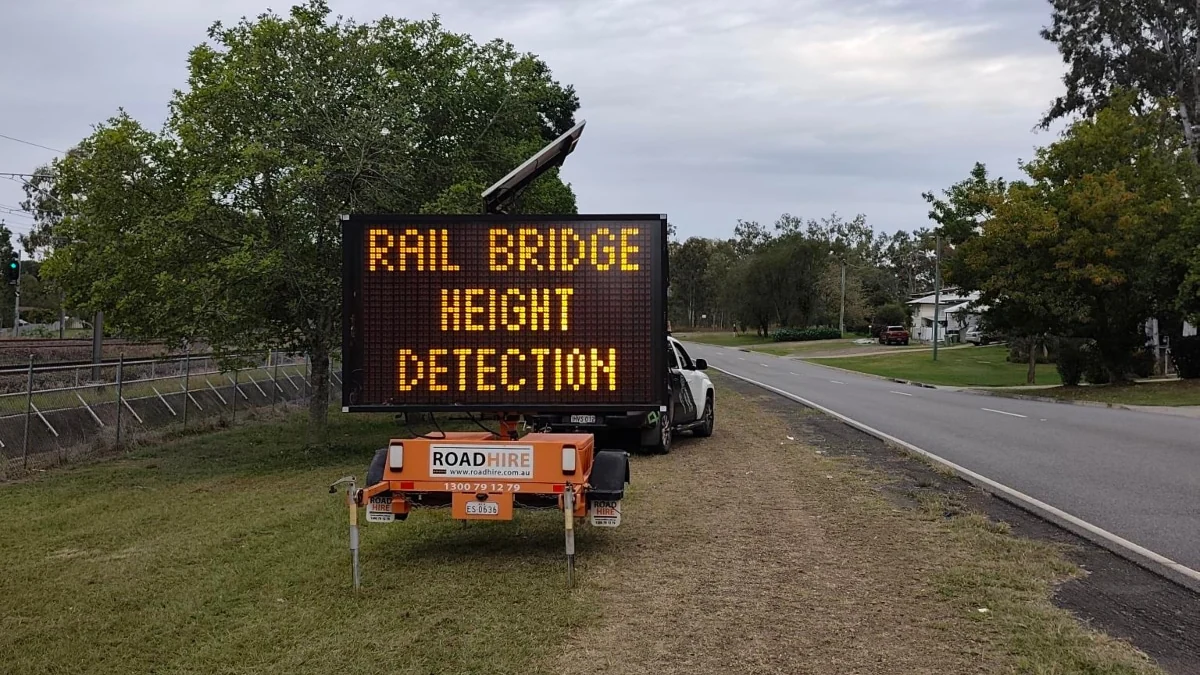
Mobile detection system at two Ipswich bridges
The trailer-mounted height detection system is being deployed on roads approaching the rail bridges at Dixon Street in Wulkuraka and Layard Street in Goodna. Both structures are among the 20 most frequently struck bridges on the Queensland Rail network.
Sensors identify vehicles exceeding safe height limits and provide drivers with real-time warnings through a Variable Message Sign (VMS), helping to prevent bridge strikes.
After remaining at each location for about two weeks to collect data, the trailer will move to other bridge-strike hotspots across the South East Queensland (SEQ) network.
Don’t miss…BART LED lighting upgrades planned for nine stations
Bridge strike risks and penalties
There were 427 bridge and beam strikes in SEQ during 2025. By the end of May 2026, 157 incidents had already occurred.
Queensland Rail Head of SEQ Neil Backer said bridge strikes are a serious safety concern.
“Bridge strikes not only delay rail customers but are potentially very dangerous to the driver and other road users, as well as impacting road traffic,” he said.
“While we continue to implement new safety strategies to prevent bridge strikes, we remind drivers that ultimately they play the biggest role: know the height and load of your vehicle and plan your journey so you don’t get your truck or load stuck.”
Motorists who damage rail infrastructure face a fine of $1,381 and four demerit points. If the matter proceeds to court, the maximum penalty for causing such damage is $13,816.
Queensland Rail says bridge strikes caused more than 200 hours of rail delays in 2023. When a collision is detected, trains on the affected line must stop while the bridge and track are inspected for safety. Since July 2015, the operator has also invested $15.5 million in protection beams at 14 high-priority bridges across South East Queensland, including Dixon Street in Wulkuraka. The Ipswich trial forms part of Queensland Rail’s wider bridge strike reduction program.
News on railway transport, industry, and railway technologies from Railway Supply that you might have missed:



