Berlin S-Bahn Contract Secures 350 New Trains for 2032
The Berlin S-Bahn Contract will deliver 350 four-car trains, long-term maintenance and continued operations across the Stadtbahn and North–South subnetworks under a legally binding award announced in July 2026.
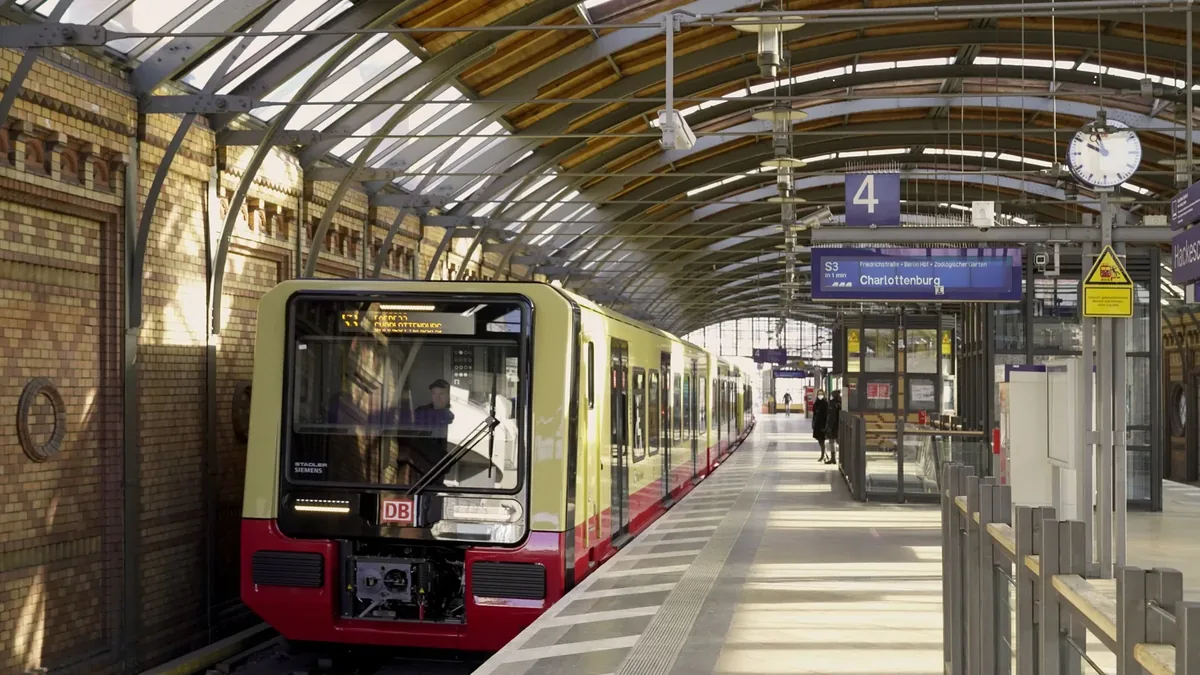
The contract was formally awarded on 8 July after the completion of the procurement review process. S-Bahn Berlin, Siemens Mobility and Stadler Deutschland will work as a consortium, combining train operations, vehicle production and maintenance. The order covers 350 fully walk-through four-car units, equivalent to 1,400 cars, while S-Bahn Berlin will continue operating the two subnetworks for 15 years.
Berlin S-Bahn Contract Sets a 2032–2038 Rollout
Passenger service with the new fleet is scheduled to begin at the start of 2032. The trains will then enter service progressively, with the planned fleet introduction completed in 2038. They will replace the existing Class 480 and Class 481 vehicles used on the Stadtbahn and North–South corridors.
The programme extends beyond rolling-stock delivery. The maintenance agreement will run for 30 years, covering the expected service life of the trains. Existing S-Bahn Berlin facilities, including the Schöneweide workshop, will be upgraded for the fleet. A new maintenance facility is also planned at Fredersdorf-Vogelsdorf to provide capacity for the expanded operation.
The Länder of Berlin and Brandenburg have also established the Landesanstalt Schienenfahrzeuge Berlin, or LSFB, as a public vehicle body supporting long-term financing and quality monitoring for the trains and workshop projects. VBB, which managed the procurement on behalf of the two states, will remain responsible for contract management.
Don’t miss…Amtrak Bribery Settlement Tops $7.2 Million in Philadelphia
How the Berlin S-Bahn Contract Updates the Fleet?
The new vehicles will develop the concept used by the latest Berlin Ringbahn trains. Siemens and Stadler say that fleet has travelled more than 120 million kilometres since entering service while maintaining high technical reliability. The next generation will retain the familiar exterior design but introduce an updated driver’s cab, current fire-protection requirements and stronger cybersecurity provisions.
Passenger areas will receive a brighter interior layout and a redesigned multipurpose space. Planned accessibility features include a wheelchair position, an appropriate seat for shorter passengers and more room for people accompanying travellers with reduced mobility. The trains will also have automatic sliding steps, video systems, modern passenger information and full air conditioning.
Stadler is redesigning the climate-control system around chilled-water technology and a halogen-free refrigerant. USB-C charging will be available at every second seat. The specification also includes stricter noise requirements and further development of the energy-saving traction system, with the manufacturers targeting lower energy use over the fleet’s full operating life.
Digital Maintenance Supports Long-Term Availability
Siemens Mobility will use Railigent X as the central digital platform for the 30-year maintenance programme. It will combine condition information from trains, infrastructure and onboard IT, allowing maintenance teams to identify emerging faults and plan work before failures disrupt service.
Railigent Fleet Manager will monitor vehicle condition in real time, analyse operating data and support work-order creation. Materials, assets and workforce planning will also be managed digitally. Software maintenance and vulnerability monitoring are included to protect connected vehicle systems throughout the contract.
“The 350 trains will be built in Berlin and for Berlin,” Stadler chairman Peter Spuhler said.
Alongside the fleet programme, Berlin and Brandenburg are preparing a new control and dispatch centre with DB InfraGO for the early 2030s. Infrastructure and operating staff are expected to work from a shared location, improving coordination during disruption and supporting more consistent passenger communication.
The award gives Berlin a defined timetable for replacing ageing trains on two of its main S-Bahn axes while preserving continuity of operations under S-Bahn Berlin. The operator currently carries about 1.4 million passengers each day, so the long procurement and deployment schedule affects a core part of the capital region’s transport system. The contract also anchors production and maintenance in the region and creates capacity for future passenger growth and network extensions.
News on railway transport, industry, and railway technologies from Railway Supply that you might have missed: