Amtrak first-quarter results set records as challenges mount
29.01.2026
Amtrak first-quarter results in fiscal 2026 delivered record performance in several areas, but directors were told that equipment constraints and major capital projects could make the second quarter a tougher stretch.
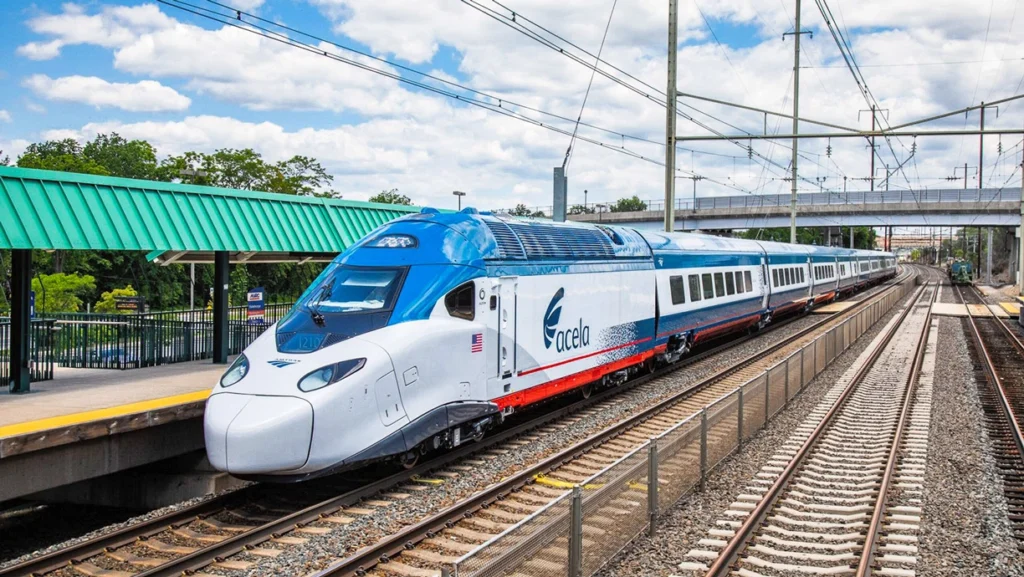
During the board meeting on Wednesday, Jan. 28 — referenced in an Amtrak Board of Directors meeting notice — the company also discussed how NextGen Acela delivery delays are still weighing on operations.
Chief Financial Officer Costin Corneanu said first-quarter ridership rose by 422,000 compared with the same period a year earlier — up 4.7% and 49,000 riders ahead of plan. The Northeast Corridor led the gains, increasing by 294,000 passengers (7.6%). State-supported service was up by 95,000 (2.4%), and long-distance services added 33,000 riders (2.8%).
Operating results, however, showed a loss of $74.6 million, compared with a $68 million loss in the first quarter of fiscal 2025. Corneanu said the Northeast Corridor remains “operationally profitable,” improving by $13.7 million year over year.
Don’t miss…Port of Savannah rail container moves hit new high in 2025
State-supported routes moved in the opposite direction. Losses increased by $14.2 million, or 26.4%, which Corneanu tied to decreased capacity following the loss of the Horizon car fleet as well as higher expenses. Even with fewer cars available, ticket revenue for state-supported service increased by 0.8%.
Amtrak first-quarter results highlight long-distance gains
On the long-distance side, results improved by $14.3 million from a year earlier, a 9.9% gain. Corneanu said a slight increase in capacity and higher per-ticket yield helped produce a 17.4% rise in revenue. He told board member Ellen Clegg that the strongest performance was on sleepers, while demand on the coach side also remained solid, and he said capacity growth has been managed in a way that keeps unit cost increases under control.
Chief Commercial Officer Eliot Hamlisch put the long-distance story in straightforward terms: more riders are traveling farther and paying more, with all three measures increasing. Still, he warned it will be hard to sustain the first-quarter pace.
Looking ahead, Hamlisch said equipment delays and major infrastructure outages will continue to put downward pressure on the business through the rest of the year, and he stressed that Amtrak remains focused on mitigating those impacts as much as possible.
NextGen Acela delivery delays and legacy fleet reliability
Hamlisch said the Northeast Corridor continues to outperform the rest of the network despite tight fleet availability. NextGen Acela delivery delays are limiting capacity and the ability to meet demand, while reliability issues with the legacy Acela fleet remain part of the picture — a theme also reflected in coverage such as Railway Supply’s report on Amtrak Acela delays. The original Acela trainsets entered service in 2000, are past their projected retirement date, and are expected to be retired by the end of the year.
In customer satisfaction data, Hamlisch said the NextGen equipment has improved the onboard experience, pointing to better WiFi connectivity, grab-and-go café food service, and newer, cleaner interiors. At the same time, he said riders are still getting used to the new train layout, including wayfinding, navigation, and amenities.
Chief Operating Officer Gery Williams said Acela on-time performance was down 7% in December compared with the previous year. He noted that eight NextGen trainsets are now in service — half of the total active high-speed fleet — and said Amtrak is working through “infancy issues” with the new equipment.
Among the most significant problems, Williams said, has been door reliability. He told the board that Alstom identified the need to recalibrate some door settings as the carbodies settle. Progress is being made, but he said it has been slower than Amtrak would like because the work requires taking trains out of service long enough to complete a lengthy calibration. As more trainsets are delivered, he added, the added capacity should give the company more flexibility to finish this work and move toward a steadier operating state.
Penn Access project and Portal North Bridge cutover outages
Even beyond equipment constraints, the Northeast Corridor is headed into a period of major disruption tied to capital work, led by the Penn Access project and the first phase of the Portal North Bridge cutover.
Penn Access — a joint Metropolitan Transportation Authority-Amtrak effort — is adding capacity for Metro-North Railroad service into Penn Station via Amtrak’s Hell Gate Line, as described in the MTA Penn Station Access project overview. An outage that began Jan. 5 and is scheduled to run through March 30 includes a bridge replacement and will result in about a 20% reduction in Amtrak service.
Laura Mason, executive vice president of capital delivery, described the work as “a double block,” saying it requires an interlocking where two blocks of track are taken out, creating a long single-track section. She said the impact is substantial and that additional outages are expected roughly from mid-May to mid-November. Mason said Amtrak is working with the contractor to minimize outages and make track time as productive as possible, balancing project delivery with the need to keep Northeast Corridor service running.
Mason also outlined the Portal North Bridge cutover, which will shift operations onto one track of the two-track bridge over the Hackensack River. The change will require a 50% reduction in trains between Newark and Secaucus, N.J., from Feb. 13 to March 16, she said, noting that earlier reports listed the dates as Feb. 15 to March 14. When the work is complete, Mason said the south or westbound track will operate on the new Portal North Bridge — a higher, fixed bridge that will not need to open for maritime traffic — but she emphasized the effect of reducing one of the corridor’s busiest segments to a single track.
News on railway transport, industry, and railway technologies from Railway Supply that you might have missed:



