Amtrak Airo Trains to Start on Cascades This Fall
28.08.2026
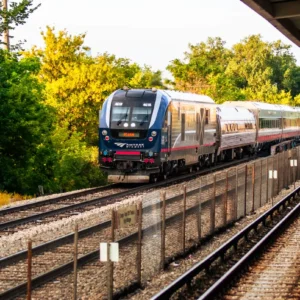
Amtrak Airo trains are set to enter service this fall, with the rollout starting with eight trainsets on the Cascades route in the Pacific Northwest. The broader program covers 83 new trains and represents an $8 billion investment in rolling stock.
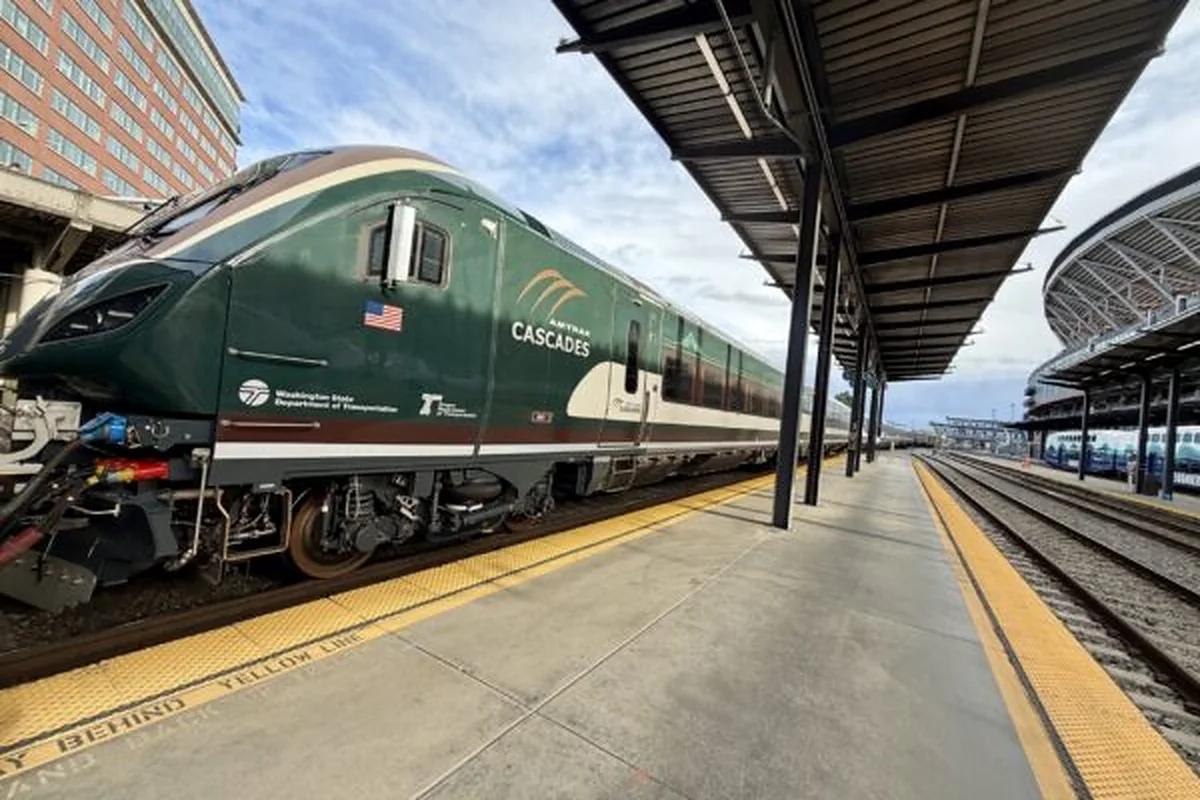
The Cascades Airo trains will carry 317 passengers, substantially more than the equipment now used on the route, and can reach speeds of up to 125 mph. Amtrak expects the new trains to improve reliability and passenger comfort while cutting journey times on several routes, although the company has not said how much time will be saved.
For passengers traveling between Seattle, Portland, Oregon, and Vancouver, British Columbia, the new equipment forms part of a broader Amtrak fleet refresh at a time when some of the carrier’s trains still date to the 1970s. A Seattle–Portland trip currently takes about three hours and 30 minutes, including six intermediate stops, roughly the same amount of time as driving.
Don’t miss…Norfolk & Western Power Car 409 Faces Deadline
Amtrak Airo trains could support more frequent Cascades service
The new fleet could also support more frequent Cascades service. Charlie Hamilton, who leads the passenger advocacy group All Aboard Washington, said the trainsets could make hourly operations possible.
“Having trains once an hour would be very helpful, and the Airo trainsets would make it possible to do that,” Hamilton said.
The new trains combine diesel and electric propulsion, allowing them to operate on both electrified and conventional sections of the Amtrak network. Siemens is building the trains in the United States.
Their locomotives meet the Environmental Protection Agency’s Tier 4 standards, the agency’s strictest emissions requirements for locomotive engines. Amtrak says the new equipment will provide environmental benefits, while newer diesel technology can reduce particulate matter and nitrogen oxide emissions compared with older locomotives.
Alex Scott, a professor of supply chain management at the University of Tennessee-Knoxville, said rail’s efficiency is partly due to its ability to carry large numbers of people at once.
“If you can get a fully well-utilized rail car, be it humans or products, those are still more efficient than everybody going in different cars, even if they’re electric cars,” he said.
Scott also pointed to the emissions benefits of replacing older diesel equipment even where electrification is unavailable.
“The locomotives they make now, even if they’re not electric, are a heck of a lot cleaner than the old ones, and so upgrading equipment, be it electric or not, is a good answer,” Scott said.
Airo rollout will extend beyond the Pacific Northwest
After the Pacific Northwest introduction, Airo trains are expected to expand to more than a dozen routes across New England, Pennsylvania, and the Mid-Atlantic. Northeast Regional passengers are scheduled to begin using the new fleet in 2027.
The dual-mode capability will be particularly useful for passengers traveling between Virginia and the Northeast. At Washington Union Station, trains on this corridor can currently remain stopped for as long as an hour while Amtrak replaces the diesel locomotive used south of Washington with an electric locomotive for the northbound journey toward Boston. Airo trains will be able to switch between diesel and electric propulsion without changing locomotives.
Virginia Passenger Rail Authority spokesperson Karina Romero said the new rolling stock will complement the state’s rail infrastructure investment.
“It’s a win for the environment, it’s a win for the people that are sitting in traffic,” Virginia Passenger Rail Authority spokesperson Karina Romero said. “We definitely want more trains in Virginia.”
Virginia has invested $6 billion in its Transforming Rail in Virginia program. Romero said combining improved infrastructure with new equipment should provide passengers with more reliable service.
“You can put down fabulous infrastructure and great tracks,” she said, “but you’ve definitely got to have the equipment to roll on.”
What will change for passengers
The Airo rollout will cover the broader Cascades corridor, which WSDOT says serves 18 cities between Vancouver, British Columbia, Seattle, Portland and Eugene. It will also change the equipment passengers encounter: WSDOT describes the Horizon trainsets now used on the route as interim equipment that will remain until the new trains arrive. Amtrak expects all eight Cascades Airo trainsets to finish manufacturing in 2026, providing the new fleet for the corridor as the service moves away from that temporary equipment.
Amtrak fleet investment reaches $8 billion
The Airo rollout follows the introduction of Amtrak’s NextGen Acela trains on the Northeast Corridor last summer. It also comes after $66 billion was directed to passenger and freight rail through the Infrastructure Investment and Jobs Act.
Amtrak has set ridership records for two consecutive years, while federal passenger rail funding remains uncertain. The Trump administration has proposed severe cuts to passenger rail funding, although the federal government announced $3 billion for Amtrak in August, including $2 billion for train purchases.
News on railway transport, industry, and railway technologies from Railway Supply that you might have missed:
Don’t miss…Suburban Rail Loop savings: About Half Identified