
200,000 Railcars Near Retirement Across North America
03.09.2026
USA: Railcars near retirement could total about 200,000 across North America over the next few years, while high lease utilization and restrained production leave little spare capacity.
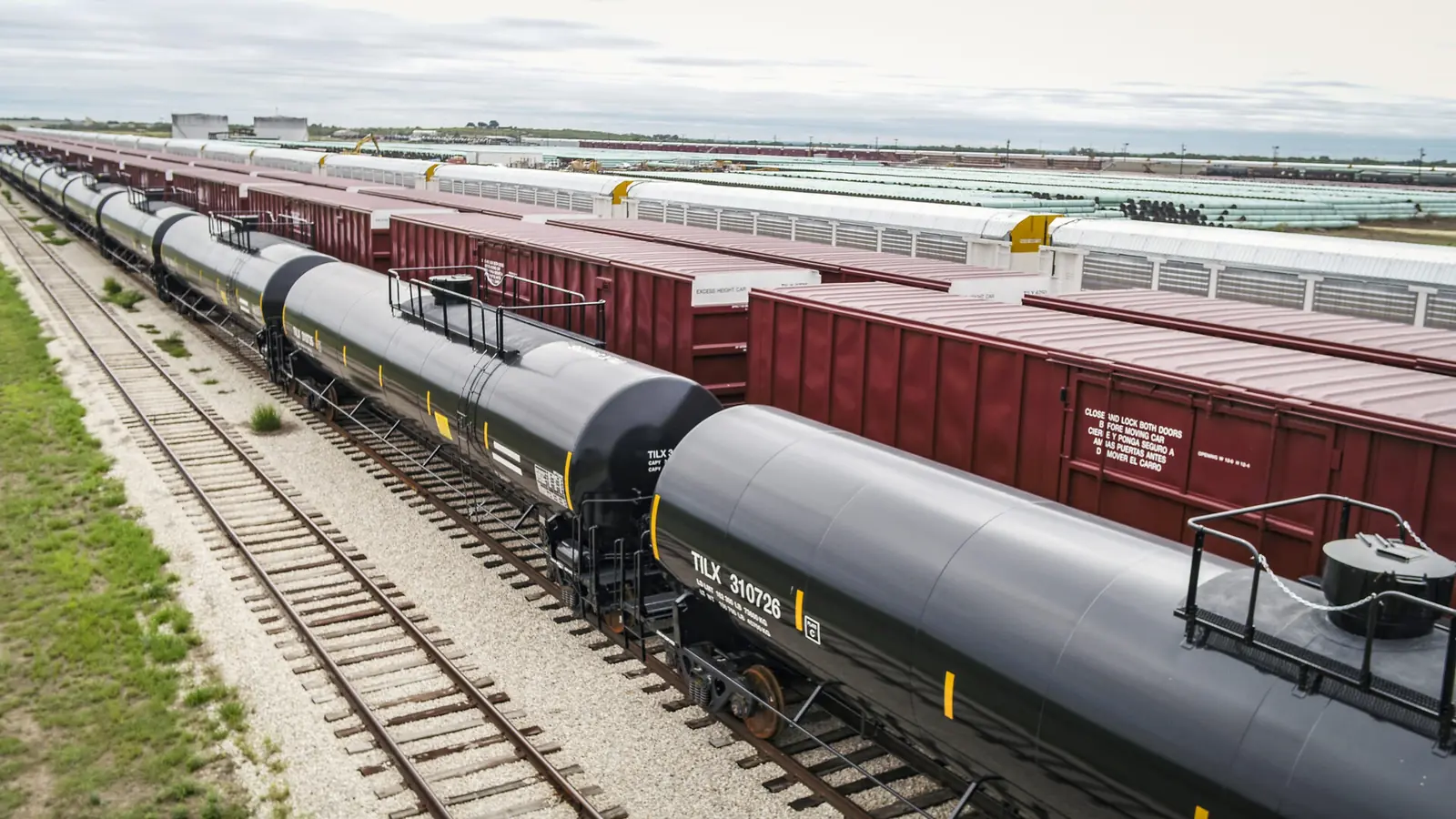
Railcars near retirement add pressure during a production trough
Charley Moore, chief commercial officer at TrinityRail, put the North American fleet at 1.6 million cars and said public lessors are operating at utilization rates in the “high 90s.” His estimate of roughly 200,000 cars approaching end-of-life points to a replacement cycle unfolding in a market with limited idle equipment.
Industry output is expected to reach about 25,000 railcars in 2026 before rising to 30,000–35,000 in 2027, Moore said. Tariff uncertainty and higher steel input costs have delayed customers’ capital decisions, keeping current construction below the projected level for next year.
TrinityRail has an owned and managed fleet of more than 140,000 railcars. It also manufactures equipment in the United States and Mexico, with U.S. facilities that include Longview and Fort Worth, Texas. Against that scale, high utilization among public lessors leaves little room to absorb demand without additional equipment or faster fleet turnover.
Don’t miss…Brotherton Bridge Repairs Disrupt Yorkshire Rail Travel
Traffic growth adds to railcar demand
AAR data for the week ending August 29, 2026 showed total North American rail traffic up 3.9% from a year earlier. Carloads increased 1.7%, while intermodal units rose 6%. The results matched the growth rates recorded over the preceding four weeks.
The U.S. figures were slightly stronger overall. Carloads gained 2.2%, intermodal volume rose 5.7%, and combined traffic increased 4.1%. Even after removing coal and grain, U.S. carloads were up 1.5%. Bill Stephens, editor of Trains magazine, described that measure as evidence of strength in the underlying industrial economy.
Moore linked some of the commodity gains to geopolitical disruption. He said grain market effects associated with the Russia-Ukraine conflict had supported U.S. exports, while instability involving Iran had increased domestic and export crude movements. He also pointed to renewed coal demand connected with electricity use by AI data centers. Stephens cited Pennsylvania announcements in which planned coal-plant closures were extended as power requirements increased.
Railroad alignments could change equipment needs
Moore said the proposed Union Pacific–Norfolk Southern merger could remove an interchange and reduce transit times by 24 to 48 hours. He also acknowledged that the Surface Transportation Board would need to consider rate concerns affecting captive shippers served by a single railroad.
“If you think about post-announcement when UP and NS came out and said, hey, we’re going to merge, some things that happened — BNSF and CSX showed more lanes and improved service into different transcon markets. The CN and CSX provided a new service into Nashville. UP and CN recently came out with announcements about alignments. There’s better service into Mexico,” Moore said.
TrinityRail has described its position as “pro-growth,” whether added rail volume comes through a merger, closer railroad alignments, or service improvements. Moore said any shift of freight to rail would create downstream demand for more cars.
Tariffs remain another constraint. Moore said higher input prices have raised the cost of new railcars and slowed orders. The treatment of Section 232 duties on cars crossing the U.S.-Mexico border remains unresolved. TrinityRail maintains that railcars produced at its Mexican facilities qualify under USMCA and is discussing the issue with U.S. Customs and Border Protection.
At the same time, higher new-car prices are creating room for stronger lease rates. Moore said TrinityRail is working to offset manufacturing pressure through automation, changes in domestic sourcing, and supplier negotiations as it prepares for the projected 2027 increase in demand.
What this means for the market
Retirement does not require every older car to be replaced entirely with new material. TrinityRail’s Sustainable Railcar Conversion program reuses railcar materials and components during the manufacture of new cars; the company says it has reused more than 79 million pounds of raw materials. The program provides a conversion route alongside conventional production, although TrinityRail has not specified how many of the roughly 200,000 approaching retirements could be handled this way.
News on railway transport, industry, and railway technologies from Railway Supply that you might have missed:



