
VIA Rail fleet renewal brings 313 Canadian-built cars
Canada’s VIA Rail fleet renewal will bring 313 Alstom passenger cars to long-distance, regional and remote routes under an agreement worth approximately C$4.7 billion, including support.
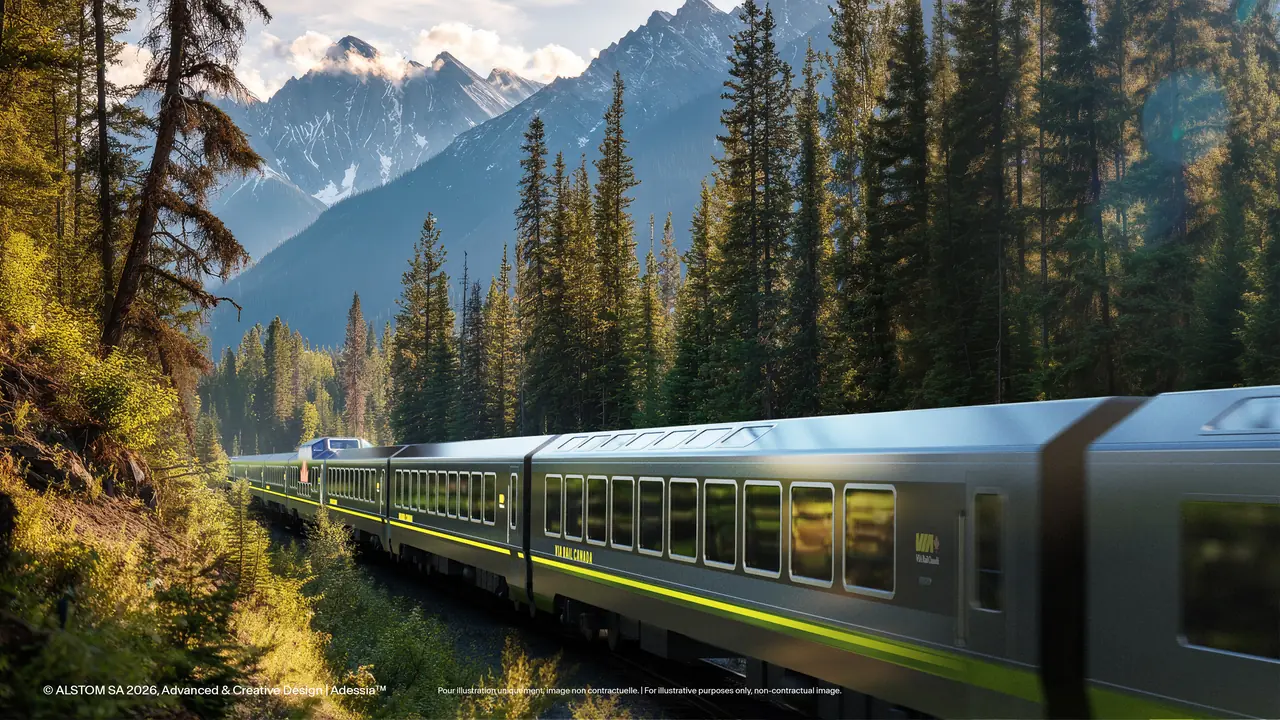
Prime Minister Mark Carney announced the order at Alstom’s Thunder Bay plant in Ontario on September 3, 2026. About C$4 billion covers the Adessia cars, while nearly C$700 million pays for a 15-year Technical Support and Spare Parts Supply Agreement (TSSSA). The combined value is approximately €3 billion. Alstom will book the order in the second quarter of its 2026/27 financial year.
First deliveries are projected for 2031, with the order expected to be completed by 2035. The replacement programme covers equipment that is more than 70 years old, including 77-year-old cars.
VIA Rail fleet renewal: routes and onboard features
The fleet is intended for eight routes outside the Québec City–Windsor Corridor, linking nearly 400 communities. Services covered include connections involving Montréal, Halifax, Gaspé, Jonquière, Senneterre, Toronto, Vancouver, Churchill, Prince Rupert, Jasper, Sudbury and White River. Regional and remote travellers, including many First Nations communities, are among those the fleet will serve.
Alstom will supply nine configurations: coach, sleeper, accessible, berth, prestige, panorama, dome, dining and baggage cars. Dome cars, full-service dining and spaces for socialising will remain part of the onboard offer. Alongside those features, the designs provide more accessible facilities, brighter and roomier interiors, digital connectivity and updated amenities.
| Car type | Cars |
|---|---|
| Sleeper | 78 |
| Coach | 58 |
| Panorama | 38 |
| Baggage | 29 |
| Accessible sleeper | 26 |
| Dome | 25 |
| Dining | 20 |
| Prestige sleeper | 20 |
| Berth | 19 |
| Total | 313 |
Scroll horizontally if needed to view all columns.
Sleeper cars form the largest individual category, followed by coaches. The nine categories total 313 cars.
Planned procurement quantities, not delivered vehicles or passenger capacity. Accessible and Prestige sleepers remain separate categories, as in the source.
Source: Transport Canada backgrounder, “313 new passenger rail cars”; updated September 3, 2026; checked September 6, 2026.
The cars are being developed for Canada’s climatic extremes and will include cybersecurity protections for operational technology. VIA Rail expects the replacement equipment to improve reliability while preserving the experience associated with its long-distance services.
Mathieu Paquette, VIA Rail’s Interim President and CEO, said:
“Today’s announcement marks a defining step in shaping the future of VIA Rail’s pan-Canadian fleet”
“These new rail cars will retain signature features such as dome cars, full-service dining and social areas, while incorporating modern amenities, improved accessibility, and greater reliability. They will help us preserve essential services to remote communities and elevate the unique onboard experience that allows passengers to discover Canada in a way that only train travel can offer. We are very proud to partner with Alstom to create lasting value for Canadians by having these new cars designed, engineered and manufactured in Canada, and we thank the Government of Canada for this historic investment in the future of passenger rail.”
Don’t miss…MARC Train Service Links Montgomery County and Baltimore
Canadian production and employment
Design and engineering will take place in Saint-Bruno-de-Montarville, Québec. Alstom’s La Pocatière operation in Québec will manufacture the carbodies, and Thunder Bay will handle final assembly. The order brings passenger-car production for VIA Rail back to Canada for the first time in four decades.
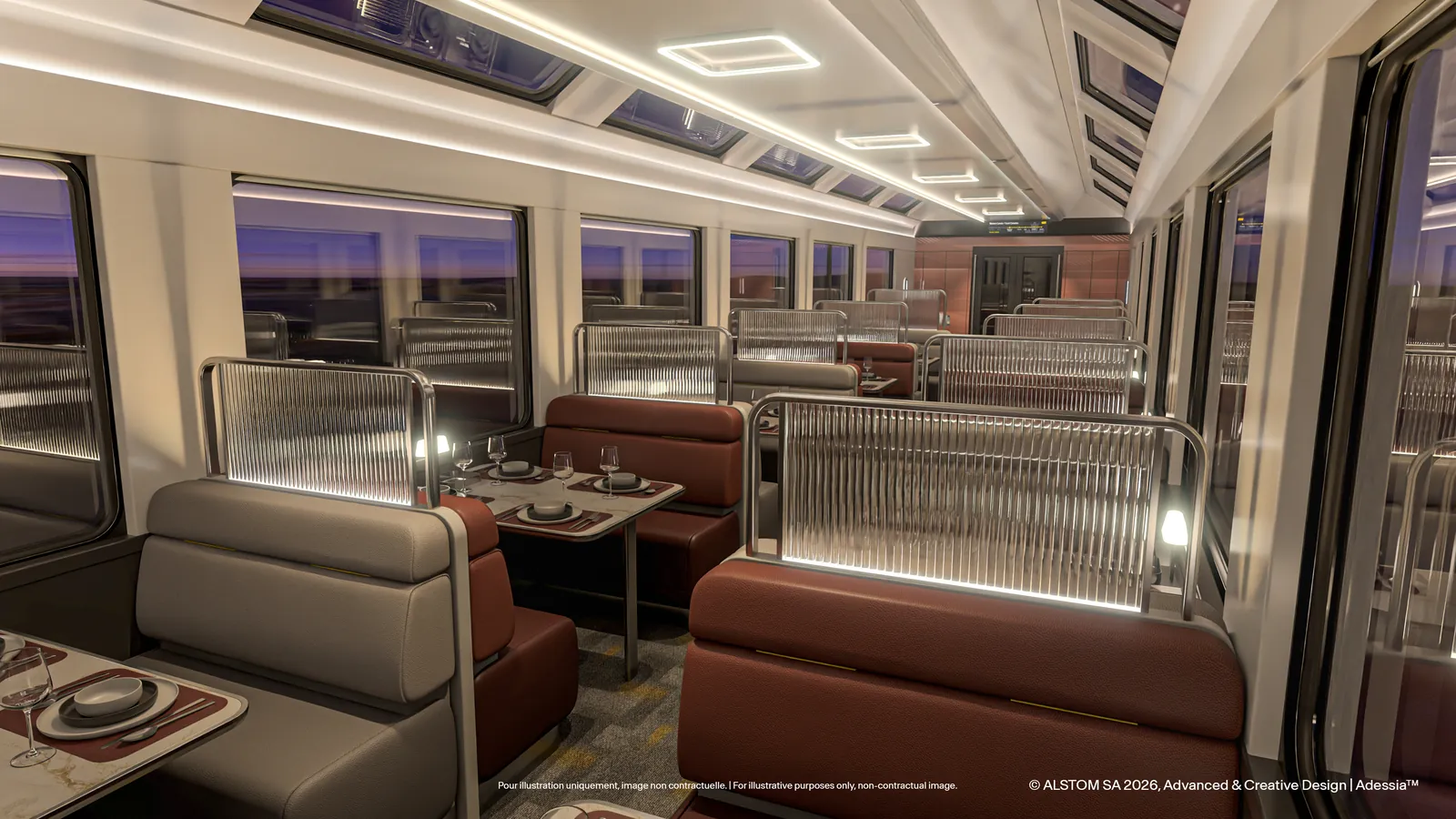
Alstom expects the programme to create or sustain up to 670 direct jobs in Canada, alongside hundreds of indirect and induced jobs. Its estimate for the contribution to Canadian GDP exceeds C$1.6 billion, or approximately €1 billion.
The procurement falls under the federal Buy Canadian Policy. Alstom is expected to expand its Canadian supplier base and increase the use of Canadian steel for structural assemblies, supports and fabricated metal components. The government presents the investment as a way to support domestic employment and production while reducing dependence on overseas manufacturing.
Carney said:
“In the face of strong headwinds, a confident Canada is choosing to build. For the first time in four decades, VIA’s passenger cars will be built in Canada. Cars once made in the United States, now made here at home. This means new contracts for Canadian suppliers, good jobs for Canadian workers, and paycheques that stay in Canadian cities and towns. That’s how we build Canada strong.”
Steven MacKinnon, Minister of Transport and the Leader of the Government in the House of Commons, said:
“Canadians deserve a passenger rail system that is modern, reliable and built to serve them for generations to come,”
“This investment delivers exactly that while supporting good-paying Canadian jobs and strengthening our domestic rail manufacturing sector. By assembling these railcars in Thunder Bay and La Pocatière, supported by Canadian design and engineering expertise in Saint-Bruno-de-Montarville, we are investing in Canadian workers, Canadian innovation and a stronger, more resilient economy.”
Unifor welcomes the car order
Unifor, Canada’s largest private-sector union, welcomed the announcement. Its 320,000 members include workers at the Thunder Bay Alstom plant and VIA Rail employees.
Unifor National President Lana Payne said:
“This is a tremendous victory for our members in Thunder Bay and for Canadian manufacturing,”
“It’s also an important investment in public passenger rail, securing an important service for Canadians — a service proudly provided at VIA by Unifor members across the country.”
Payne added:
“It took a trade war to get us here, but let’s keep building Canada by Canadians and for Canadians,”
Unifor Quebec Director Daniel Cloutier said:
“At a time when workers and industries are facing unprecedented economic threats from the United States, governments must use every tool available to strengthen our domestic manufacturing capacity,”
Ontario Regional Director Samia Hashi said:
“‘Made in Canada’ can’t just be a slogan. It must mean awarding publicly funded work to facilities right here at home and creating good union jobs in Canada. Our members are proud of what they build, and they have proven they have the experience to deliver high-quality rail vehicles for Canadians.”
Locomotives and the wider fleet programme
The car order accompanies federal commitments of C$1.6 billion for 45 Stadler passenger locomotives and C$357 million for a Montréal assembly and maintenance facility. Up to 36 locomotives will receive final assembly in Canada. Pomerleau is building the facility, which will also support fleet maintenance and operations over the long term.
Together, the passenger-car, locomotive and facility investments bring federal funding for VIA Rail’s long-distance, regional and remote fleet renewal to more than C$6.6 billion.
Michael Keroullé, President of Alstom Americas, said:
“This is an emblematic project for Alstom, and we’re honoured to be entrusted by VIA Rail and the federal government with delivering it. This project marks the beginning of a new chapter between Canada’s national passenger railway company and the country’s local rail manufacturer. Together, we are building a fleet for Canadians, by Canadians, and it will move the country forward for generations to come.”
The Adessia platform and Alstom in Canada
The VIA Rail vehicles belong to Alstom’s Adessia family. Its wider portfolio spans high-floor multiple units and coaches, in single- and double-deck forms, for electrified and non-electrified networks. Across that portfolio, designs cover operating speeds of 120–200 km/h.
Alstom says it has sold more than 48,000 Adessia cars to over 60 commuter systems in nearly 20 countries across Europe, Asia, Africa, the Americas and Australia. The range includes bilevel equipment for GO Transit and NJ Transit. The company cites more than 60 years of commuter-train experience and over 20 million daily passengers using Adessia equipment.
In Canada, Alstom employs about 5,200 people and works with more than 900 local suppliers annually. It describes itself as the country’s only passenger-train manufacturer, with rolling stock, signalling, operations and maintenance activities. Its Canadian projects include Toronto, Waterloo, Ottawa, Vancouver, Edmonton and Montréal, with Québec City also identified in its upcoming work.
Context
More than 216,000 passengers used VIA Rail’s long-distance, regional and remote services in 2025. The federal announcement places those routes across eight provinces and highlights their role in providing essential transport for Indigenous, rural and remote communities, particularly where affordable alternatives are limited or unavailable. VIA Rail operates national public passenger services as a Crown corporation on behalf of the Government of Canada.
| Service | 2024 | 2025 | Change |
|---|---|---|---|
| Ocean | 69.4 | 73.3 | +5.6% |
| Canadian | 64.1 | 76.3 | +19.0% |
| Regional services | 65.7 | 67.1 | +2.1% |
| Non-Corridor total | 199.2 | 216.7 | +8.8% |
Scroll horizontally if needed to view all columns.
Non-Corridor ridership rose by 8.8% in 2025, with increases in all three reported service groups.
Figures and percentage changes are published by VIA Rail; values are rounded. The report links the Canadian’s comparison with partial service interruptions during the 2024 Jasper wildfires. These historical results do not measure the effect of the new-car order.
Source: VIA Rail 2025 Annual Report, p. 47; comparison context on p. 48. Released May 6, 2026; checked September 6, 2026.
News on railway transport, industry, and railway technologies from Railway Supply that you might have missed:
Don’t miss…Sounder Train Cancellations Disrupt Morning Commute



