UP-NS merger: coalition appeal and 102 Democrats’ letter
In the United States, the UP-NS merger review has prompted a coalition appeal for community participation and a congressional demand to prioritize railroad workers, safety and accountability.
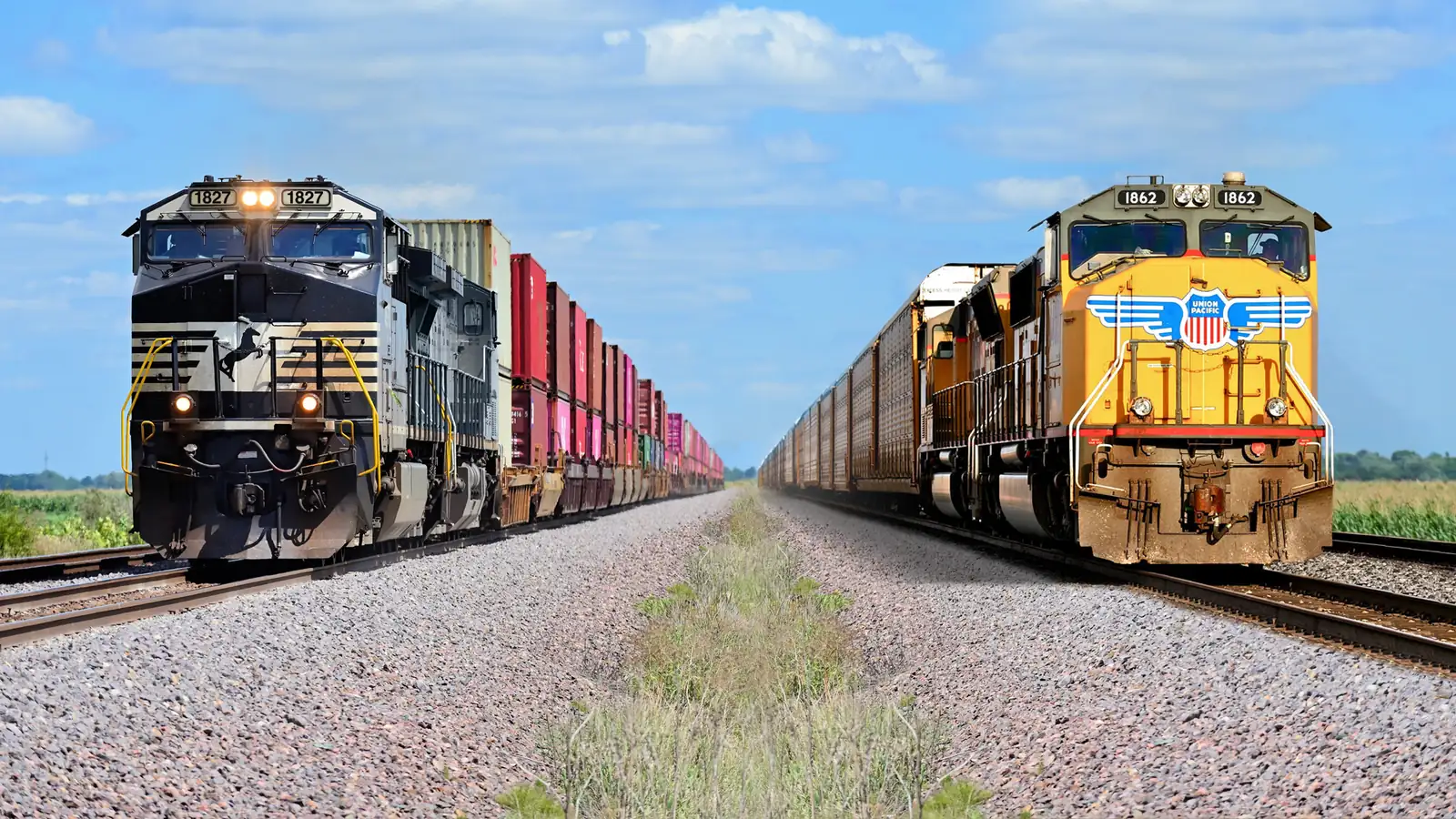
The Stop the Rail Merger Coalition released an interactive map on September 3 to encourage residents and local officials to take part in the Surface Transportation Board’s review of Union Pacific’s proposed acquisition of Norfolk Southern. A separate letter led by Rep. Valerie Hoyle, an Oregon Democrat, called on the regulator to put labor concerns first. The September 3 letter carries the signatures of 102 House Democrats.
Communities have until September 30 to file a notice of intent to participate. The board has set November 18 as the deadline for comments, protests and requests for conditions. The proposed $85-billion combination, announced in July 2025, would establish the first transcontinental freight railroad. Regulatory filings put the combined network at 52,215 route miles.
Community traffic projections
The coalition’s map brings together projected changes in train traffic and freight volumes with existing safety and blocked-crossing information. Its members include BNSF Railway, CPKC, shipper groups and three rail labor unions.
“This map provides a clear picture, for the first time, of how many communities will see negative impacts from this proposed UP-NS railroad merger,” the coalition said. “The STB must hear from state, county, and local officials, from first responders, and from the residents who will be living with the consequences of this merger.”
The group says daily train numbers would rise by at least 40% along more than 2,200 miles of main line. It also projects increases of 40% or more in gross ton-miles across over 5,000 miles, reflecting heavier or longer trains.
Some grade crossings would see rail traffic double, the coalition says. It projects truck-traffic growth above 20% at more than 50 intermodal and transload facilities. Among the locations it identifies are California’s Inland Empire; Centreville, Illinois; Toledo, Ohio; and Minnesota’s Twin Cities.
“All are projected to see increases above 225%, with Inland Empire exceeding 400% and Centreville reaching 400%,” the coalition said.
Houston is another focus. The coalition says the railroads forecast an almost 140% rise in intermodal truck traffic there within five years, alongside a 15% increase in auto-carrier truck traffic. The Federal Railroad Administration has received more than 20,000 blocked-crossing reports from the Houston area since 2020.
The coalition also points to FRA records showing more reports involving Union Pacific than all other U.S.-based Class I railroads combined. However, these submissions are not a scientific measure of blocked crossings. Multiple motorists can report the same incident: six reports about one obstruction are counted six times.
Don’t miss…$1.5 Billion Transit Funding Accompanies NITA Launch
Union Pacific’s traffic forecast
Union Pacific says the merger would require only a small increase in train numbers and would improve safety by shifting 2.1 million trucks off highways. The merger application projects that two dozen additional trains would handle most merger-related growth, divided equally between intermodal and merchandise services.
“We expect to launch less than 1% more trains per day, including local trains that are moving within communities to make deliveries, and less than 3% more cross-country train starts. That’s cargo that will come off highways, easing congestion and saving more than 1,700 lives from highway-related injuries and fatalities from large-truck incidents each year,” spokeswoman Kristen South said in an email. “Our opposition is simply afraid to compete against a single-line railroad that can deliver customers’ goods safer, faster, and more reliably coast to coast.”
Environmental review and earlier mergers
The STB has its own online map identifying rail facilities and line segments that exceed environmental-review thresholds. Its review will examine local effects on lines projected to gain at least eight trains a day or see tonnage increase by 100% or more. The environmental impact statement will propose mitigation measures that the board could attach to any approval as conditions.
Local objections have featured in earlier rail combinations, particularly around Chicago. Suburbs opposed Canadian National’s 2009 acquisition of the Elgin, Joliet & Eastern. That transaction transformed a lightly used railway into a busy connection between CN routes serving Western Canada, Eastern Canada and the Gulf Coast. The STB required crossing improvements, including overpasses and underpasses, alongside quiet zones, fencing and noise barriers. Suburbs also opposed Canadian Pacific’s 2023 acquisition of Kansas City Southern over forecasts of additional trains.
UP-NS merger labor concerns
The congressional letter was coordinated with the Teamsters Rail Conference. The 10-page document calls for the STB to examine employment, safety and accountability before approving the transaction. Its backers also raise concerns that a railroad with monopolistic power could set terms that ultimately increase consumer prices. The appeal comes ahead of the midterm elections, more than a year after the deal’s announcement.
“The proposed Union Pacific (NYSE: UNP)–Norfolk Southern (NYSE: NSC) merger would create the largest rail network in this country’s history,” Hoyle said in the accompanying statement. “Railroad workers are the backbone of our supply chain, and their rights and security must come first. When workers do well, our economy thrives.”
The lawmakers want the board to “fully evaluate what this merger could mean for jobs, safety and accountability” before approval.
Mark Wallace, national president of the Brotherhood of Locomotive Engineers and Trainmen and head of the Teamsters Rail Conference, said his coalition had already met Union Pacific Chief Executive Jim Vena. Wallace argued that UP’s offer of “lifetime employment” for union members leaves some positions insufficiently protected.
Seven state attorneys general submitted a separate request on September 1 for the board to reject the revised application. The officials represent Montana, Iowa, Kansas, Florida, North Dakota, South Dakota and Tennessee. They argue that the applicants have not demonstrated a public-interest case and warn of higher costs for farmers, shippers and consumers. The Stop the Rail Merger Coalition has also written to President Donald Trump opposing the deal on similar grounds.
The STB lifted its pause in the proceeding in mid-August. It has requested further information from the applicants and is preparing an environmental impact statement as the review continues.
Context
The letter asks the STB to examine whether workforce reductions would undermine service and safety, and whether sales, leases or contracting arrangements with smaller Class II or Class III railroads could weaken existing labor protections. It also questions whether a combined railroad could use binding arbitration indefinitely to change collective bargaining agreements over union objections. The lawmakers want scrutiny of forced relocations that could cost workers their protections, and argue that workers’ rights and benefits should survive subsequent transactions. These are requests for regulatory examination, not findings that the merger has caused those outcomes.
News on railway transport, industry, and railway technologies from Railway Supply that you might have missed:
Don’t miss…MARC Train Service Links Montgomery County and Baltimore



