$1.5 Billion Transit Funding Accompanies NITA Launch
02.09.2026
The Northern Illinois Transit Authority launch on Tuesday, Sept. 1, transferred regional oversight of the six-county Chicago transit system from the Regional Transportation Authority (RTA). NITA now oversees the Chicago Transit Authority (CTA), Metra and Pace, though passengers are unlikely to notice major changes in daily operations at first.
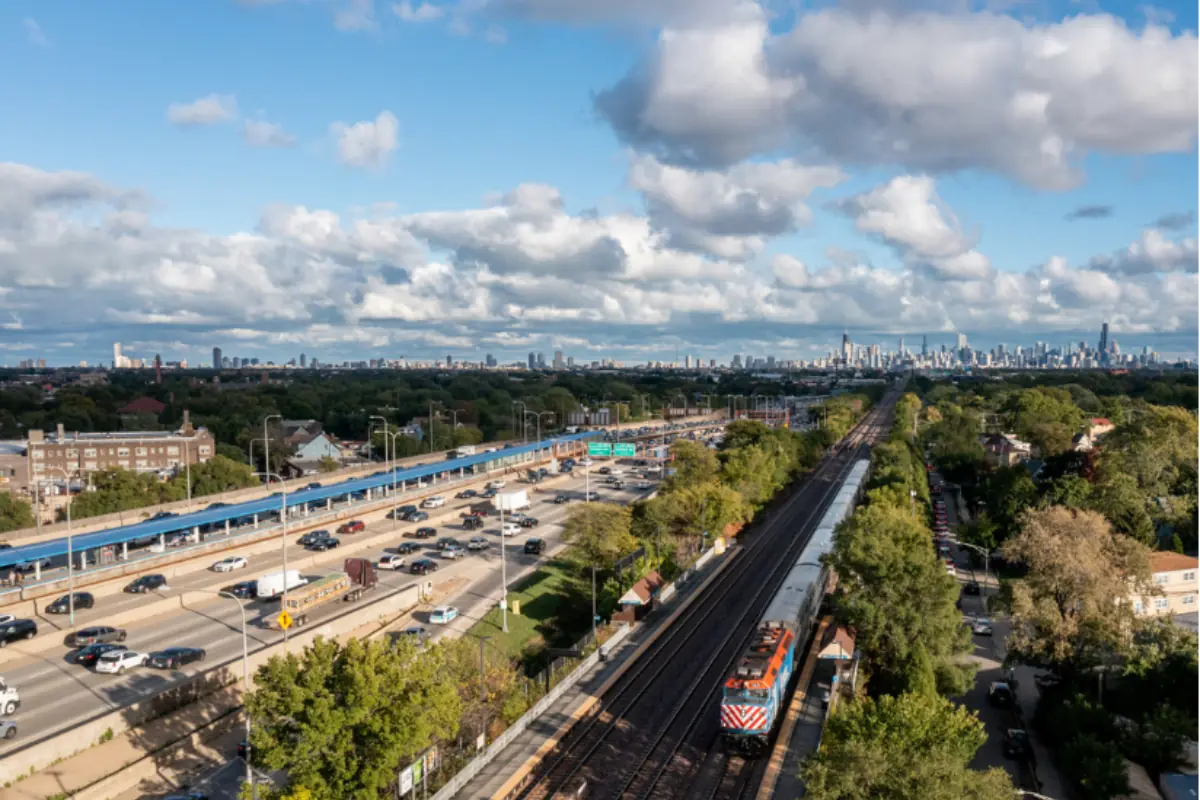
CTA, Metra and Pace will continue to operate their respective trains and buses, and all existing services will remain in place. NITA will also continue programs previously administered by the RTA, including Ride Free and Reduced Fare.
Northern Illinois Transit Authority launch and funding
The legislation establishing NITA passed in November last year as part of a restructuring of public transportation in northern Illinois. Gov. JB Pritzker signed it during a December ceremony at Chicago Union Station. Measured by passenger-miles, NITA began operations as the second-largest transit agency in the United States.
The restructuring followed warnings about mounting financial pressure on the region’s transit network. In 2022, the RTA said expiring federal COVID-19 relief funding and fare revenue that could not cover operating costs would push the system toward a fiscal cliff. By last year, the RTA was projecting a budget deficit of more than $770 million in 2026, rising to $1.2 billion in 2027 without additional support.
The legislation provided $1.5 billion for public transportation and transit-oriented development. More than $1 billion of the package consists of new operating funding. A quarter-percentage-point sales tax increase within the NITA region and a share of Illinois gas tax revenue are together expected to provide the authority with more than $1.3 billion annually.
Pritzker said the state had acted after service cuts and fare increases threatened riders.
“A year ago, our state’s transit was facing a doomsday scenario, with service cuts and fare hikes that would have left riders stranded,” Pritzker said in a press release. “Together with our partners in the General Assembly, we stepped up to support riders, keep transit affordable and improve services. Today, NITA is driving Illinois forward with a transformative vision that will deliver a reliable, safe and unified public transportation system for the entire region.”
Don’t miss…Tokaido Shinkansen 35% Discount Offered to Under-30s
Chicago-area transit coordination
NITA has broader authority than the former RTA to coordinate schedules and fares among CTA, Metra and Pace. The agency plans to improve transfers between buses and trains, streamline payment options, make fares simpler and more affordable, introduce fare-capping and expand reduced-fare programs. It also intends to improve access to real-time transit information.
Maulik Vaishnav, NITA’s chief transition officer, said passengers’ everyday experience would ultimately determine how the restructuring is judged.
“This is the beginning of a transformation that will ultimately be measured by what riders experience every day,” said Maulik Vaishnav, NITA’s chief transition officer. “Our job is to build a system with more frequent and reliable service, dependable connections, simpler fares, safer and more accessible trips, and information riders can trust. The NITA Act gives us the regional authority and resources to bring those pieces together as one network.”
Investment, safety and performance standards
A new Office of Transit Safety and Experience will oversee coordination of public safety efforts across the system. NITA also plans to develop a region-wide transit ambassador program and coordinate work among transit operators, law enforcement and social-service organizations.
NITA says it will improve transparency and accountability while using network requirements and defined performance criteria to prioritize investments. It will prepare a five-year regional capital spending plan to direct infrastructure modernization and other improvements toward areas where they are expected to have the greatest effect for passengers.
The authority will also provide regional service and performance standards covering reliability, accessibility, safety, cleanliness and overall network performance.
Governance and regional transit access
The legislation also changed the makeup of the CTA, Metra and Pace boards as part of the governance restructuring. Some suburban officials believe Chicago and Cook County control too many seats under the revised structure.
NITA’s 20-member board has five representatives appointed by the governor, five selected by the Chicago mayor and five named by the Cook County Board president. The remaining five are appointed by the county chairs of DuPage, Kane, Lake, McHenry and Will counties, which surround Chicago. The initial appointments are divided evenly: 10 members will serve three-year terms and 10 will hold five-year terms.
The new board is scheduled to meet for the first time on Sept. 10. Meetings of the reconstituted CTA, Metra and Pace boards will follow later in the month.
W Robert Schultz III, a campaign organizer at the Active Transportation Alliance, linked the funding debate to transportation and housing access in comments published March 3 in Elevated Chicago.
“From my perspective, averting the transit fiscal cliff was about far more than balancing a budget — it was about protecting a fundamental human right: the right to mobility,” W Robert Schultz III, a campaign organizer at the Active Transportation Alliance, wrote March 3 in Elevated Chicago. “We must align housing and transit policy to ensure that affordable, accessible homes are located near reliable service.”
News on railway transport, industry, and railway technologies from Railway Supply that you might have missed:
Don’t miss…Almaty–Tashkent Women-Only Carriage Starts October 1