Union Pacific grain lawsuit targets $500 interchange fee
01.02.2026
Colorado Pacific Railroad and Weskan Grain have taken their dispute with Union Pacific Railroad and the Kansas & Oklahoma Railroad to federal court.
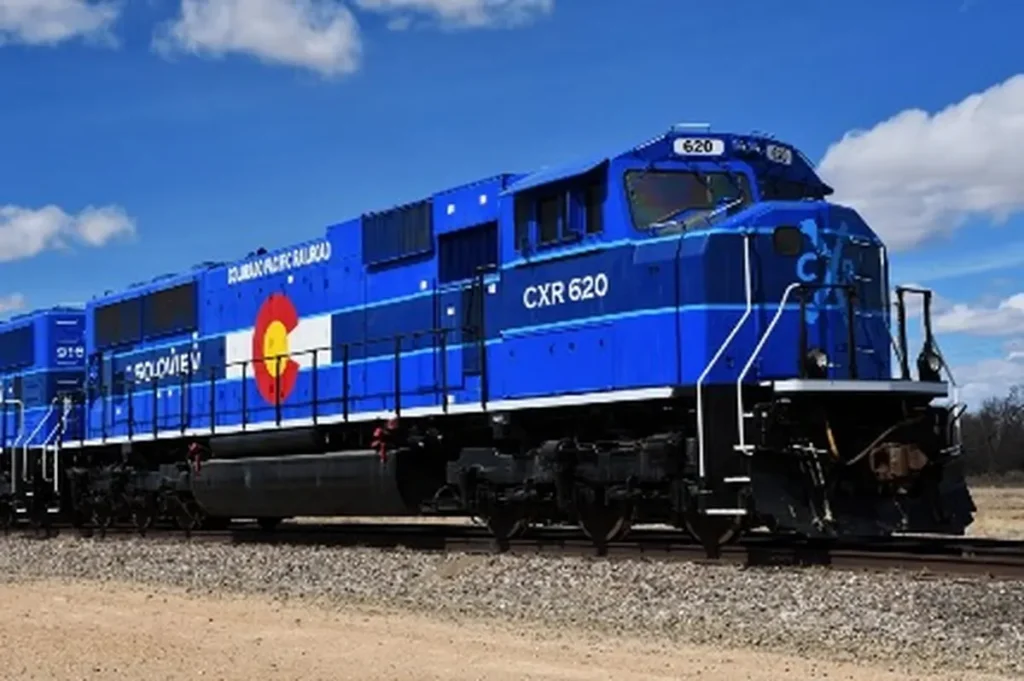
Both companies are part of the Soloviev Group, and they argue a $500 per car interchange fee is being used to block westbound grain moves over Colorado Pacific.
What the Union Pacific grain lawsuit alleges?
In the complaint, the plaintiffs say UP and Watco Cos.’ K&O have conspired to prevent farmers located on the K&O from sending export grain west over Colorado Pacific. They contend the interchange fee makes that option too expensive, even though Colorado Pacific can interchange with UP and BNSF Railway at NA Junction in Colorado.
Don’t miss…Amtrak Empire Service restoration set for March return
NA Junction is described as being near Boone, Colo., and about 25 miles east of Pueblo. Union Pacific and K&O denied the allegations, which were also outlined in a PR Newswire release.
Colorado Pacific’s Towner line and the routing dispute
Colorado Pacific bought 122 miles of track in 2018 from NA Junction to an interchange with K&O at Towner, Colo., about 60 miles west of Scott City, Kansas. It rebuilt the corridor it calls the Towner line, where no traffic had moved for more than two decades, with the aim of moving grain from elevators on K&O in the Scott City area, including two Weskan facilities.
The lawsuit filed in U.S. District Court in Kansas says UP and K&O in 2019 altered a 1997 lease agreement to impose the interchange fee. The plaintiffs argue that change made westbound moves from K&O-served elevators too costly for farmers in the Scott City area.
The filing also points to an alternative routing: grain can move more than 140 miles east on K&O to interchange with UP at Great Bend, Kan., before it moves west.
STB filing, “paper barrier” claims, and shipper stakes
Alongside the court case, Colorado Pacific has filed at the Surface Transportation Board to contest the interchange fee and to support its claim that the other two railroads created a “paper barrier” to block westbound grain moves from K&O to Colorado Pacific.
In an interview, Weskan and Colorado Pacific Chairman Stefan Soloviev said the company entered the rail business to add competition so farmers could obtain competitive prices. He said the fight has lasted three years and called the lawsuit the last thing he wanted to do.
Supporters of the project say the Towner line could carry substantial volumes if the westward routing opens up. Jake Wahlenmaier, superintendent at Weskan’s elevator in Sheridan Lake, Colo., said the line’s potential is enormous if grain traffic can move that direction. “We’d turn that line into the busiest stretch of rail west of the Mississippi,” he said. “We’d be smoking the rail ties.”
Union Pacific said it denies the allegations and will present its facts to the court and the Surface Transportation Board. Watco, based in Pittsburg, Kan., said it does not comment on litigation matters and will respond through the proper legal channels.
Soloviev said Colorado Pacific anticipates moving 5,000 carloads of grain this year. He added that Weskan is at capacity at five rail and five truck facilities, with 20 unit trains booked for future moves.
For local producers, the question is about access and costs. Scott City farmer Steven Compton told Trains that a western outlet is essential for the region’s grain, arguing that transportation is vital as feed and other costs rise while grain prices remain steady. He said the issue goes beyond money and is tied to “the survivability of the farm economy,” as reported by Trains.
More than a dozen farmers in the Scott City area joined the suit, and Weskan is described as part of Soloviev’s grain businesses that provide services including seed, storage, and transportation.
The story also notes the broader footprint of Soloviev Group, which says it is the 14th largest landowner in the U.S., with holdings estimated at 350,000 acres. The New York-based entrepreneur also has businesses including real estate, wind farms, and a resort hotel on Long Island.
Soloviev also controls the Colorado Pacific Rio Grande, a 150-mile railroad in southern Colorado. Several years ago, he pursued reopening the former Denver & Rio Grande route over Tennessee Pass for westbound grain, including an unsuccessful bid to force UP to sell the line to Colorado Pacific. That effort ended in 2023.
The suit alleges violations of the Sherman Act governing anti-competitive practices, Soloviev Group CEO Michael Hershman said. He called the allegations fairly standard for a Sherman Act case, while describing the dispute as a “David vs. Goliath” fight against a multibillion-dollar company.
Soloviev said Colorado Pacific was prevented from bidding on the property that UP owns and K&O operates under the lease challenged in the federal court case. He also said that moving traffic directly via Colorado Pacific would eliminate 25,000 moves currently made by truck to get grain from Scott City to where Colorado Pacific can handle it.
News on railway transport, industry, and railway technologies from Railway Supply that you might have missed:



