
Spain plans lab tests on about 125 rock samples for Gibraltar rail tunnel
Spain’s state company studying the Gibraltar rail tunnel plans to lab-test about 125 rock samples from offshore boreholes for swelling clays and abrasive rock that could complicate tunnel boring.
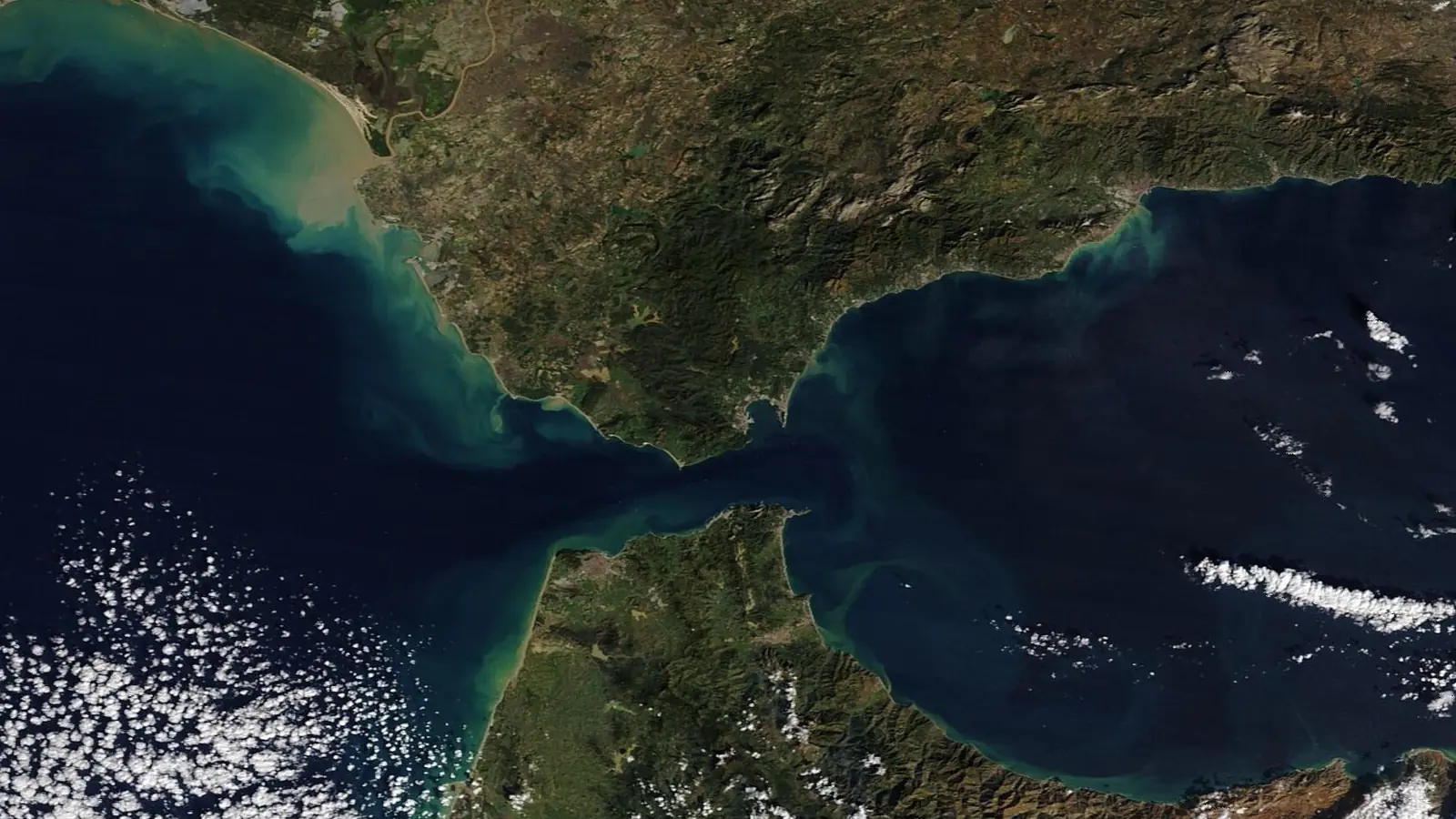
SECEGSA, the state company under Spain’s Ministry of Transport that studies a fixed link across the Strait, approved the technical and administrative specifications for the study on 3 September, Spanish news site Vozpópuli reported on 18 September after reviewing the documents. The budget is €132,200 before VAT, or €159,962 with tax, and the contract is being handled through a negotiated procedure without publication.
The specifications name the University of Salamanca as the intended contractor, citing its existing database and methodology. The contract would run for eight months: six for the laboratory work and two for reviewing and correcting the deliverables. The report does not say whether the contract has been awarded, and neither SECEGSA nor the university answered Vozpópuli’s questions.
What the rock tests look for
The samples come from boreholes drilled by SECEGSA and its Moroccan counterpart, the Société Nationale d’Études du Détroit de Gibraltar (SNED). Laboratories are to establish their mineral and geochemical composition and run swelling, strength, deformability and abrasivity tests. The work also targets faults, fractures, altered zones and smectites, a group of clay minerals that can expand.
The stated purpose is data that applies directly to the difficulties a tunnel boring machine could meet under the Strait. SECEGSA’s records list joint deep offshore drilling campaigns with SNED in 1997, 1998–99 and 2005. The published reporting does not say which boreholes supplied the 125 samples.
| Campaign | Period | Boreholes | Metres drilled | Deepest penetration below seabed |
|---|---|---|---|---|
| Bucentaur-97 | February–April 1997 | 4 valid boreholes plus 6 redundant ones, at 4 of 8 planned sites | 344 m | 118 m, in 275 m of water |
| Norskald 1998–99 | November 1998–May 1999 | 11 boreholes, 5 of them redundant, at 6 sites | About 1,040 m | 222.56 m |
| Kingfisher-05 | January–June 2005 | 19 boreholes, 4 of them redundant, at 14 sites | 1,531 m | 325 m, in 276 m of water |
Together the three campaigns drilled roughly 2,900 m under the Strait; the 2005 campaign is the most recent deep drilling in SECEGSA’s published record. The reporting on the new study does not say which of these boreholes supplied the 125 samples. Total: editorial sum of the three campaign figures, rounded. Source: SECEGSA, offshore drilling campaigns.
How the study fits SECEGSA’s other geology work
The core tests cover ground that a separate seabed survey does not. SECEGSA’s agreement with Spain’s National Research Council (CSIC), published in the official gazette on 30 December 2025, covers multibeam bathymetry, sub-bottom profiling and samples taken with grabs and rock dredges. Its laboratory work is limited to texture, calcium carbonate content and the sand fraction. The agreement is worth €553,187.38 and required the survey to be carried out before the end of June 2026.
Earlier, Spanish state engineering firm Ineco hired Herrenknecht to check whether tunnel boring machines could cut through the breccias along the Camarinal Sill, which SECEGSA describes as the most critical section of the alignment. That excavation feasibility study cost €296,400 before VAT and was due to finish in June 2025. Vozpópuli reported that it found the tunnel technically feasible with current technology.
Abrasion has been tested before: SECEGSA’s tender register shows a contract for abrasivity tests on rock formations in the Strait, with a €35,000 tender budget, awarded to Geotecnia 2000 in November 2014.
Funding, cost estimate and the 2027 decision
Vozpópuli reported that Spain’s transport ministry has transferred more than €9.61m to SECEGSA since 2022, compared with about €50,000 a year before, including €1.73m in 2026. It put the estimated cost of the Spanish part of the project at more than €8.5bn, covering the exploratory gallery, the rail tunnels, the terminal, installations and contingencies.
According to sources cited by Vozpópuli, Spain and Morocco have committed to a final decision in 2027 on tendering a first exploratory tunnel. The provisional schedule gives six to nine years to build that gallery and puts a possible opening of the rail tunnel between 2035 and 2040.
The planned link would be about 65km long, close to 40km of it in Spain, with the Spanish terminal near Vejer de la Frontera and a new connection to the Cádiz–Seville line. It is designed for mixed traffic: through high-speed passenger trains, shuttles carrying cars and buses, and freight trains.


