Final Second Avenue Subway contract goes to market with CBTC for Phase 1
The MTA has issued the final Second Avenue Subway contract RFQ, covering a systems package that will bring CBTC signaling to the existing Phase 1 section.
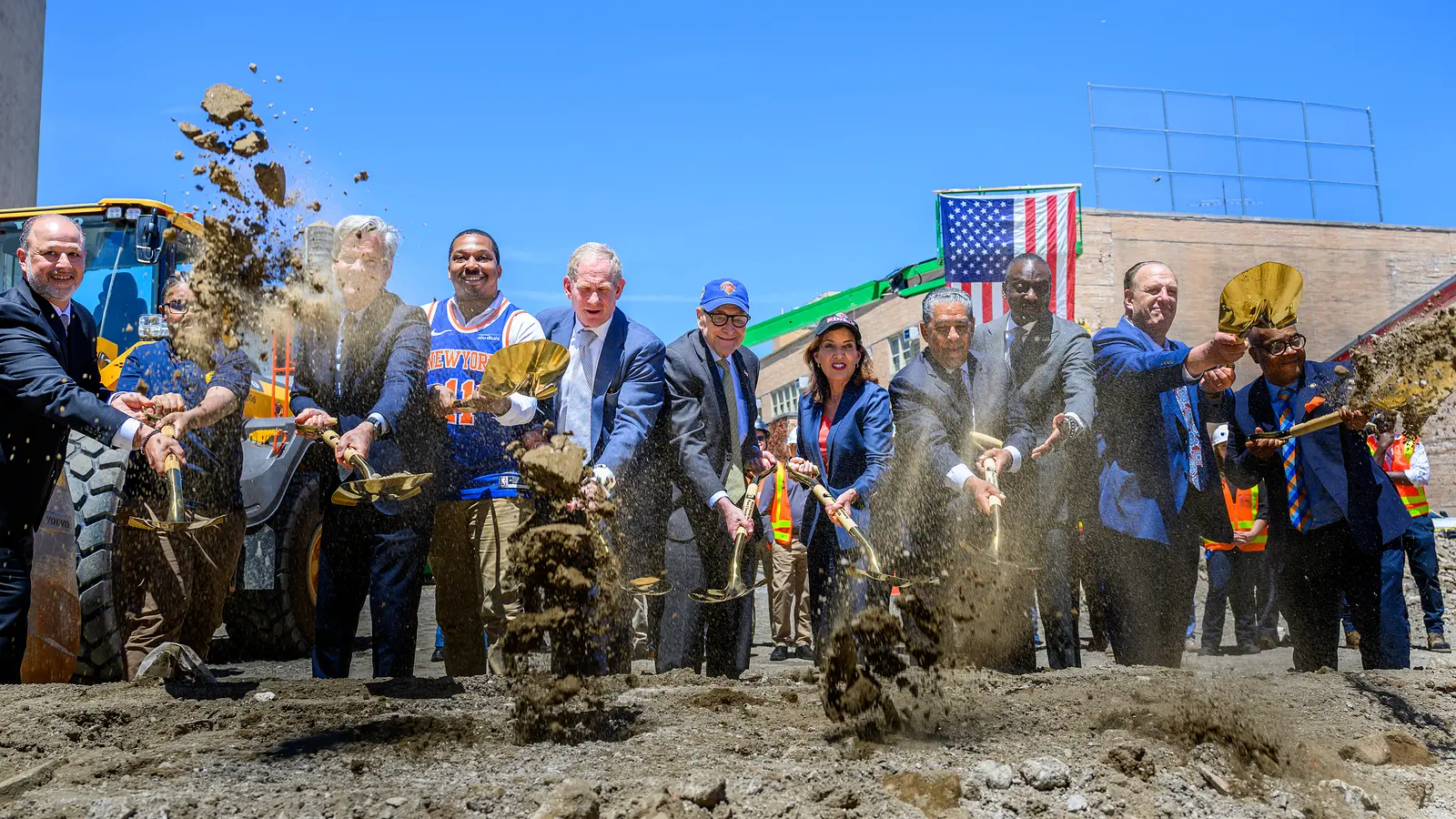
The MTA announced on September 14 that it had issued the RFQ. It intends to invite proposals from qualified contractors by the end of 2026 and expects to select a contractor in mid-2027. Construction under Contract 4 is due to start in 2027, and the MTA describes it as the largest of Phase 2’s four construction packages.
Stations and systems in Contract 4
Contract 4 will complete the three new fully accessible stations at 106 St, 116 St and 125 St, equipping them and the connecting tunnel segments with their full systems. Its structural scope includes platforms, entrance canopies and six ancillary buildings above ground for ventilation, mechanical and electrical equipment, with room for possible street-level retail and community use.
Across the stations and facilities, the contractor is to install 22 elevators and 20 escalators, along with HVAC, smoke management, fire protection, power, lighting, plumbing and drainage. Communications work covers security cameras, Wi-Fi, radio, Help Point intercoms, customer information screens, public address systems and fire and emergency alarms. Track work includes track, third rail, wayside signals, traction power and train detection equipment.
The package also covers architectural finishes, signage and wayfinding, artwork, fare arrays and customer service facilities, followed by testing and commissioning of every installed system. It links the new 125 St station with the existing 125 St station on the 4, 5 and 6 lines, while a new Park Avenue entrance will allow transfers to Metro-North’s Harlem-125 St station and the M60 Select Bus Service to LaGuardia Airport. Permanent utility connections and the restoration of streets, sidewalks and traffic signals within the Phase 2 limits complete the scope.
MTA Chair and CEO Janno Lieber described the package this way:
“This fourth and final RFQ covers the architectural finishes and the communications and other systems in the stations – the things that riders directly experience.”
CBTC on Phase 1 and the procurement route
Papers prepared for the MTA Board’s July 29, 2026 meeting add detail that the announcement did not spell out. Contract 4 will deliver communications-based train control (CBTC) covering both the existing Phase 1 and the new Phase 2 sections, and its contractor will install and commission the system on both. Phase 1, in service since January 1, 2017, was built with the fixed-block signaling that was standard at the time. Under the project’s federal grant agreement, CBTC must be added to Phase 1 within the Phase 2 project.
Those board papers also authorized MTA Construction & Development to use a competitive request for proposals instead of sealed bids. The agency argued that the systems must connect seamlessly to the existing subway and be closely coordinated with Contracts 2 and 3, so it needs to weigh bidders’ technical qualifications, approaches and schedules alongside price. Both the contract value and its term were listed as to be determined.
| Date | Step | Status |
|---|---|---|
| March 2025 | MTA Board approves a $59,962,040 consultant contract modification to advance Contract 4 from preliminary design to a fully designed design-bid-build package | Done |
| May 11, 2026 | MTA Construction & Development lets its design consultant start CBTC requirements covering Phase 1 and Phase 2 | Done; ratified in July 2026 |
| July 29, 2026 | MTA Board allows a competitive request for proposals instead of sealed bids | Done |
| September 14, 2026 | Request for qualifications announced | Done |
| By end of 2026 | Request for proposals sent to qualified contractors | Planned |
| Mid-2027 | Contractor selected | Expected |
| 2027 | Contract 4 work starts | Planned |
Contract 4 moved to a fully designed package in 2025, and its CBTC scope was defined in 2026 to cover both Phase 1 and Phase 2. Procurement is now moving from qualification to proposals, with contractor selection expected in mid-2027.
Dates for the request for proposals, selection and start of work are MTA plans, not completed steps.
The $59,962,040 figure is the value of the design consultant modification, not the value of Contract 4.
Sources: MTA Board, March 2025; MTA Board, July 29, 2026; Office of Governor Kathy Hochul.
Progress on Contracts 1 to 3
The first contract, awarded in January 2024, is relocating utilities at the site of the future 106 St station. That work is about 60 percent complete and due to finish by summer 2027.
In August 2025, the MTA Board approved the second contract, valued at $1.972 billion, for Connect Plus Partners, a joint venture of Halmar International and FCC Construction. It covers two new tunnels, rehabilitation of existing tunnels, the 116 St station box, the structural shells of the 116 St and 125 St stations, and seven shafts for future entrances and ancillary buildings. Final design has passed 50 percent, the tunnel boring machine is being built, crews are preparing its launch site and digging has started on the 125 St entrance shaft. Substantial completion is forecast for September 2029.
Awarded in April 2026, the third contract covers excavation and the structural shell of the 106 St station, tunnel connections, ancillary buildings, entrances and utility work, with substantial completion expected in the third quarter of 2030. Main works on Phase 2 formally began in June 2026.
Phase 2 has a budget of $6.968 billion, paid for with $3.4 billion in federal funding plus congestion relief revenue, and is expected to be fully complete by fall 2032. It will extend Q service about 1.5 miles north from 96 St to 125 St and Lexington Avenue. MTA Construction & Development President Jamie Torres-Springer said the agency had saved more than $1 billion so far by applying lessons from Phase 1 and would take the same approach to the final contract.
| Contract | Main scope | Contractor and delivery route | Next milestone |
|---|---|---|---|
| Contract 1 | Moving utilities at the future 106 St station site | C.A.C. Industries; design-bid-build | Work due to finish by summer 2027 |
| Contract 2 | Two new tunnels, existing tunnel repairs, 116 St station box, shells of the 116 St and 125 St stations, seven shafts | Connect Plus Partners, a joint venture of Halmar International and FCC Construction; design-build; $1.972 billion | Substantial completion forecast for September 2029 |
| Contract 3 | Structural shell of the 106 St station, tunnel connections, ancillary buildings, entrances, utility work | Joint venture of Skanska, Traylor Bros. and Walsh Construction; design-build; $1.02 billion | Substantial completion expected in the third quarter of 2030 |
| Contract 4 | Station systems, CBTC for Phase 1 and Phase 2, finishes, entrances and ancillary buildings | Not yet chosen; competitive request for proposals; value to be determined | Contractor selection expected in mid-2027 |
Three of the four Phase 2 contracts are under way with named contractors, while the systems package that finishes the extension is still in procurement.
Sources: Office of Governor Kathy Hochul; MTA project page; MTA, August 18, 2025; MTA Board, March 2025; MTA Board, July 29, 2026; Skanska USA.
Federal funding dispute resolved in April 2026
The final RFQ comes after a dispute over federal funding for the project. In an April 16, 2026 statement, Lieber said restoring federal funding had required a lawsuit and seven months. He added that the billion-dollar contract the MTA Board approved in March was being awarded and that contractors were mobilizing immediately.


