
MTA Targets 25 Subway Bottlenecks Across New York City
USA: The MTA subway bottleneck plan selects 25 locations for deeper analysis while active upgrades at DeKalb and Nostrand target some of New York’s most disruptive junctions.
MTA report prioritizes 25 projects
The first systemwide MTA bottleneck study examined more than 70 locations where track layouts or operating constraints can slow trains. It selected 25 as the most promising candidates for further analysis and possible capital investment.
The authority says improvements at those locations could meaningfully reduce delays across a subway network serving 4.5 million riders each day. Planners compared ridership, current performance, potential capacity or travel-time benefits, and estimated capital and maintenance costs.
The shortlist is not a commitment to build all 25 projects. Over the next two years, the MTA plans to complete detailed feasibility and cost assessments, with the findings informing the 20-Year Needs Assessment scheduled for October 2028 and the next five-year capital plan.
Don’t miss…CPKC Sets Canadian Grain Record at 30.66 Million Tonnes
DeKalb upgrade combines CBTC and faster switches
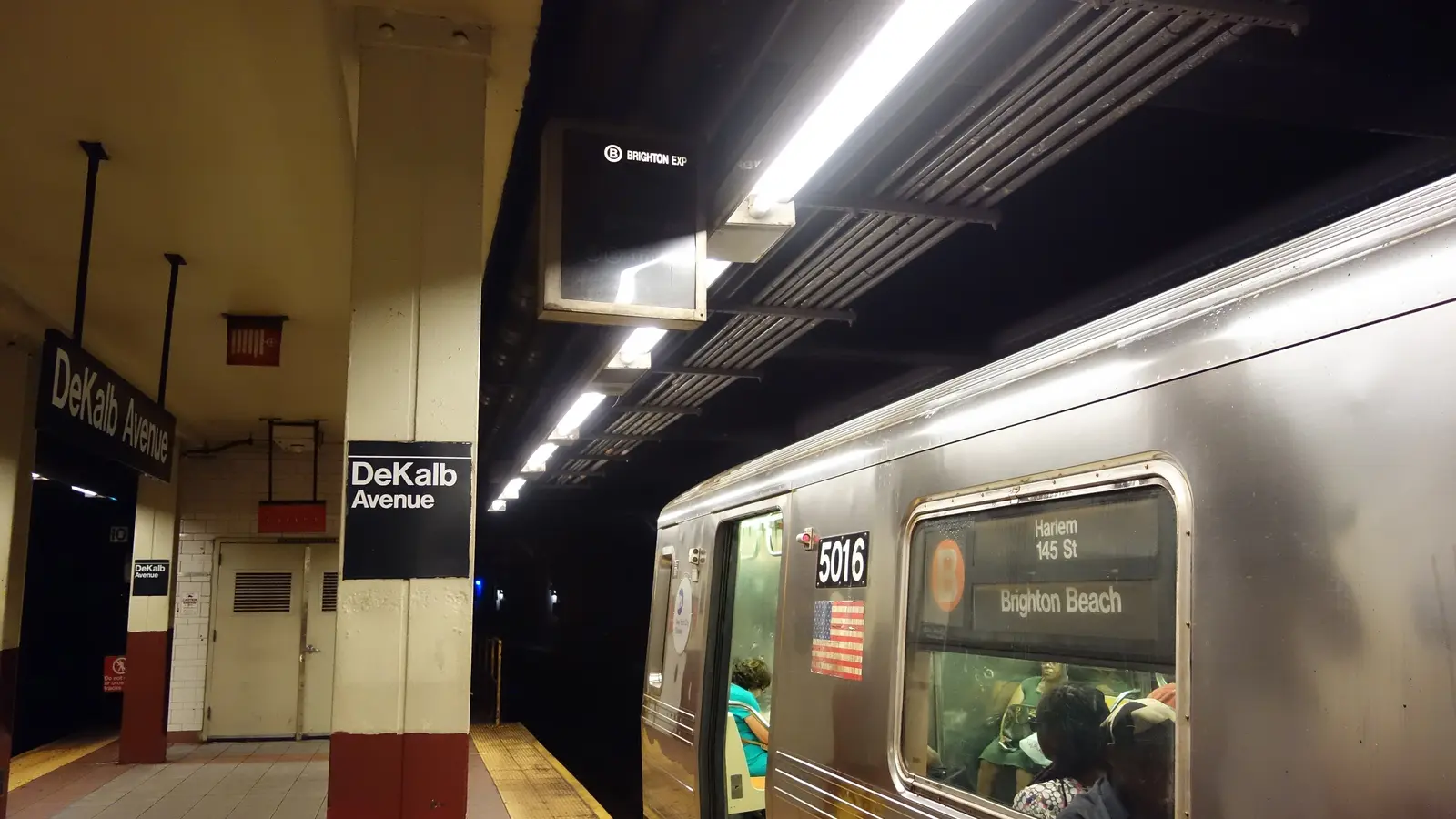
At DeKalb Interlocking in Downtown Brooklyn, B, D, N, Q and R trains merge and separate on routes to and from Manhattan. More than 1,600 trains navigate 18 switches there each day, allowing one late arrival to create delays across several services.
Under the 2025–2029 Capital Program, the MTA is extending communications-based train control to DeKalb and plans to replace key switches. CBTC is intended to reduce train spacing safely and support automatic service regulation, while the new switches would let trains pass through the junction at higher speeds.
The authority plans to award the contract for CBTC installation between DeKalb Avenue and 47–50 Streets–Rockefeller Center by the end of 2026. A completion date for the full DeKalb package was not specified in the report.
Nostrand work could save up to one minute per train
Nostrand Junction forces 2, 3 and 5 trains to share about 150 feet of track, creating conflicts that can spread along the 2, 3, 4 and 5 lines. At peak times, service is already close to the number of trains the junction can handle.
The funded project would add switches between Franklin Avenue and Crown Heights–Utica Avenue and reorganize service through the junction. The 2 and 3 would use the Nostrand Avenue Line toward Flatbush Avenue–Brooklyn College, while the 4 and 5 would continue along the Eastern Parkway Line.
MTA estimates the revised layout could save 45–60 seconds for each train passing through the area and benefit up to 1.2 million daily trips. The report does not provide a final construction cost or completion date.
What happens to the other candidates?
The remaining candidates cover interlockings, track geometry, terminals and legacy signaling. MTA will use the next assessment phase to determine which projects are feasible and cost-effective enough to enter future investment programs.
The approach focuses on extracting more capacity and reliability from existing infrastructure. Signal modernization is part of that work, but the report says physical changes to switches, junctions and terminal layouts will also be required at many locations.
News on railway transport, industry, and railway technologies from Railway Supply that you might have missed:


