
Bullet Train Power Line Gets Mangrove Clearance in India
INDIA: The Bombay High Court has approved the removal of 847 mangroves and 196 other trees for a 132 kV power line serving the Mumbai–Ahmedabad bullet train.
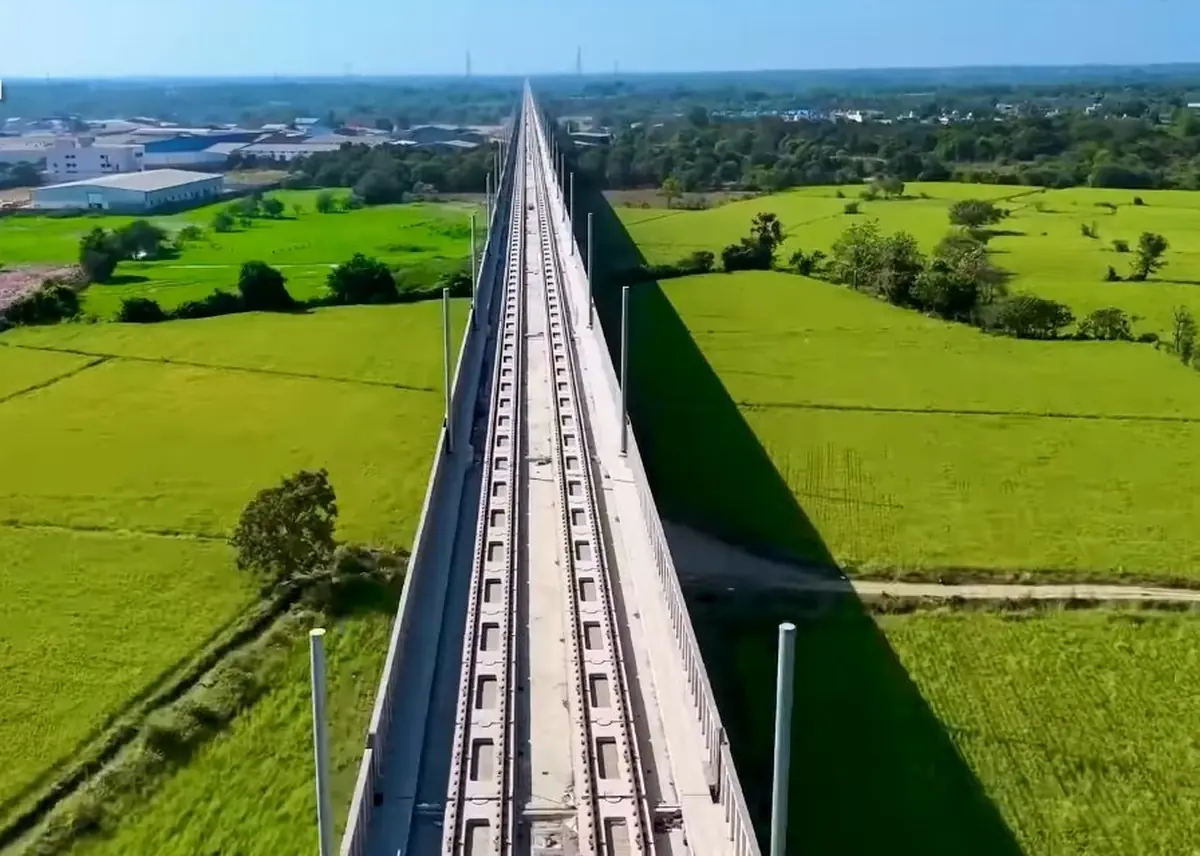
Court Approves Bullet Train Power Line With Conditions
The 4 August decision in WP/11256/2025 allows Maharashtra State Electricity Transmission Company Limited to divert 3.3561 hectares of forest land for an overhead line from Dahanu to the Ambesarai traction substation.
Acting Chief Justice Ravindra Ghuge and Justice Gautam Ankhad accepted that the transmission line and substation are integral to the high-speed rail corridor. The proposal had also passed scrutiny by the relevant authorities and expert bodies.
MSETCL required the court’s permission because a September 2018 ruling bars non-forest activity in and around Maharashtra’s mangroves without prior judicial approval.
Don’t miss…ÖBB Rail Cargo Group Adds 500 High-Volume Eanos-y Wagons
Replanting Commitments Carry a 10-Year Obligation
The approval rests on explicit ecological commitments. MSETCL has agreed to plant 26,664 mangrove saplings over six hectares and 7,457 other trees over 6.7122 hectares of degraded forest land in Sangola tehsil, Solapur district.
The company has deposited ₹3.53 crore to cover forest-land diversion, compensatory planting, tidal channeling, fencing and protection. Maintenance of the new plantation is required for 10 years.
The Bombay Environmental Action Group objected to compensatory afforestation in Solapur, around 500 km from the affected area. The judges agreed that distant planting may satisfy a numerical target without restoring the environmental benefits lost locally.
The court therefore treated this arrangement as an exception. It said future proposals for compensatory afforestation far from the affected ecological region would not be accepted.
Land Banks Must Be Created Within Four Weeks
The Chief Secretary must comply with earlier directions and create land banks within four weeks. The court also called for effective monitoring and transparent disclosure so compensatory afforestation functions as ecological restoration rather than a theoretical exercise.
The power infrastructure will serve a much larger rail scheme. NHSRCL’s project overview describes a 508 km corridor with 12 stations, while an official June 2026 technical brief says its traction-power network includes 12 traction substations, two depot traction substations and 16 distribution substations.
News on railway transport, industry, and railway technologies from Railway Supply that you might have missed:


