Santiago Metro Line 7 train now due to reach Chile in early 2027
The first Santiago Metro Line 7 train has begun dynamic testing at Alstom’s plant in Taubaté, Brazil. The unit is now due to reach Santiago in early 2027.
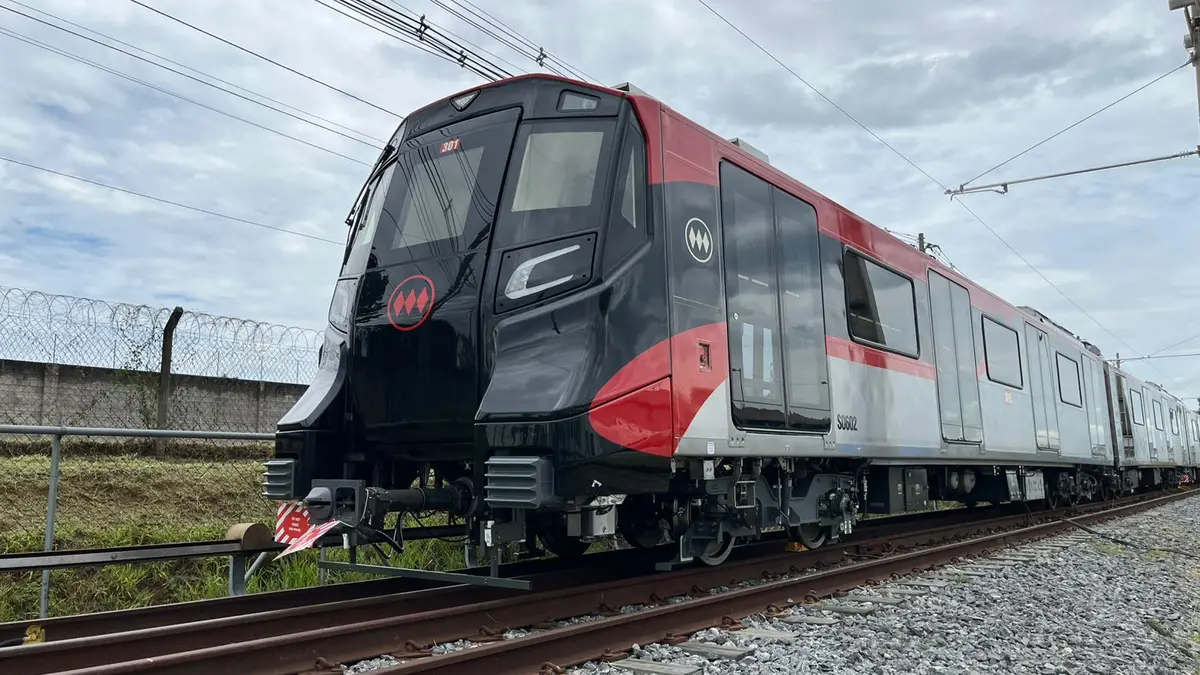
Dynamic testing began after the static checks ended. The set is a driverless Metropolis AS-22-UTO.
What the dynamic tests cover
Static testing examines the train while it stands still. That phase covers weight and dimensions, along with doors, motors, lighting, air conditioning and passenger information systems. Dynamic testing then measures how the train behaves in motion. The programme checks traction, braking and signalling. It also checks the Unattended Train Operation system, which will let Line 7 run without a driver. Alstom carries out the runs at its Taubaté test track.
Seven of the 37 sets ordered for the line have now been assembled. They sit at different stages of manufacturing or testing. Patricio Rey, chairman of Metro de Santiago, said the start of dynamic testing “confirms the project’s progress”. He added that it brings the trains closer to their arrival in Chile for the line’s future commissioning. Jean-Michel Morvan is Alstom’s general managing director for Southern Latin America. He said trains bearing the Alstom name account for four out of every five running on the network.
| Parameter | Value |
|---|---|
| Trains ordered | 37 |
| Cars per train | Five |
| Train length | 102 m |
| Capacity | 1,247 passengers |
| Spaces for people with reduced mobility | Two per train |
| Doors per car side | Four |
| Car body material | Stainless steel |
| Train control | Urbalis CBTC, driverless operation |
Alstom and Metro de Santiago published the fleet configuration and capacity on 20 January 2026. Alstom’s 2022 contract announcement specifies four doors on each side of every car.
What Alstom has said about the first-train timetable
Alstom won the Line 7 rolling stock and signalling package in March 2022. The €355 million contract covered 37 Metropolis trains, Urbalis CBTC signalling and 20 years of maintenance. At that stage, the company expected the first cars to be delivered in 2025. The line itself was then due to open at the end of 2027.
Alstom presented the first train to the operator at Taubaté on 20 January 2026. In that announcement, the company said the train was entering testing before its scheduled delivery in the second half of 2026, which would mark the start of deliveries across the 37-train fleet. On 10 September, Alstom said the first train was scheduled to arrive in Santiago in early 2027.
Civil works follow their own timetable. Metro de Santiago reported in May 2026 that general works had reached 42 per cent. Excavation had reached 17.7 kilometres. The operator expects service to begin at the end of 2028.
What Line 7 adds to the Santiago network
Line 7 will run for 26 kilometres and serve 19 stations. Alstom and the operator expect it to improve mobility for about 1.6 million people. Rey also said the line will relieve congestion on Line 1. Alstom builds every Metropolis set for the line at Taubaté, so each train must still travel to Chile.