MTA details Interborough Express accessibility for vehicle design
The MTA has detailed Interborough Express accessibility across all 18 planned stations and in vehicle design, alongside a fourth-quarter target for the Draft Environmental Impact Statement.
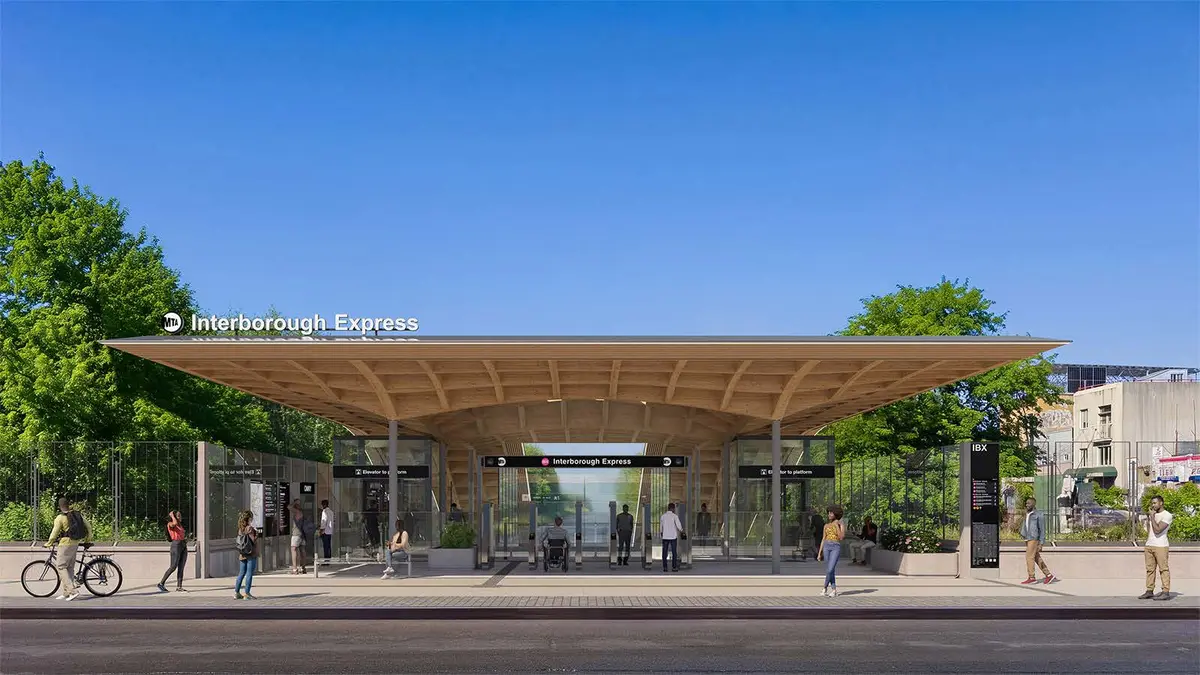
The agency plans to publish the Draft Environmental Impact Statement for the proposed 14-mile Brooklyn–Queens route in the fourth quarter of 2026, which it describes as ahead of schedule. However, the project website already describes the public review period as late 2026. The published information therefore does not show how much the timetable has changed. The September 9 announcement also identified the four subway stations on the IBX route that are not yet accessible. It gave completion estimates for three of them and a contract-award deadline for Wilson Av.
Four subway transfer stations on a dated timetable
Three of the four are already under way through the 2020–2024 Capital Plan. Junius St on the 3 is due by the end of 2026. That work also adds a new connection to Livonia Av on the L. Broadway Junction, where the A, C, J, Z and L meet, follows by the end of 2027. Ave I on the F comes next, by early 2028.
The fourth station, Wilson Av on the L, sits in the 2025–2029 Capital Plan. Because the MTA has expedited it, the agency plans to award a contract for the work by mid-2027. Wilson Av will be the last IBX–subway transfer point to receive accessibility improvements. Once all four are finished, every transfer point along the line will offer an accessible option.
Interborough Express accessibility enters vehicle design criteria
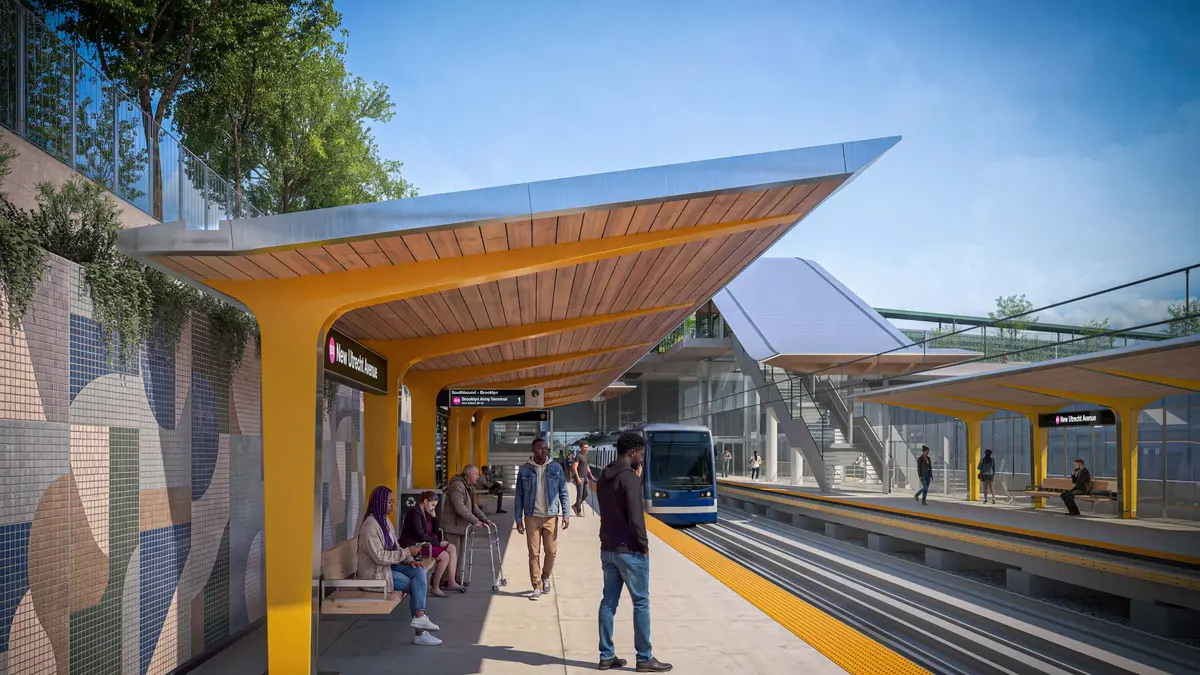
For vehicle designers, accessibility forms part of the criteria published by the MTA. Separately, the station design includes level boarding throughout the platform and pass-through elevators with wider cabs. It also covers wide fare gates reached by tactile floor tiles, brighter lighting, digital signage and audio announcements. For the vehicles, the MTA wants entrance height matched to platform height and priority seating. It also asks for easy movement inside the car and compliance that meets or exceeds ADA guidelines.
Those accessibility requirements sit alongside demanding operating constraints. The chosen vehicles must support five-minute peak service, negotiate tight curves along an active freight corridor and pass through the East New York Tunnel. The MTA also lists speeds of up to 65 mph and regenerative braking that recovers energy. End to end, the planned journey takes approximately 32 minutes.
| Parameter | Criterion listed by the MTA |
|---|---|
| Peak service interval | Every five minutes |
| End-to-end journey | Approximately 32 minutes |
| Speed | Up to 65 mph |
| Boarding | Entrance height at platform height, level boarding along the platform |
| Alignment constraints | Tight curves along an active freight corridor; clearance through the East New York Tunnel |
| Interior | Priority seating; easy movement inside the car |
| Compliance | Meets or exceeds ADA guidelines |
| Energy | Regenerative braking |
Taken together, the entries describe a vehicle that must support five-minute peak service, fit a constrained freight alignment and meet the platform at door level. The values appear in the vehicles section of the Interborough Express project site.
MTA Construction & Development President Jamie Torres-Springer said accessibility was being built into the project from the outset.
“From day one, we’re building accessibility into every aspect of the project—because every rider should be able to take full advantage of this new way to move across the boroughs.”
Vehicle design inside the Jacobs–HDR engineering contract
The MTA’s own case for light rail also rested on procurement. In its project FAQ, the MTA argued that light rail vehicles can be bought off the shelf with minimal modification. It added that the supplier base differs from the one behind its conventional rolling stock. So far, the MTA has announced no vehicle order.
Vehicle design instead sits inside the engineering phase that started in 2025. A joint venture of Jacobs and HDR leads that phase. The MTA Board authorized the team’s selection in July 2025, and the agency says it awarded the design contract that October. Its scope reaches from signaling and communications to track, stations, bridges and retaining walls. Vehicle design, the operations facility and the storage yard form part of the engineering scope.
Full project funding is not yet in place. Total cost is put at $5.5 billion, with $2.75 billion approved through the 2025–2029 Capital Plan. Funding for the current design phase comes mainly through $45 million previously secured by Governor Hochul, plus the Capital Plan. The MTA projects more than 160,000 weekday riders. That figure, it says, would exceed the ridership of any light rail system now operating in the United States.
How published IBX figures differ across MTA sources
The station count has fallen from 19 in the August 2025 announcement to 18 in the September 2026 release. Public MTA materials use slightly different figures for bus connections: the August 2025 announcement lists 50 routes, while an earlier project FAQ and the September 2026 release list 51. Meanwhile, the updated project site uses the broader description of more than 50 bus connections.
The station count fell after the MTA removed Sutter Avenue from the IBX program following further analysis of transfers, station spacing and transit performance. The existing Sutter Av station on the L will remain a local stop, while the IBX will operate express between Livonia Av and Atlantic Av.