
India Develops High-Speed Railways Stretching 7,000 km
India is busy building high-speed railways, aiming to have a 7,000 km network ready by 2047 that can connect large cities and become the representative of the nation’s technology advancement.
This is reported by the railway transport news portal Railway Supply.
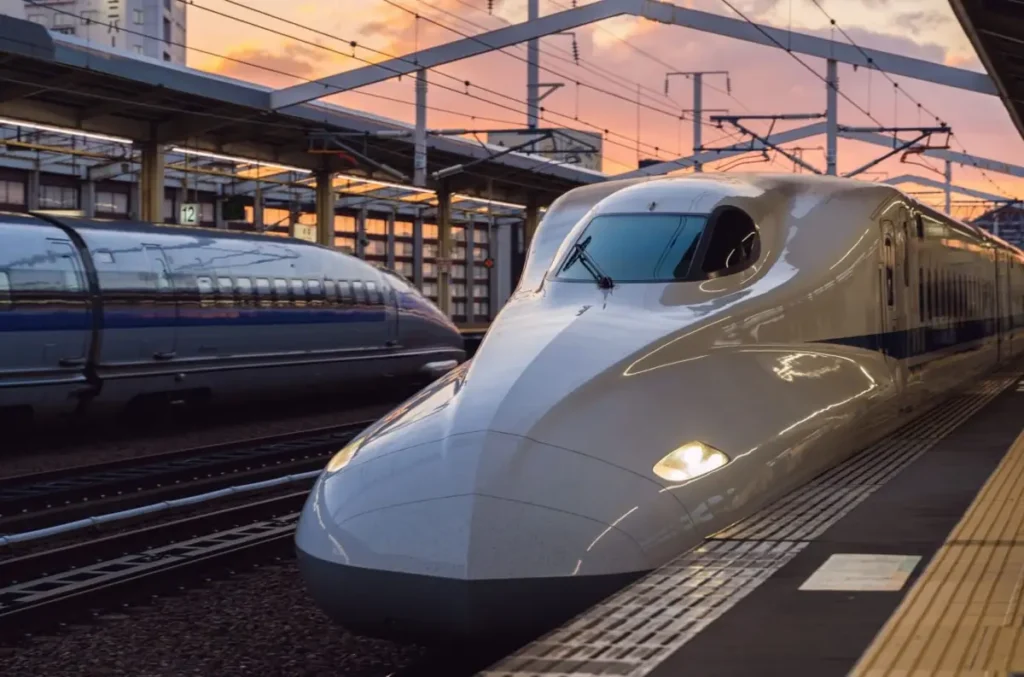
High-Speed Railways Drive India’s Industrial Growth
Minister for Railways Ashwini Vaishnaw said the high-speed railway project is planned for decades into the future and become a transport plan cornerstone. Trains will run at speeds up to 350 km/h, radically reducing journey times between the main metropolitan hubs.
Don’t miss…Knorr-Bremse to Overhaul Sanitary Systems on Pendolino Trains in the UK
Today, there are 156 Vande Bharat electric trains and 30 Amrit Bharat trainsets in service. In the 2024–2025 fiscal year, Indian plants manufactured a record 1,681 locomotives — a number that indicates robust factory capacity and steady expansion. Those outcomes seal the proof that the people of India’s railroad industry are quickly catching up with the best manufacturers in the world.
In the coming three years, the Amrit Bharat 4.0 project aims at manufacturing new-generation locomotives and passenger trains. The trains will not only be a symbol of domestic technology but also export material, enhancing India’s market share in the world’s rail technology market.
High-Speed Railways Strengthen International Cooperation
India’s first high-speed project — the Ahmedabad – Mumbai line — became a testing ground for technology and foreign collaboration. India first negotiated with Japan to buy Shinkansen trains, but negotiations broke down. Then the government issued a tender to develop and produce indigenously manufactured trainsets capable of 250 km/h speeds.
In April, Japan committed donating one Shinkansen E5 and one E3 train set to India for trial along the being-built corridor. Through this collaboration, the Indian engineers will be able to learn high-end technology and tailor it in local conditions.
On the other hand, BEML aims at conducting its own high-speed train testing by the end of 2026, and India also rejuvenated talks about procuring Shinkansen E10 trains. That shows a balanced approach — marrying local innovation with global expertise in order to hasten modernization in our infrastructure.
Construction of high-speed railways represents one of the most ambitious infrastructure projects in India. It produces new jobs, types the manufacturing industry, and enhances technology self-sufficiency. By matching local investment with foreign partnerships, India reinforces its presence in the globe’s transport sector.
News on railway transport, industry, and railway technologies from Railway Supply that you might have missed:
What are high-speed railways?
High-speed railways are rail systems that allow trains to operate at speeds exceeding 250 km/h, providing fast, safe, and comfortable travel between major cities.
When will India’s high-speed railway network be completed?
The government aims to complete the network by 2047, with the first corridor, Mumbai–Ahmedabad, expected to open by the end of 2026.
Will India export its high-speed trains?
Yes. Under the Amrit Bharat 4.0 initiative, India plans to export locomotives and coaches, expanding its footprint in the global rail technology market.


