Hyundai Rotem maintenance contract covers ONCF fleet
25.06.2026
The Hyundai Rotem maintenance contract with Morocco’s national rail operator ONCF covers new electric trains destined for use on the country’s railway network.
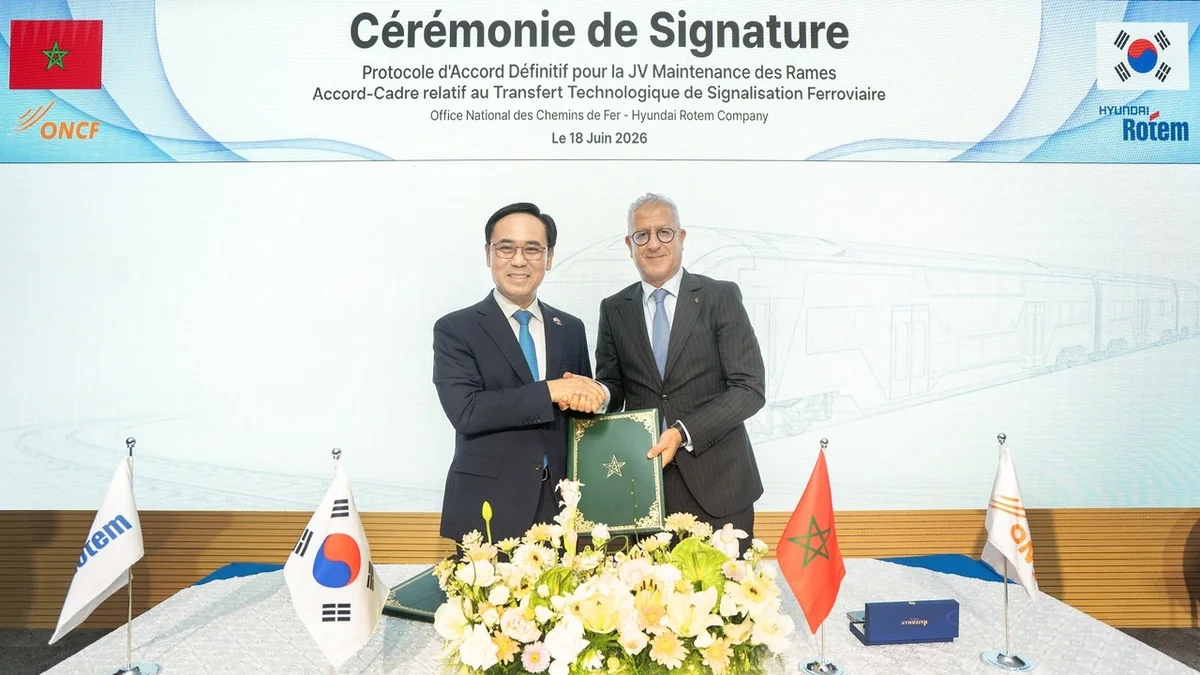
Hyundai Rotem signed the contract in Rabat during a formal ceremony attended by CEO Lee Yong-bae and ONCF Director General Mohamed Rabie Khlie.
The agreement, valued at EUR 487 million, equivalent to 748.2 billion won, is the largest overseas maintenance contract of this type signed to date by Hyundai Rotem.
Hyundai Rotem maintenance contract covers 440 railcars
The 20-year maintenance agreement covers the full fleet of 440 double-decker electric railcars ordered under an earlier agreement concluded in February. The trains are intended to connect major Moroccan cities, including Casablanca, and support the expansion of the network ahead of the 2030 FIFA World Cup, which Morocco is co-hosting.
Under the agreement, Hyundai Rotem will supply spare parts, operate a technical support center, and carry out heavy maintenance. The scope includes technical inspections, repairs, and the replacement of components that are critical to operational safety.
ONCF electric trains linked to Vision 2040
The maintenance package is linked to a separate EUR 1.3 billion contract under which Hyundai Rotem is supplying 440 electric trains for the ONCF network.
The maintenance deal follows Hyundai Rotem’s wider double-decker train supply project in Morocco. In its February announcement, the company said the order marked its first entry into the Moroccan market and covered 160 km/h double-decker trains intended to serve Casablanca and other key regions before the 2030 World Cup. In the June announcement, Hyundai Rotem said the new agreement finalized maintenance, material management and technical support arrangements for the same fleet, with the work to run for 20 years through a joint venture with ONCF.
For the supply of maintenance parts, Hyundai Rotem will work with more than 200 small and medium-sized enterprises in South Korea, thereby contributing to the development of the railway industry in both South Korea and Morocco.
The contracts form part of Morocco’s broader transport infrastructure modernization plans under the Vision 2040 program. The program aims to expand the national railway network, improve links between cities, airports, and ports, and strengthen Morocco’s role as a regional transport hub.