HS2 green tunnel completion reaches Copthall Tunnel
09.07.2026
HS2 green tunnel completion has been reached at the 880-metre Copthall Tunnel near West Ruislip in west London, with the structure becoming the first of five planned green tunnels on the route to be fully completed.
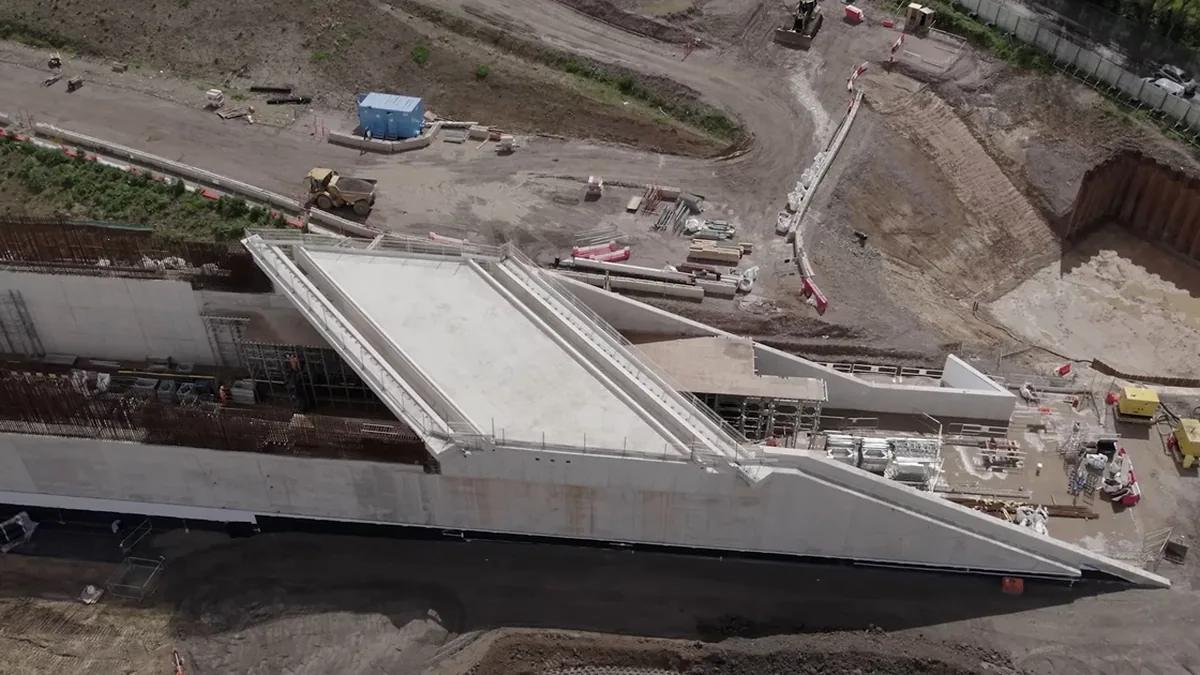
The tunnel forms part of Britain’s new high-speed railway between London and the West Midlands. It was built using approximately 1.2 million cubic metres of material excavated during work on the nearby twin-bore Northolt Tunnel.
Copthall Tunnel and material reuse
This section of the route was initially planned as an open cutting. It was later redesigned as a cut-and-cover tunnel, allowing material from the Northolt Tunnel works to be reused on site. HS2 said the change avoided an estimated 100,000 lorry journeys that would otherwise have been required to remove the spoil.
The main tunnel structure is now complete, and the earth covering has been placed above it. Landscaping will continue over the next two years, including the planting of trees, shrubs and other vegetation to help integrate the structure into the surrounding environment.
Copthall Tunnel is part of the southern section of HS2 being delivered by the Skanska, Costain and STRABAG joint venture.
Don’t miss…Vande Bharat sacred towns for weekend rail trips
HS2 green tunnel completion on the London route
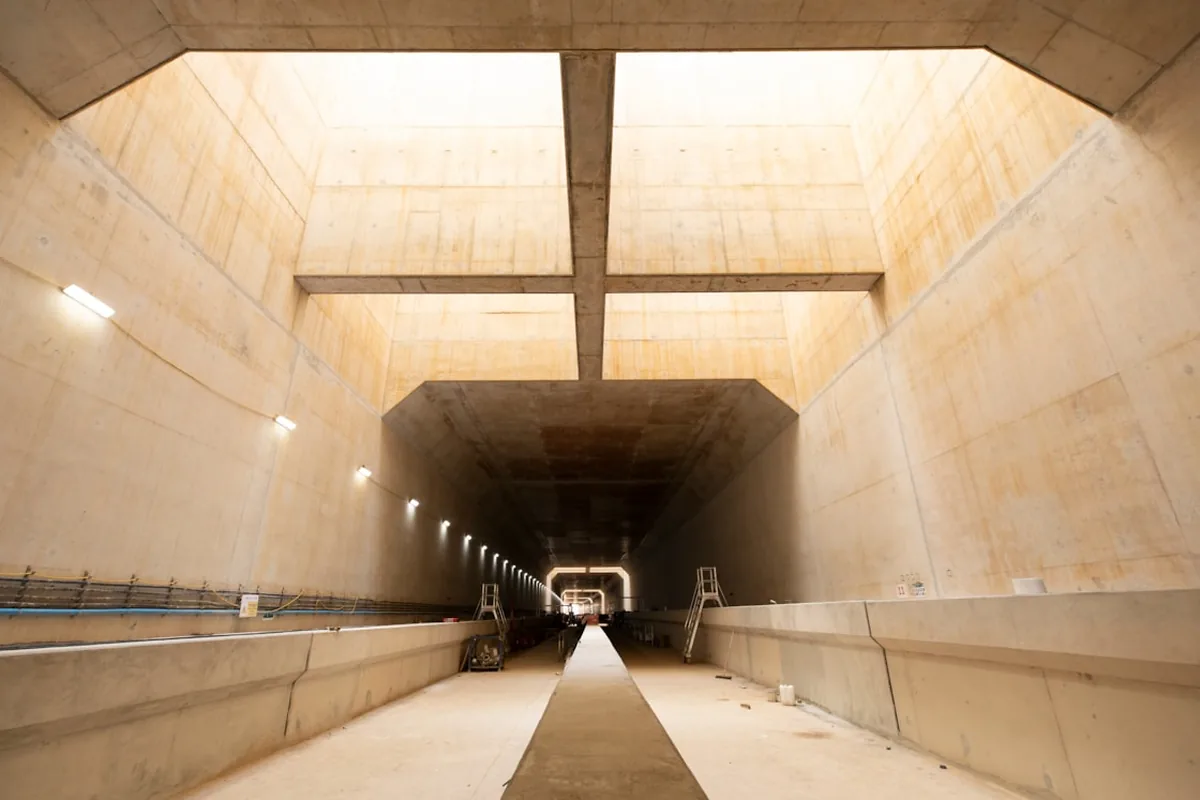
Located between the Northolt Tunnel and the Colne Valley Viaduct, the structure is more than half a mile long. Internally, it is approximately 12 metres high and up to 16 metres wide. It has been designed to withstand aerodynamic forces from trains travelling at speeds of up to 200mph. Five ventilation shafts connect the landscaped area above with the tunnel roof and reach depths of up to 17 metres.
During construction, travelling formwork and falsework systems advanced in 20-metre sections, enabling engineers to build the tunnel along its curved alignment.
The project also included the diversion and reconstruction of Harvil Road, together with a new bridge carrying the road over the railway.
James Leeming, Head of Delivery – HS2 said:
“Finishing civil works on HS2’s first-completed ‘green’ tunnel clearly demonstrates the progress that’s being made to deliver the first new intercity railway north of London in over a century.”
“I pay tribute to the dedicated workforce that has worked since early 2021– and in all weathers – to deliver this remarkable structure, which was a key component of our plan to deal with the muck excavated to build part of HS2’s tunnelled sections.”
Wider HS2 programme reset
The completion of Copthall Tunnel comes as work continues across the wider HS2 programme. Four other green tunnels remain under construction. HS2 has also recently confirmed that structural works on Chipping Warden Green Tunnel in Northamptonshire have been completed ahead of backfilling.
Once landscaping is finished, Copthall Tunnel will form part of a continuous green corridor across the site, while high-speed rail services will run below the restored ground level.
Rail Minister Lord Peter Hendy said:
“The completion of Copthall tunnel marks another significant milestone for HS2. Making use of innovative design, the tunnel reduces the impact on nearby communities by blending into its surroundings whilst keeping thousands of truck journeys off local roads by using materials close to the site.”
“Our reset of HS2 is driving faster, more efficient construction on-the-ground and supporting thousands of jobs as we work to deliver the project at the lowest reasonable cost.”
HS2’s green tunnel programme covers five cut-and-cover structures between London and the West Midlands, positioned to reduce disruption to natural habitats and nearby communities. In this construction model, the process does not end with the tunnel structure itself: excavated earth is used to backfill the completed tunnel, before local trees, shrubs and vegetation are planted to restore the surface and reduce visual and noise impacts.
The Copthall Tunnel completion therefore sits within both the environmental restoration sequence for HS2’s green tunnels and the wider 2026 programme reset. The UK Department for Transport has said the reset includes new costs and timeframes, as well as plans for HS2 trains to operate at 320 km/h rather than 360 km/h under previous plans.
HS2 has said the project is currently at its peak construction phase. Earlier this year, the UK Department for Transport confirmed a revised delivery schedule and updated cost estimates as part of an ongoing programme reset. The department also announced proposals to simplify parts of the railway by operating trains at speeds comparable with high-speed networks elsewhere in Europe and Japan, with the aim of reducing costs and shortening the construction programme.
News on railway transport, industry, and railway technologies from Railway Supply that you might have missed: