Gold Coast Transport Plan adds rail and metro links
24.06.2026
The Gold Coast Transport Plan outlined by the Queensland Government will expand public transport capacity as the city responds to population growth and prepares for the 2032 Olympic and Paralympic Games.
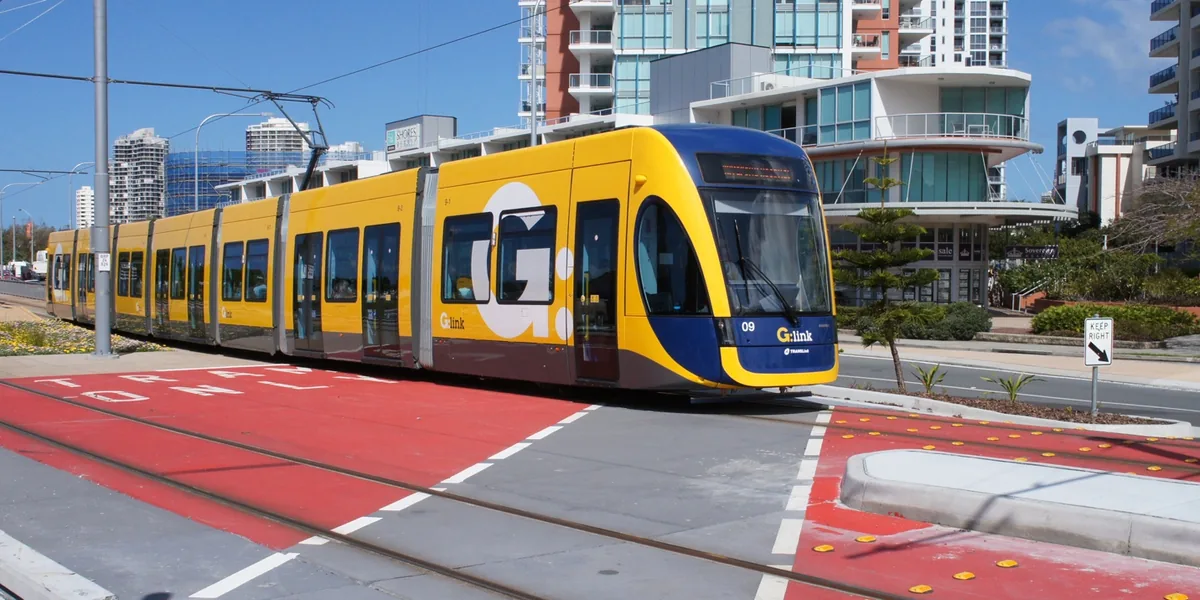
The plan is built around two main initiatives: an extension of the Gold Coast Light Rail network and a metro-style service known as The GC Surfer.
Together, they set out the rail and metro-style elements of the plan, with delivery tied to the 2032 Olympic and Paralympic Games.
Gold Coast Transport Plan scope
The Gold Coast Light Rail extension will connect Harbour Town in Biggera Waters with the Gold Coast University Hospital. The route will follow Olsen Avenue and Oxley Drive, with three new stations planned at Musgrave Avenue, Labrador and Biggera Waters.
To support the larger network and more frequent services, the government also plans to acquire additional light rail vehicles and construct another depot.
The Harbour Town Light Rail extension is intended to improve public transport access on the northern Gold Coast, reduce congestion and provide extra capacity for a growing population before the 2032 Games.
The GC Surfer and southern Gold Coast links
Another part of the plan is The GC Surfer, which will link Burleigh Heads with the Gold Coast Airport. The government said both The GC Surfer and the Harbour Town Light Rail extension will be accelerated as part of the planned changes to the city’s transport network.
The GC Surfer will use metro-style vehicles running every ten minutes between Robina, Varsity Lakes, Burleigh Heads, Gold Coast Airport and Coolangatta.
The service follows the government’s review of Gold Coast Light Rail Stage 4. That review found strong community support for flexible and cost-effective transport options that respect the natural environment and protect local landmarks, including Burleigh Heads National Park and Tallebudgera Creek.
Both projects are planned to be delivered by the 2032 Olympic and Paralympic Games.
What changes for passengers?
For passengers, the plan adds new links to a light rail system that has already been developed in stages. Queensland transport material describes the existing Gold Coast Light Rail network as a 20.3 km system between Helensvale and Broadbeach, with 19 stations and 18 trams. Stage 3 is extending that corridor by 6.7 km from Broadbeach to Burleigh Heads with eight more stations. The new plan would add a northern connection to Harbour Town and a metro-style link toward Gold Coast Airport, while the 2032 Delivery Plan frames transport upgrades as part of preparations before, during and after the Games.
Government comments on the transport plan
David Janetzki, Treasurer, Minister for Energy and Minister for Home Ownership, said the new transport plan would help future-proof Queensland’s second-largest city for the decades ahead.
“Central to a better lifestyle and a more productive economy is the transport system and infrastructure that Queenslanders need to make the journey home safer and sooner,”
“We’re seizing the generational opportunity presented by the 2032 Olympic and Paralympic Games to create legacy infrastructure for all Queenslanders.”
Member for Bonney Sam O’Connor said the government was delivering for the northern Gold Coast.
“Light rail to Harbour Town has been talked about for more than a decade, so we’re proud to be getting on with the job of delivering it to cut congestion and connect thousands of people in Biggera Waters, Labrador and Arundel to world-class public transport,”
Member for Southport Rob Molhoek, who has supported Gold Coast transport strategy, including light rail, for 20 years, welcomed the next stage moving forward.



