EU high-speed rail network to revolutionize European travel
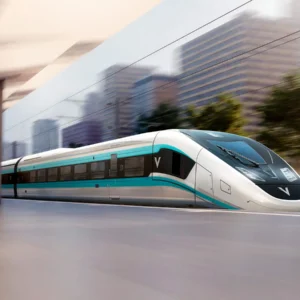
The EU is also revamping its transport future with its ambitious high-speed rail network, an investment of over 550 billion euros, which will connect cities across the European Union by 2040, cutting travel time between them by then.
This is reported by the railway transport news portal Railway Supply.
EU high-speed rail network to enhance connectivity
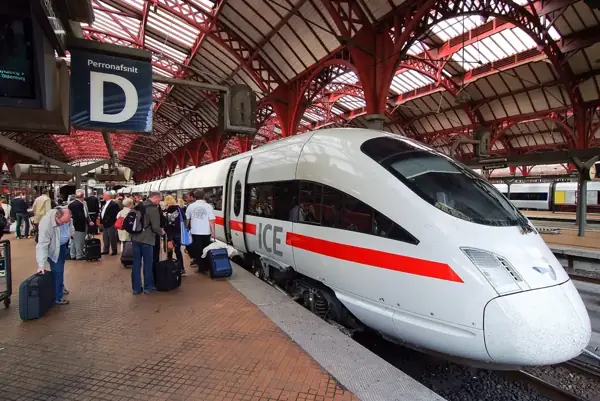
The European Commission has announced the construction of one of the world’s biggest rail networks, which will connect remote and major cities. The investment, which is valued at €550 billion ($589 billion), will promote faster, cleaner, and cheaper transport solutions.
Don’t miss…Great British Railways: Transforming UK Rail Travel
The construction of the early corridors will commence during the current decade, with the operation extending throughout the 2030s and 2040s. The plan is to create fast, seamless journey possibilities between Central, Eastern, and Southern Europe.
Currently, the fast rail network is mostly used in connection with the countries of France, Spain, Italy, and Germany. However, there are areas that are still unconnected. The new project will correct this, with the latest train technology that will go over 300 km/h being used.
EU high-speed rail network to cut travel times
According to Euronews, “The network will link the European capitals and regional centers with the help of ten core corridors. The journey time between Copenhagen and Berlin will be cut to four hours from the current seven, while the Lisbon to Paris service will be reduced to nine hours with onward connection to Madrid,”
The journey between Tallinn-Warsaw, involving stops in Riga-Vilnius, will be below eight hours. The journey between Budapest-Bucharest will reduce from fifteen hours to over six, while the journey between Sofia-Athens will be six hours from the current fourteen hours.
Such time-saving benefits will result in huge economic advantages. The faster travel will promote employment, business, and regional development. Also, the fact that there is much lower carbon emission with high-speed train transport compared with air transport will help the EU realize its climate neutrality by the year 2050.
Expert insight and economic impact
Transport analysts call the network a milestone for European integration. They note that large-scale coordination among national operators will be crucial. Governments must upgrade existing lines, modernize signaling, and deploy low-emission rolling stock to meet EU standards.
Although the project’s cost is enormous, its long-term returns — including job creation, productivity gains, and reduced carbon output — far outweigh the investment. By 2040, Europe could rival Japan and China in high-speed connectivity, offering travelers a faster, greener alternative.
Source: curlytales.com
News on railway transport, industry, and railway technologies from Railway Supply that you might have missed:
What is the EU high-speed rail network?
It is a €550 billion plan by the European Commission to link European cities through a modern, high-speed rail system by 2040.
How will the EU high-speed rail network reduce travel times?
Routes such as Copenhagen–Berlin and Lisbon–Paris will take up to 50% less time, improving efficiency for both leisure and business travelers.
Can travelers expect lower emissions from high-speed trains?
Yes. High-speed trains generate far less carbon per passenger than short-haul flights, making them central to Europe’s green transition.