Chuo Shinkansen tunnel boring machine stops again with drive about 9% done
A Chuo Shinkansen tunnel boring machine under Tokyo’s Shinagawa ward has stopped for inspection after an abnormal sound, about 734 m into a roughly 8.2 km drive towards Todoroki.
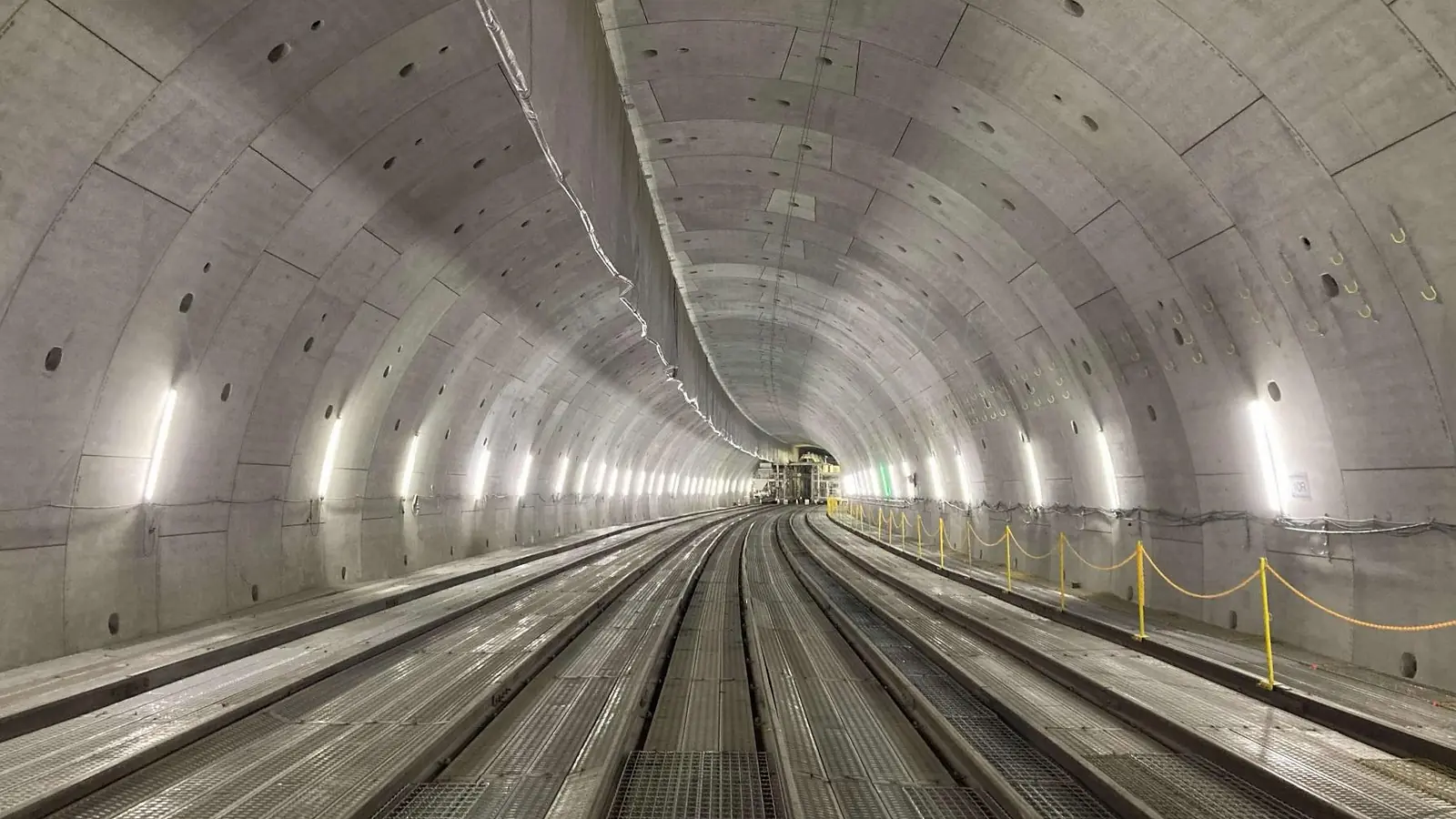
In its progress update dated 28 September, Central Japan Railway (JR Central) says boring is currently halted while the machine is inspected near Nishi-Shinagawa 1-chome, and that it has confirmed no effect on the ground surface or the surrounding environment. The update names neither the cause of the sound nor a date for resuming work.
Where the Kita-Shinagawa machine has stopped
The machine is boring the Kita-Shinagawa section, which covers about 9.2 km of the roughly 37 km First Metropolitan Area Tunnel, from Shinagawa Station to the Todoroki emergency exit. It set off from the Kita-Shinagawa emergency exit shaft and is heading west for about 8.2 km to Todoroki, passing the Higashi-Yukigaya emergency exit on the way; JR Central’s construction plan leaves the roughly 1 km stretch to Shinagawa Station until afterwards. At about 734 m, the machine has covered roughly 9% of the drive to Todoroki.
The work is carried out for JR Central by a joint venture of Kumagai Gumi, Daiho Corporation and Tokura Corporation. The maglev line it serves is planned to link Shinagawa and Nagoya in 40 minutes at the fastest, at an operating speed of 500 km/h.
Earlier halts on the Kita-Shinagawa drive
This is not the first pause. Survey excavation, a trial stage to check effects on the surroundings before full boring, began in October 2021. In March 2022, about 50 m in, the machine was stopped for a setup change and inspection, which found faulty additive injection equipment that had left excavated soil stuck to the cutter head; boring resumed in May 2023. In July 2023, at about 124 m, segments became harder to assemble after the machine’s outer skin plate had deformed inward by up to about 7 cm on curves, and reshaping work ran from October 2023 to March 2024. The roughly 270 m survey drive was completed on 4 November 2024.
Full-scale boring began on 25 August 2025 and stopped on 28 October 2025, when a step of up to about 13 cm opened between the pavement and the roadway at an intersection in Nishi-Shinagawa 1-chome. JR Central and the contractors said in December 2025 that they believe air built up in the machine’s chamber escaped to the surface and pushed up the pavement, because it had not been vented often enough or in large enough volumes. Their fixes include set venting frequencies and volumes and a new alert in the boring management system. In April 2026, Setagaya City wrote to JR Central after the company announced that boring would restart.
| Date | What happened | Distance from Kita-Shinagawa | Boring resumed |
|---|---|---|---|
| October 2021 | Survey excavation begins | 0 m | — |
| March 2022 | Stopped for setup change and inspection; faulty additive injection equipment found | About 50 m | May 2023 |
| July 2023 | Stopped for setup change and inspection; outer skin plate deformed inward by up to about 7 cm | About 124 m | April 2024 |
| 4 November 2024 | Survey excavation completed | About 270 m | — |
| 25 August 2025 | Full-scale boring begins | Not stated | — |
| 28 October 2025 | Boring stopped after a road surface step of up to about 13 cm in Nishi-Shinagawa 1-chome | Not stated | Restart announced before 21 April 2026 |
| 28 September 2026 update | Stopped for inspection after an abnormal sound inside the machine | About 734 m | Not announced |
The machine has been halted four times since boring began in October 2021; the latest stop leaves it about 734 m into the roughly 8.2 km drive to Todoroki. Distances are approximate, as given by JR Central. Sources: JR Central survey excavation briefing, December 2024; JR Central and contractors on the road surface uplift, December 2025; Setagaya City letter, 21 April 2026; JR Central progress update, 28 September 2026.
What JR Central tells residents
JR Central says it updates the machine’s position every Monday in principle and runs a 24-hour construction information line for people living near the planned route. Detailed questions about the machine’s position are handled by its Chuo Shinkansen Tokyo construction office.