Halkalı–Kapıkule project nears service after tests
20.06.2026
Halkalı–Kapıkule project tests on the Çerkezköy–Kapıkule section have brought the route closer to operation, marking progress on the main railway between Istanbul and the Bulgarian border.
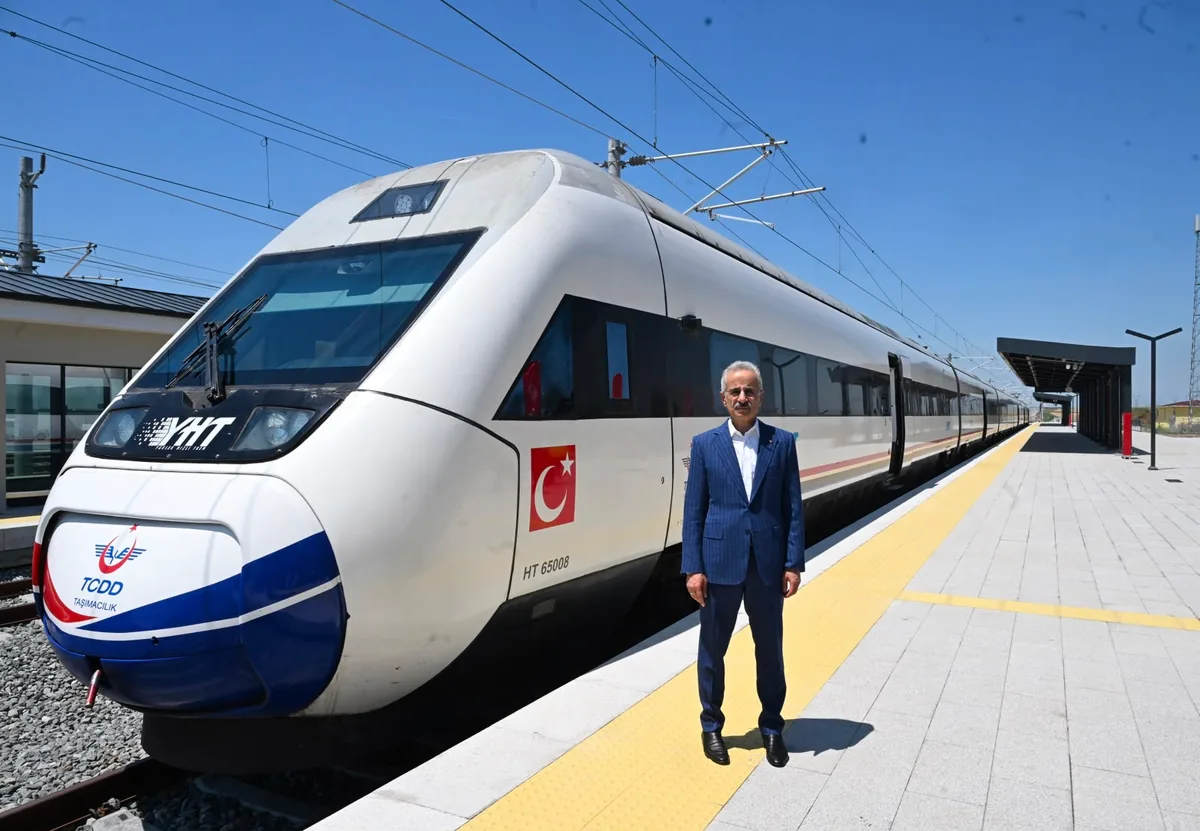
Turkey’s Minister of Transport and Infrastructure, Abdulkadir Uraloğlu, travelled along the newly completed infrastructure during a test run and said certification work is being finalised. The Çerkezköy–Kapıkule section is expected to open for service by the end of the year.
Halkalı–Kapıkule project scope
The wider Halkalı–Kapıkule project is designed to modernise the principal rail connection between Istanbul and Bulgaria. It forms part of the Orient/East–Mediterranean corridor within the Trans-European Transport Network and completes the European segment of the Middle Corridor, which links Europe with the Caucasus, Central Asia and China through Turkey.
The full project covers 229 km and consists of three parts: Halkalı–Ispartakule, Ispartakule–Çerkezköy and Çerkezköy–Kapıkule. The 153 km Çerkezköy–Kapıkule section is the most advanced part of the scheme and is being financed jointly by the European Union and Turkey.
Work on this section has included the construction of 31 bridges, eight tunnels, 61 overpasses, 53 underpasses and 175 culverts. Track-laying has been completed across 353 km, while electrification and signalling systems are in the final stages of implementation.
The project’s total value exceeds €1 billion. The Çerkezköy–Kapıkule section forms part of the largest infrastructure scheme carried out under financial cooperation between the European Union and Turkey.
Bulgaria–Turkey rail connection
The Bulgaria–Turkey rail connection is significant because it extends the TEN-T network to the European Union’s external border and strengthens transport links with Turkey, one of the EU’s key neighbouring markets.
Once in use, the upgraded infrastructure will provide a European-standard rail route between Istanbul and Bulgaria. It will support both passenger and freight operations on the wider corridor between Central Europe and Asia.
The line has been designed for mixed traffic and speeds of up to 200 km/h. Its technical specification includes double-track infrastructure, electrification and ERTMS Level 1 signalling, allowing interoperability with European rail networks.
Capacity and journey-time changes
Turkish authorities expect the project to reduce journey times between Halkalı and Kapıkule from four hours to 90 minutes. Freight transit times are projected to fall from 8.5 hours to 3.5 hours.
The annual passenger capacity of the route is expected to increase from about 600,000 to almost 3 million. Freight capacity is projected to rise from 1.5 million tonnes to 9.5 million tonnes per year.
These changes are expected to benefit the industrial areas of Istanbul, Kocaeli, Tekirdağ and Thrace by improving their rail access to European markets.
Turkey is also expanding the Kapıkule rail complex, which serves as the main cross-border rail gateway to Bulgaria. The complex will grow from 253,000 to 660,000 square metres, while the number of tracks will increase from 23 to 42.
The expansion is intended to ease operational bottlenecks, accelerate customs procedures and increase capacity for international rail services.
Context
Official project material shows that the current Çerkezköy–Kapıkule tests concern the 153 km section co-financed by the European Union and Türkiye, while the remaining 76 km of the Halkalı–Kapıkule route are being handled separately through Turkey’s national budget. The European Commission’s 2025 Türkiye report also placed the Çerkezköy–Kapıkule section at 95% physical progress, which supports the current focus on testing, certification and preparation for service rather than treating the full 229 km corridor as already complete.
The Halkalı–Kapıkule project goes beyond a conventional rail upgrade because it supports one of the main railway links between the European Union and Asia. It also supports the shift of larger traffic volumes from road to rail as Europe develops more efficient and sustainable transport corridors.