Battery electric locomotives in Australia enter service
26.12.2025
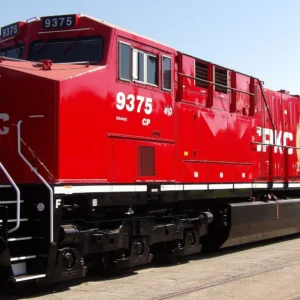
Battery electric locomotives in Australia are now working on active mining railways, offering a way to reduce diesel use without waiting for new catenary infrastructure.
This is reported by the railway transport news portal Railway Supply.
Two Fortescue electric locomotives have entered service on iron ore routes in the Pilbara, where operations are remote, harsh, and demanding.

Battery electric locomotives in Australia: the 14.5 MWh leap
Manufactured by Progress Rail for Fortescue, the locomotives are built around unusually large onboard energy storage—an approach previously covered by Railway Supply. A Progress Rail 14.5 MWh battery locomotive carries a 14.5 MWh battery system per unit, described in the source as the biggest battery installation in any mobile land vehicle.
Fortescue expects the two locomotives together to deliver a diesel reduction of around 1 million liters per year, positioning the change as a practical move in one of the most energy-intensive industrial sectors.
Don’t miss…Amtrak Acela delays: Senate report cites years of setbacks
Key technical features in service
- Battery capacity: 14.5 MWh per unit
- Axles: 8 per locomotive
- Regenerative braking: recovers up to 60% of energy
- Recharging power: 2.8 MW fast charging
- Energy source: 100% renewable from Fortescue’s own installations
- Diesel reduction: about 1 million liters annually (both units combined)
Pilbara mining rail decarbonization without overhead wires
Fortescue links the rollout to its plan to reach zero operational emissions in the Pilbara before the end of the decade. The decision to pursue this battery approach was made over two years ago, when solutions at this scale still faced skepticism.
On these routes, terrain and loads matter. Mining railways often combine steep grades with very heavy trains, which is why regenerative braking up to 60% is a key element—capturing energy during loaded downhill runs. The locomotives recharge at 2.8 MW, supporting quick rotations without pausing operations for hours.
Delivery timeline and Fortescue’s operational claims
Delivery was originally scheduled for 2023, but it was completed this year. The first locomotive arrived in June, and the second followed a few weeks ago. Both units landed in Port Hedland before moving on to the Pilbara mining complex.
Fortescue CEO Dino Otranto emphasized that the equipment is already in real-world use: “They are not concepts,” he said, adding that they are “operational assets” that are redefining what is possible in heavy rail transport.
Australia’s wider push: BHP Wabtec 7 MWh battery locomotives
Fortescue is not the only operator moving in this direction. Other Australian mining companies are pursuing similar decarbonization paths.
Earlier this month, BHP received its own battery-powered electric locomotives from Wabtec; in a BHP update, the company described them as 7 MWh units with energy recovery systems. The locomotives are expected to begin operating in real conditions soon. If they meet expectations, the takeaway in the source is straightforward: heavy rail can move toward electrification without waiting for large-scale infrastructure projects.
What the shift could mean beyond mining?
These locomotives are not presented as a standalone climate solution. Instead, they are framed as a workable template for industrial decarbonization—one that applies to steel, minerals, logistics, and tough-duty transport, not only rooftop solar or city EVs.
In the short term, the same logic could accelerate replacement of diesel locomotives on mining, forestry, or other industrial routes. Over time, the approach could spread to non-electrified corridors on other continents, reducing emissions without waiting decades for new infrastructure. And in the long run, when paired with local renewables, stationary storage, and smarter grids, it could help decarbonize one of the most difficult parts of the energy and transport chain.
News on railway transport, industry, and railway technologies from Railway Supply that you might have missed: