Barstow International Gateway project gets approval
25.06.2026
Barstow International Gateway project has been approved by Barstow City Council, clearing the way for BNSF Railway to advance a privately funded USD 4 billion freight rail terminal in California.
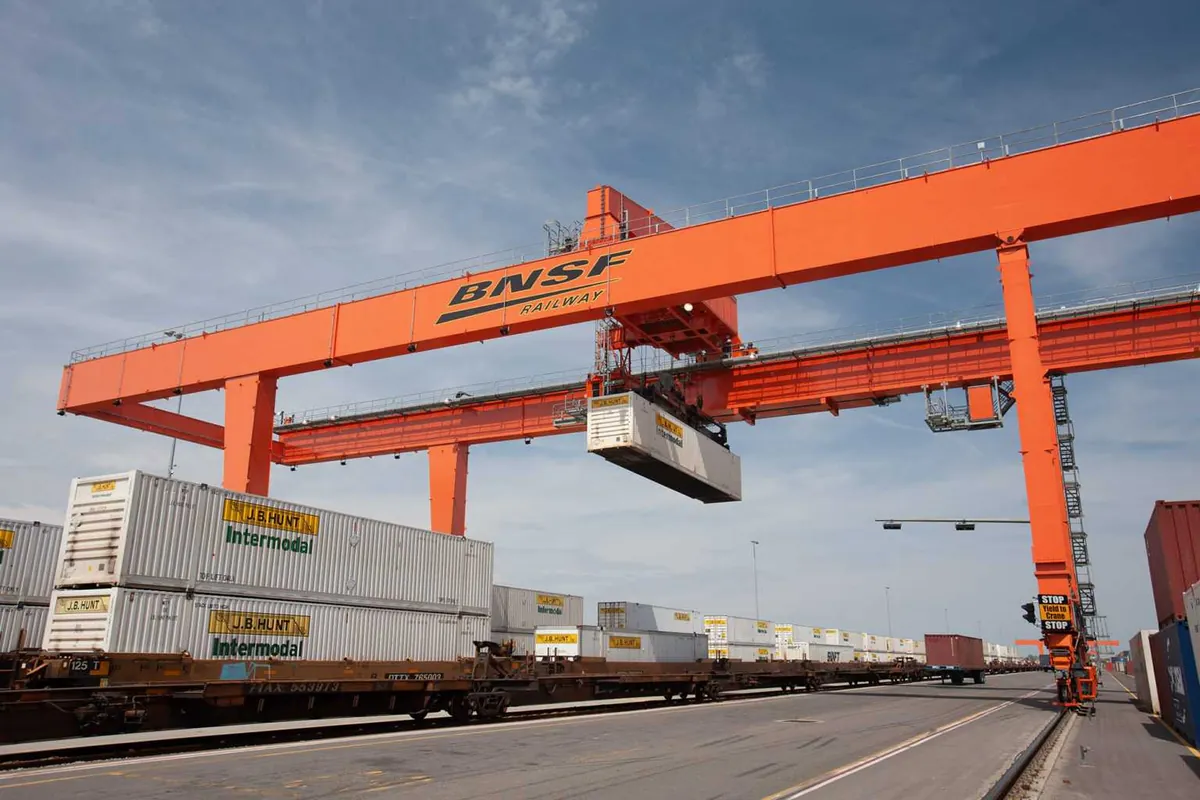
The project covers a 4,500-acre, or 1,821-hectare, site in western Barstow. It is planned as an integrated rail terminal in California with a rail yard, an intermodal terminal and warehouse facilities for freight transfer. Its main purpose is to move goods more efficiently from international maritime containers into domestic containers, with a focus on faster and more sustainable logistics operations.
Under the planned operating model, containers unloaded at the Port of Los Angeles and the Port of Long Beach will travel directly by rail to Barstow. They will then be handled at the new facility and redistributed through BNSF’s national network.
BNSF Railway President and CEO Katie Farmer said:
“This USD 4 billion private investment strengthens the entire supply chain, reduces port congestion and gives our customers greater flexibility,”
Barstow International Gateway project and freight flows
The California terminal will fundamentally change how goods are transported in the state. By moving container sorting and processing operations from congested port areas to Barstow, it is expected to enable a significant shift of freight traffic from roads to rail.
Project estimates indicate that the change will eliminate 330 million km, or 205 million miles, driven by trucks in 2028. The figure is expected to rise to 433 million km, or 269 million miles, in 2033 and to 502 million km, or 312 million miles, in 2048. This will help ease road congestion, lower emissions and reduce pressure on urban communities near the ports.
BNSF also plans to equip the facility with zero-emission freight-handling equipment. This includes electric cranes, electric forklifts and other low-emission machinery. The company has also reached agreements with environmental authorities to test and introduce further technologies aimed at reducing emissions.
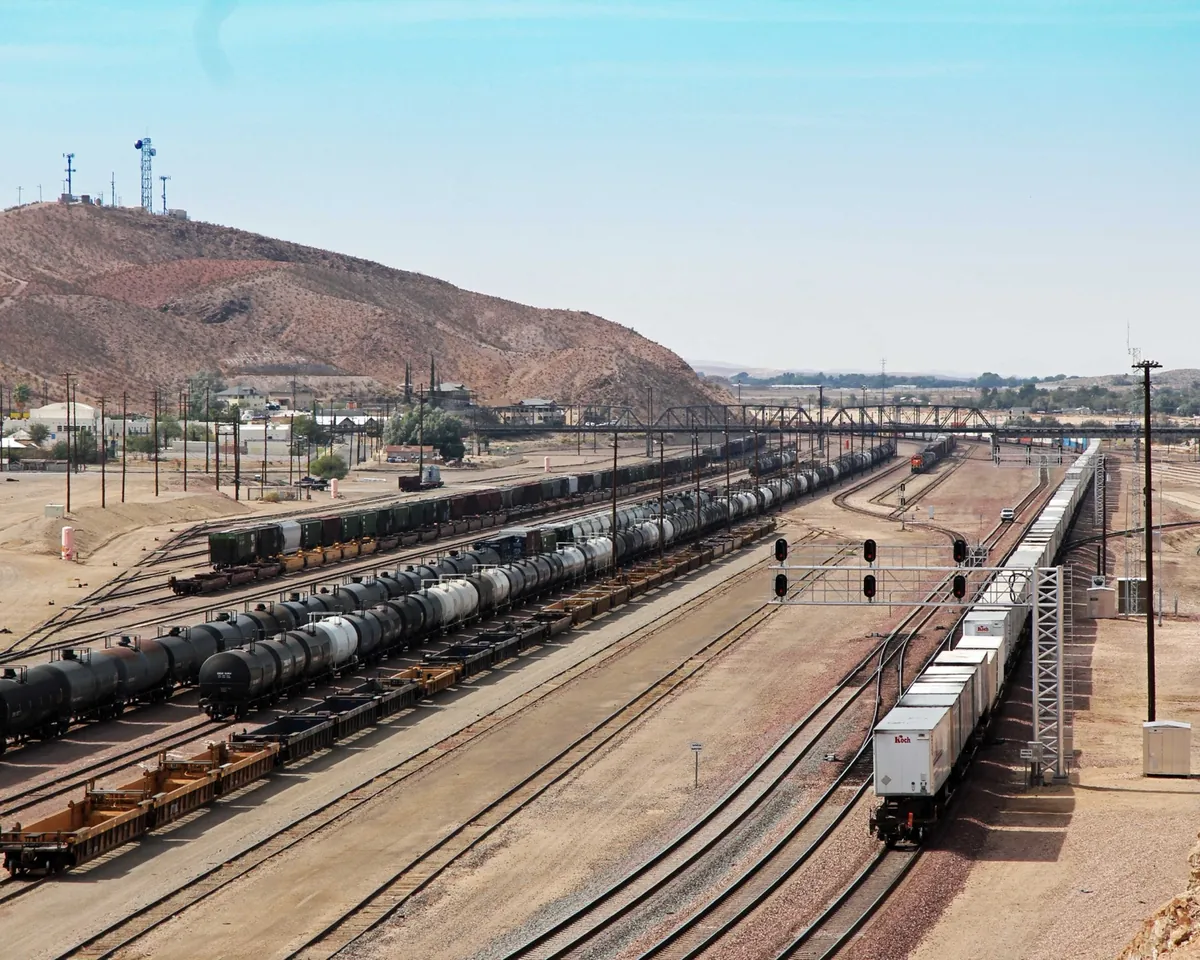
Jobs, local works and SB 149 certification
The project is also linked to large employment and economic projections. It is expected to support about 62,000 construction jobs and another 15,000 permanent positions once the facility is operating.
During the first 20 years of operation, the terminal is projected to create roughly 5,400 direct jobs, generate USD 938 million in total earnings and contribute USD 2.9 billion to Barstow’s economy.
Beyond the rail and logistics facilities, the project also includes local infrastructure works. These cover flood risk reduction measures, replacement of the Hinkley Road bridge over the Mojave River and improvements to the road network.
BNSF presents the Barstow International Gateway as a way to change a container-transfer process that now depends heavily on trucking between ports, warehouses and rail yards. According to the project page, much international cargo arrives in 40-foot containers, is moved to warehouses in Los Angeles or the Inland Empire, and is then reloaded into 53-foot domestic containers before continuing by truck or rail.
BIG is designed to shift that processing inland by moving cargo by rail through the Alameda Corridor to Barstow and handling it at on-site transload warehouses. The SB 149 certification also matters because California says certified projects can receive expedited CEQA judicial review, reducing lawsuit-related delays from 3–5 years to about 270 days.
The Barstow International Gateway recently received special certification from California Governor Gavin Newsom under SB 149, a law intended to speed up major infrastructure schemes. It is the first transport project to receive this designation and is among ten local and regional projects in California recognised under the mechanism.