Astana Aluminium Car Bodies Planned for Stadler’s Global Supply Chain
In Kazakhstan, Stadler is investing more than KZT 14 billion, around CHF 25 million, in Astana workshops for welding and painting aluminium car bodies for rail vehicles.
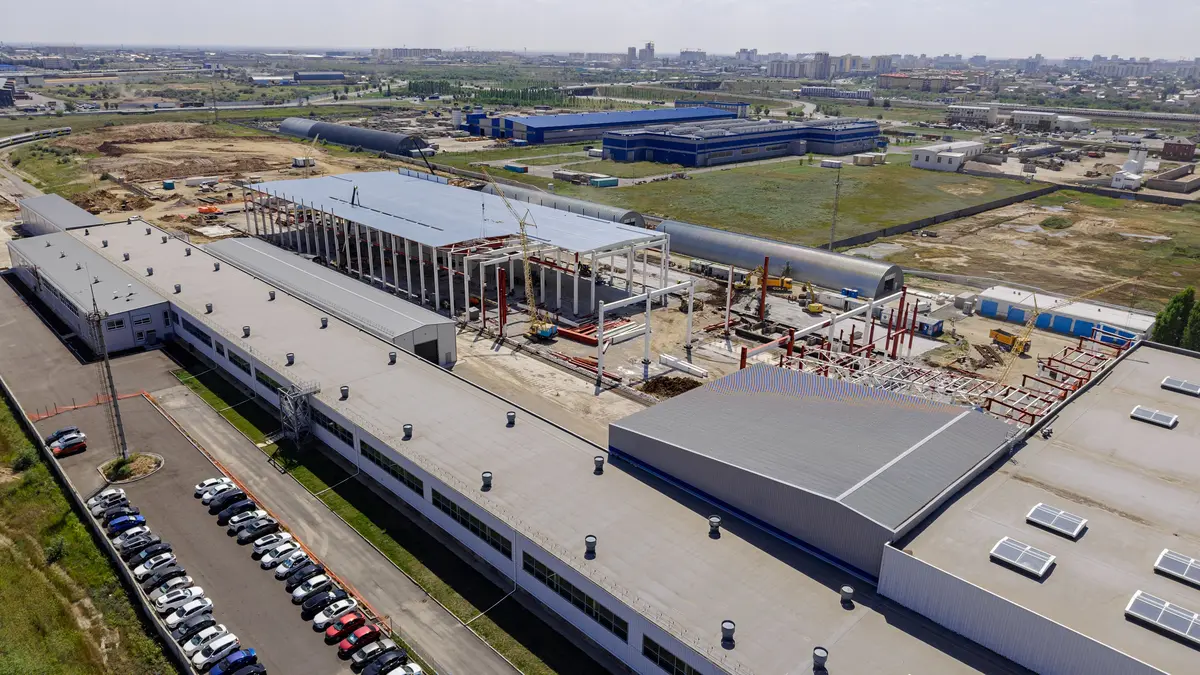
Stadler describes the project as Central Asia’s first highly automated facility dedicated to producing aluminium rail-vehicle bodies.
Aluminium capability joins existing steel production
Today the Astana site welds and paints steel car bodies. It also manufactures electrical and underfloor equipment and bogies, installs pneumatic and electrical systems, and assembles and commissions railcars. The aluminium workshops will therefore add a new capability alongside the site’s existing steel-body operations, according to the company announcement.
Stadler Kazakhstan employs more than 650 people, and the company expects the new workshops to add roughly 100 more jobs. Recruitment is taking place in stages, while local specialists receive training in aluminium welding and painting at Stadler facilities in Europe. Kazakh employees previously trained in Switzerland and Poland in bogie assembly, underfloor equipment and electrical cabinets.
Where Stadler builds car bodies
Car bodies are not only an internal component for Stadler. The Service & Components segment also supplies vehicle components such as car bodies and bogies. In the first half of 2026, Stadler made further investments in capacity expansions at its car body plant in Szolnok, Hungary, and at its production sites in Salt Lake City and Albuixech, Valencia.
The same half-year report records another change in the group’s production network. Stadler says it was effectively forced to shut down its Minsk plant following the war in Ukraine. Its Astana release lists integrating Kazakhstan into the global supply chain among the expected results of the new workshops.
Stadler does not disclose Kazakhstan separately in its geographical revenue data. Net revenue from the CIS market reached CHF 15.3 million in the first half of 2026, compared with group revenue of CHF 1.97 billion. The CIS figure therefore must not be read as revenue generated specifically in Kazakhstan.
| Market | CHF million | Share of total |
|---|---|---|
| Germany, Austria, Switzerland | 1,120.1 | 57.0% |
| Western Europe | 395.4 | 20.1% |
| Eastern Europe | 333.6 | 17.0% |
| America | 99.5 | 5.1% |
| CIS | 15.3 | 0.8% |
| Rest of the world | 1.3 | 0.1% |
| Total | 1,965.3 | 100% |
Shares are Railway Supply calculations based on each reported market figure divided by total net revenue and rounded to one decimal place. Because of rounding, the percentages total 100.1%. The figures represent revenue rather than orders, and Stadler does not disclose Kazakhstan separately. Source: Stadler Rail Half-Year Report 2026, segment reporting note.
Stadler expects total group investment of around CHF 250 million in 2026. The announced Astana amount is equivalent to about 10% of that figure. However, Stadler has not disclosed the workshop spending schedule, so this is a scale comparison rather than evidence that all CHF 25 million will be recorded as 2026 capital expenditure.
| Item | Timing or basis | CHF million |
|---|---|---|
| Group capital expenditure, actual | January to June 2026 | 101.0 |
| Group investment, planned | Full year 2026 | About 250 |
| Aluminium car body workshops in Astana | Announced September 2026 | About 25 |
| Minimum total Stadler investment in Kazakhstan | 2023 to 2031 | At least 53 |
The Astana amount equals about 10% of Stadler’s planned 2026 investment, based on 25 divided by 250. The figures cover different periods and reporting bases and should not be added together. Stadler has not disclosed the Astana project’s spending schedule. Sources: Stadler Rail Half-Year Report 2026 and the Stadler media release of 11 September 2026.
The Kazakh commitments behind the shops
The workshops follow an agreement signed with Kazakhstan’s Ministry of Industry and Construction on 28 November 2025 during the fifth meeting of the Kazakhstan-Switzerland Business Council. Stadler says it will put at least KZT 29.5 billion, around CHF 53 million, into the country between 2023 and 2031. Using the rounded CHF equivalents, the workshop investment is about 47% of that minimum commitment. This is a scale comparison, not an allocation disclosed by Stadler.
The plant itself came out of an earlier agreement. In December 2022, Kazakhstan Temir Zholy and Stadler signed three contracts covering the supply of 537 sleeper and couchette coaches, full-service maintenance for 20 years and the acquisition of a local production facility with around 100 employees. Deliveries are due by 2030. Serial production of the coaches started in Astana in 2025.
Questions the announcement leaves open
The 11 September announcement does not give a launch date for the aluminium workshops, identify the vehicles that will use the new bodies, name the aluminium supplier or disclose annual production capacity. Without those details, the project’s eventual weight within Stadler’s global supply chain cannot yet be measured.


