Amtrak weather disruptions disrupt routes and Acela service
05.01.2026
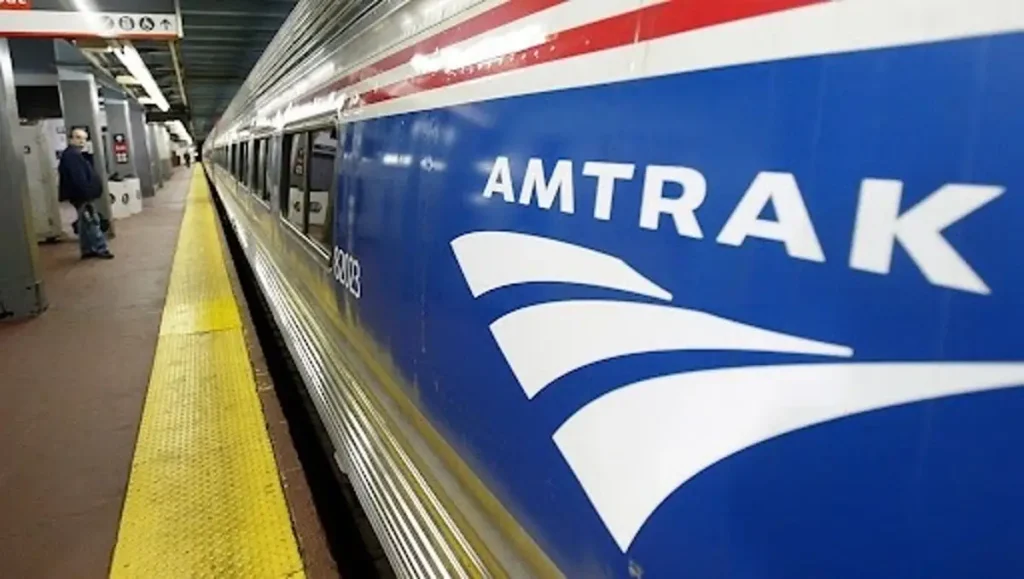
Amtrak weather disruptions caused scattered problems during the holiday travel period, even though most trains still made it to their endpoints.
This is reported by the railway transport news portal Railway Supply.
For the period ending today (Sunday, Jan. 4), Amtrak said ongoing “mechanical assessments” continued to affect service across the network, as reported by Trains.com.
Long-distance routes during the holiday travel period
Long-distance operations often see less freight interference during the holiday travel period, and the past week generally fit that pattern. Routes that have been recently hammered by host railroad congestion — including the Southwest Chief west of Albuquerque, N.M. — recorded comparatively few major delays.
The Coast Starlight was a notable exception. Union Pacific traffic can stymie service between Dunsmuir, Calif., and Eugene, Ore., but this time the biggest issues emerged farther south. Track problems developed south of San Jose, and track inspections following landslides or flooding held northbound departures near Santa Barbara, Calif., on New Year’s Eve, Saturday, Jan. 3, and Sunday, Jan. 4. Southbound Starlights were also held south of San Jose over that weekend for the same inspection-related reason.
Don’t miss…Roanoke Amtrak area grant funds half-mile station district study
By this afternoon, Seattle-bound No. 14 was running more than six hours late at Chumult, Ore. Track damage linked to king tides and storm surge forced today’s southbound Coast Starlight to reverse from Elkhorn Slough along Monterey Bay to Morgan Hill, where the train was canceled. Today’s northbound No. 14 was also canceled between Santa Barbara and Oakland. Amtrak’s website and Amtrak Service Alerts and Notices did not indicate whether alternate transportation was provided.
Empire Builder tardiness and Borealis electrical problem
Route blockages and below-zero temperatures triggered extensive Empire Builder tardiness, and short scheduled West Coast turnarounds, mechanical setbacks and crew availability compounded the delays. Amtrak advisories cited a three-hour “communication outage” near Grand Forks, N.D., on Dec. 29 that affected freight-delayed eastbound No. 8 and westbound No. 7. No. 7 then waited almost five hours at Minot, N.D., for a rested crew. The following eastbound Builder was also sidelined for three hours at Shelby, Mont., on the same day for the same reason.
More disruption followed for the eastbound Empire Builder that departed Seattle on Jan. 2, when the Seattle section apparently struck an obstruction west of Spokane. Reports indicated several passenger cars were also damaged. Early today, the train was seven hours late at Minot, and it then lost another two hours at Grand Forks during “mechanical maintenance.” After that, Amtrak decided to terminate the reduced-consist train at St. Paul and bus passengers overnight to Chicago. It arrived at St. Paul, Minn., at 5:52 p.m., 9 hours and 19 minutes late. Late today, Monday’s westbound Builder had not been canceled out of Chicago, so the damaged trainset was presumably set to be deadheaded to the Windy City.
The day after New Year’s brought another interruption on the westbound Borealis. The train was terminated at La Crosse, Wis., after an electrical problem in one of the coaches apparently damaged the train’s head-end power capability. The consist was sent back to Chicago without passengers, and buses were substituted for Saturday’s eastbound service. (For a separate discussion of Amtrak disruption notices using similar “mechanical assessment” terminology, see Railway Supply.)
Northeast Corridor catenary and Acela problems
On the Northeast Corridor, both legacy and NextGen Acela sets continued to be subject to “mechanical assessments,” leading to late departures and occasional unscheduled pauses en route. The week’s biggest Northeast Corridor issue came Monday, Dec. 29, when the pantograph on early morning Acela No. 2151 snagged catenary at Boston and produced cascading delays that lasted for hours. More cancellations followed during the week, including today’s southbound NextGen No. 2247.
After a week of shuffling Acela equipment assignments, Amtrak website information indicated that starting Monday, Jan. 5, four of seven Boston–New York Acela departures will be NextGen consists. Between New York and Washington, five of 10 Acelas will feature the new equipment. Overall Acela departures are reduced compared with the fluctuations of the past month, but the NextGen trains are now scheduled throughout the day.
News on railway transport, industry, and railway technologies from Railway Supply that you might have missed:
Find the latest news of the railway industry in Eastern Europe, the former Soviet Union and the rest of the world on our page on Facebook, Twitter, LinkedIn, read Railway Supply magazine online.Place your ads on webportal and in Railway Supply magazine. Detailed information is in Railway Supply media kit