Amtrak mechanical issues Chicago trains expose head-end power failures
10.12.2025
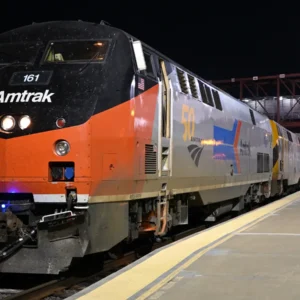
Amtrak mechanical issues Chicago trains are again in the spotlight. The company’s aging locomotive and passenger car fleet has triggered severe delays and cancellations on long-distance and regional services out of Chicago, with repeated head-end power issues undermining reliability, as reported by Trains Magazine.
California Zephyr and Southwest Chief cancellations
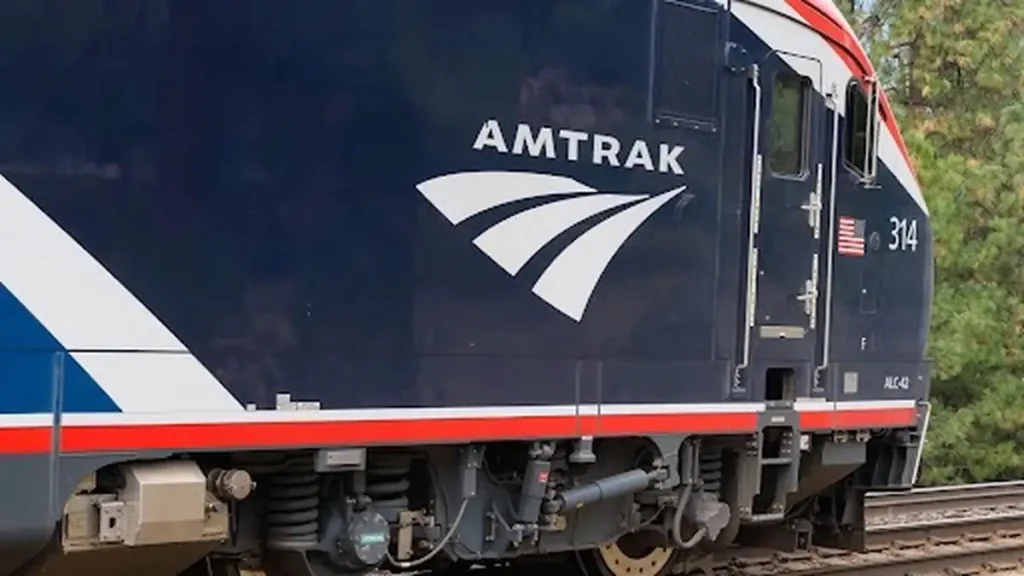
On a recent Monday, westbound runs of both the California Zephyr and the Southwest Chief failed to make it through even the first night of their trips, becoming one of the most notable California Zephyr and Southwest Chief cancellations in the period described.
This is reported by the railway transport news portal Railway Supply.
Because those trainsets were supposed to provide equipment for the corresponding eastbound services, Wednesday’s Southwest Chief from Los Angeles and Thursday’s California Zephyr from Emeryville, Calif., had already been canceled.
One of the first trains affected that day was the westbound Borealis. It was scheduled to leave Chicago for St. Paul, Minn., much earlier, but did not depart Union Station until 1:56 p.m., running two hours and 46 minutes late.
Don’t miss…High-speed rail link between Britain and Germany: plans by Eurostar and DB
An advisory to passengers cited “equipment adjustments at the maintenance facility” as the reason for the late departure, turning the trip into a clear example of a Borealis train delay Chicago–St. Paul.
Head-end power issues on long-distance Amtrak trains from Chicago
The day’s westbound California Zephyr ran into recurring trouble with one of its passenger cars as it moved across Iowa. Reports indicate the train first endured a lengthy delay at Burlington, Iowa, for additional “equipment adjustments.” It then departed Ottumwa at 1:21 a.m., by which point it was nearly six and a half hours behind schedule. Shortly after leaving Ottumwa and stopping again west of the city, the decision was made at 3:31 a.m. to cancel the trip for the remainder of the run to Emeryville, Calif.
The same day’s Southwest Chief initially left Chicago on time, following the Zephyr out of the terminal. Even so, it did not reach Naperville, Ill., until almost two hours later, after Amtrak crews carried out a “locomotive assessment.” West of Fort Madison, Iowa, the train was held for roughly three more hours “due to a mechanical assessment and an adjustment to the train’s consist.” It then advanced to LaPlata, Mo., where it was to be “further evaluated,” but there the westbound Chief was terminated, adding to a sequence of Amtrak train delays from Chicago.
According to Amtrak, head-end power issues were to blame in both the Zephyr and Chief incidents, reinforcing the picture of broader Amtrak head-end power problems on long-distance services, a pattern also examined in a Trains.com analysis of mechanical challenges.
Passengers from the Zephyr were provided substitute transportation from Ottumwa back to Chicago, while riders on the Southwest Chief were taken to Kansas City and from there were offered alternate transportation back to Chicago. In both cases, once passengers were offloaded, the empty trains were deadheaded back to Chicago.
An Amtrak spokesman said affected passengers would receive full refunds and additional compensation, including lodging and meals, along with a formal apology from the company. The railroad is analyzing the cause of the problems, using these Amtrak mechanical issues near Chicago as further evidence of the impact of its aging locomotive and passenger car fleet.
Floridian severe delay and Cardinal electrical problem
While those issues were unfolding in Iowa and Missouri, another Chicago departure ran into difficulty and turned into a notable Floridian severe delay from Chicago. Amtrak’s eastbound Floridian made an unscheduled stop at Hammond-Whiting, Ind. The train had left Chicago almost exactly on time at 6:41 p.m., one minute behind schedule, yet nearly three hours later it had covered only 16 miles.
Initially, the delay was described as a “mechanical assessment” involving the locomotive at 9:19 p.m. Before long, the cause was updated to “readjusting a coach car to the end of the train,” a maneuver that itself required another three hours to complete. After a mandatory operating crew change, the Floridian finally reached its first scheduled stop, South Bend, Ind., pulling in at 3:36 a.m.—about six hours and 27 minutes late.
The Floridian’s difficulties came on the heels of a similar electrical problem involving the westbound Cardinal, illustrating another Cardinal electrical problem and bus substitution. That train, departing New York on a Friday, experienced what appeared to be a short in the head-end power cables west of Hinton, W.Va., on Friday evening, Dec. 5.
The Cardinal limped into Charleston, W.Va., about an hour behind schedule, but the defect could not be repaired there.
Passengers were bused overnight from Charleston to all intermediate stops, and the equipment was later deadheaded to Chicago, adding one more case to the broader picture of Amtrak mechanical issues on Chicago-bound trains, similar to disruptions described by Railway Supply.
News on railway transport, industry, and railway technologies from Railway Supply that you might have missed: