Alstom opens Indigenous supplier portal after C$7bn orders in Canada
Alstom has launched an Indigenous supplier portal in Canada for firms seeking work on its newest contracts, including Toronto subway and VIA Rail orders worth a combined C$7 billion.
The registration form, launched on 28 September, lets Indigenous-owned businesses put their capabilities in front of Alstom’s procurement team. It sits alongside a wider call for qualified Canadian companies to join the manufacturer’s supplier network. Alstom ties both to recent major contract awards, including the Toronto Transit Commission’s New Subway Trains program and VIA Rail’s Long-Distance, Regional and Remote fleet renewal.
Susie Levesque, Vice President Procurement, Americas, said:
“Alstom’s recent contract momentum creates an important opportunity to strengthen our Canadian supply chain and build new relationships with qualified businesses across the country.”
The TTC and VIA Rail orders
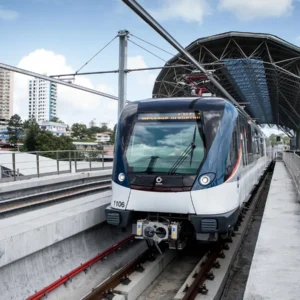
The TTC agreement, announced in January 2026 and valued at C$2.3 billion, covers 70 six-car Metropolis trains. Fifty-five will replace the ageing Line 2 fleet and 15 are planned for the Line 1 extension to Yonge North and the Line 2 extension to Scarborough. The contract also carries options for up to 150 more trainsets. The trains are to be designed and engineered in Canada, with final assembly in Thunder Bay, Ontario, and testing in Kingston.
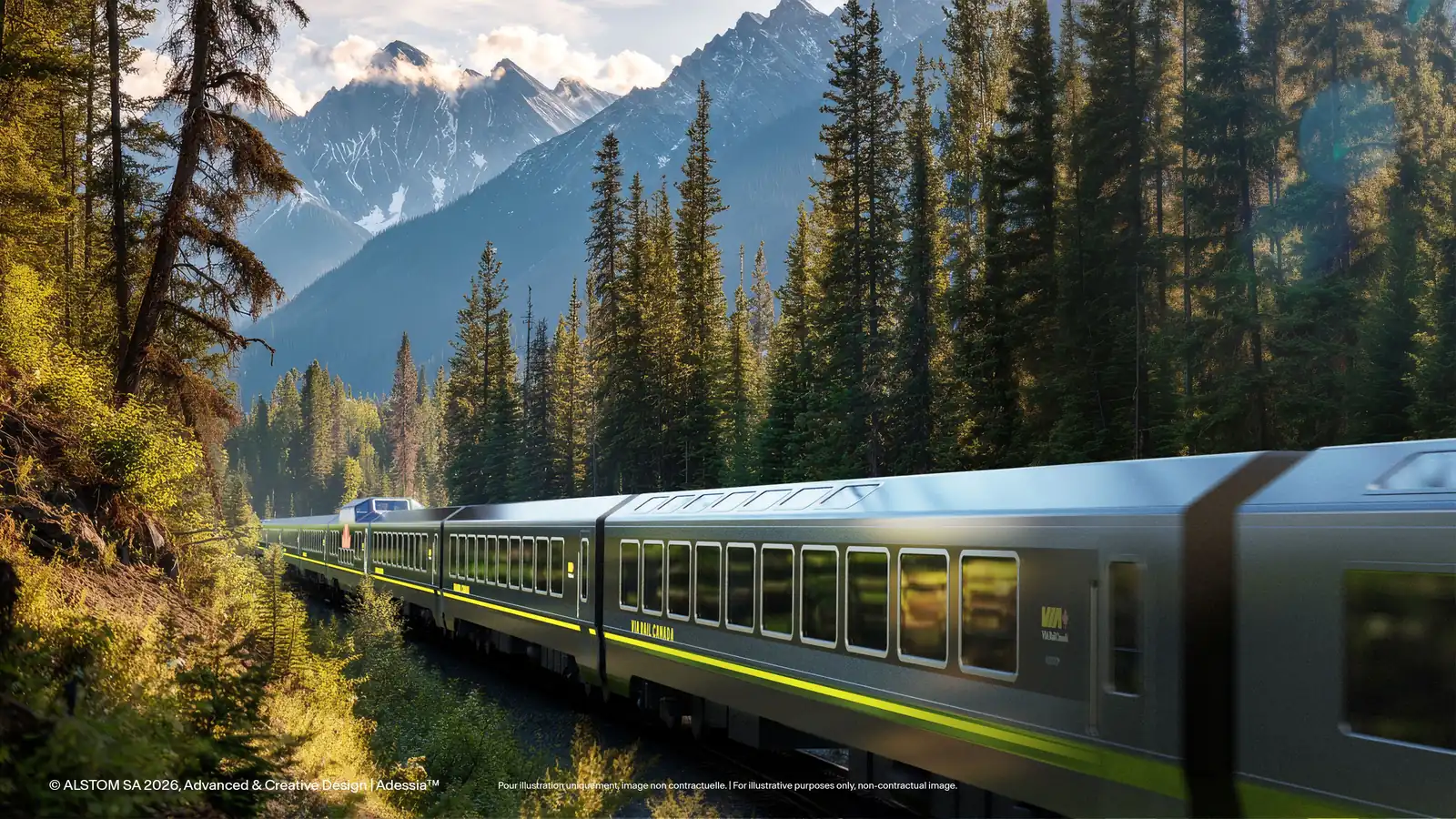
The VIA Rail agreement, announced on 3 September, is worth C$4.7 billion: about C$4 billion for 313 Adessia cars and nearly C$700 million for 15 years of technical support and spare parts. Design work is based in St-Bruno-de-Montarville, Québec, carbodies will be built in La Pocatière, Québec, and final assembly will take place in Thunder Bay. Transport Canada expects the first cars to enter commercial service in 2031 and the full fleet by 2035.
Taken together, the two agreements are worth C$7 billion, a figure that includes long-term support services. The announcements do not say how much of that value will go to outside suppliers. Alstom says it works with more than 900 Canadian suppliers each year.
| Item | TTC agreement | VIA Rail agreement |
|---|---|---|
| Announced | 15 January 2026 | 3 September 2026 |
| Total value | C$2.3 billion | C$4.7 billion |
| Vehicles | 70 six-car Metropolis trains | 313 Adessia cars |
| Also covered | Options for up to 150 more trainsets | 15 years of technical support and spare parts, valued at nearly C$700 million |
| Final assembly | Thunder Bay, Ontario | Thunder Bay, Ontario |
| Other Canadian work | Testing in Kingston | Design in St-Bruno-de-Montarville and carbodies in La Pocatière, Québec |
| Service entry | Not given in the agreement announcement | First cars in 2031, full fleet by 2035 |
Values are the totals Alstom announced for each agreement and are not a measure of spending with outside suppliers. Sources: Alstom, TTC agreement; Alstom, VIA Rail agreement; service-entry dates from Transport Canada.
VIA Rail’s long-distance, regional and remote network
The routes the new cars will serve run for about 12,500 km across eight provinces outside the Québec City–Windsor Corridor, and more than 216,000 passengers travelled on them in 2025, according to a Transport Canada backgrounder. The department says the network connects remote and Indigenous communities, including 93 Indigenous communities with no alternative public surface transportation. The passenger cars due for replacement average about 77 years old.
Who can register
Alstom aims the form at companies that are at least 51% owned and controlled by Indigenous people, or that satisfy the rules of a recognised Indigenous supplier certification program. Applicants give their Indigenous ownership share in one of three bands — 51–74%, 75–99% or 100% — and can list certification from the Canadian Council for Indigenous Business (CCIB), the Canadian Aboriginal and Minority Supplier Council (CAMSC) or another recognised body. Alstom says disclosing ownership information is voluntary.
Companies also describe what they supply and where they operate. The areas Alstom has named include manufacturing and industrial services, rail and transportation, construction and infrastructure, professional services, information technology, logistics, maintenance, and operational support. Depending on the project, a business could be engaged as a direct supplier, subcontractor, service provider or strategic partner.
| Section | What applicants provide |
|---|---|
| Company details | Legal company name, street address, website and a primary contact |
| Ownership | Confirmation that the firm is at least 51% owned and controlled by Indigenous people, or satisfies the rules of a recognised Indigenous supplier certification program, the ownership band (51–74%, 75–99% or 100%) and whether owners identify as First Nations, Inuit, Métis or another Indigenous identity |
| Certification | Any certifying body (CCIB, CAMSC or another recognised body), with certificate number, expiry date and current status |
| Capabilities | Products and services grouped under manufacturing and industrial, rail and transportation, construction and infrastructure, professional services, information technology and operations support |
| Experience and reach | A short summary of core capabilities, office locations and the areas served, from local communities to international markets |
Alstom says ownership disclosure is voluntary and that registering does not guarantee an invitation to bid or a contract. Source: Alstom Canada Indigenous Supplier Registration Form.
Registration is only a first step. Alstom states that it is not supplier qualification and carries no guarantee of an invitation to bid or of a contract award. Suppliers still have to be commercially competitive and meet all applicable qualification, safety, quality, sustainability and performance requirements. Businesses that are not Indigenous-owned can introduce themselves through Alstom’s general supplier page.
Alstom’s PAIR commitment
The initiative builds on Alstom Canada’s decision in June 2026 to join the CCIB’s Partnership Accreditation in Indigenous Relations (PAIR) program, which certifies corporate performance in Indigenous relations at bronze, silver or gold level. Alstom describes its status as a commitment to the program and participation in it; neither announcement names a certification level. The company also says it holds Indigenous Advocate status in the CCIB’s Supply Change program.