UNIFE calls for fair competition in EU rail market
20.11.2025
UNIFE calls for fair competition as it urges European policymakers to act while more operators in Europe consider, or already use, rolling stock built in China. For the association, these developments highlight how urgently the European rail supply industry needs political backing and corrective measures to ensure fair competition with third countries and to compete on equal terms with non-European suppliers.
This is reported by the railway transport news portal Railway Supply.
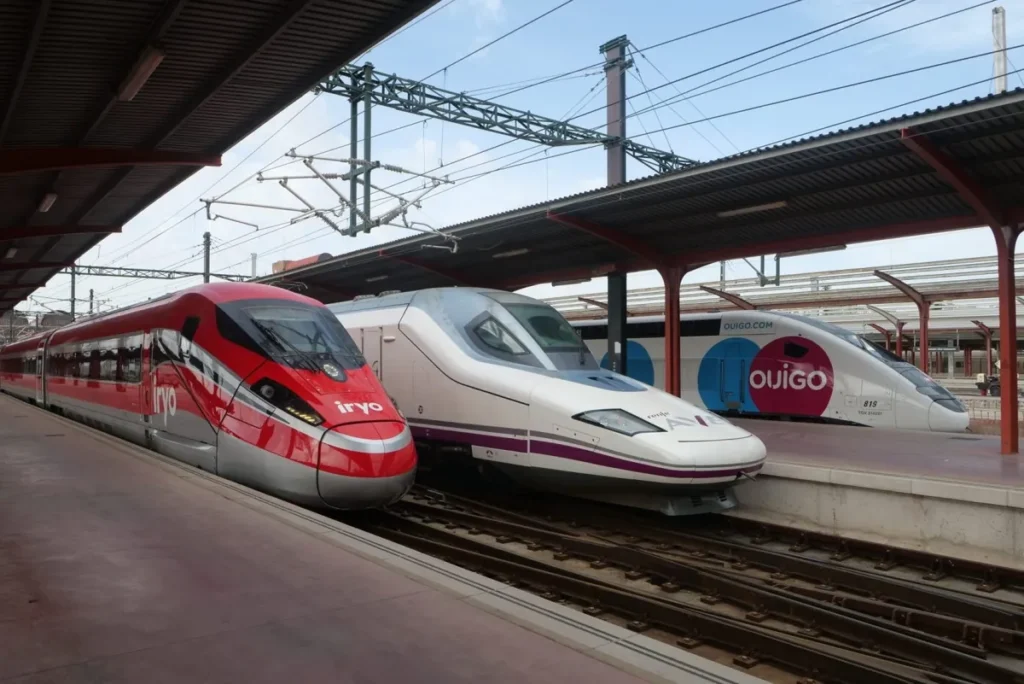
Fair competition with third countries and foreign subsidies
UNIFE stresses that the sector’s long-term competitiveness rests on clear rules of fair competition with third countries, supportive regulation and genuinely strategic public procurement. This becomes especially important when foreign subsidies and other market-distorting advantages are granted to state-owned manufacturers based outside Europe.
Don’t miss…SEPTA Silverliner IV inspections under FRA fire-safety order
The association therefore calls for a clearer, more streamlined legal environment, tender procedures that place life-cycle costs at the heart of bid evaluation and a European preference that explicitly recognises security considerations and European value creation.
Within this framework, UNIFE argues that the European rail supply industry needs stronger tools to respond to foreign subsidies and backs enhanced monitoring under the EU’s Foreign Subsidies Regulation (FSR) to tackle market distortions and reinforce fair competition in the rail sector. According to Director General Enno Wiebe, the industry is working to bring down costs through harmonisation, interoperability and economies of scale, while at the same time delivering high-quality, sustainable products for both European and international customers and helping to safeguard jobs and security in Europe.
UNIFE also reminds policymakers that European businesses already operate under strict safety, social and environmental rules. They develop sustainable technologies, train apprentices, carry out research and pay fair wages. In a sector such as rail, which provides essential public services to citizens, the association argues that comparable standards should apply to all economic operators, regardless of where they are based.
Public procurement in the EU and Foreign Subsidies Regulation
Against this backdrop, public procurement in the EU and the framework for regulating foreign subsidies — in EU law, the Foreign Subsidies Regulation (FSR) — remain at the core of UNIFE’s work. Through these instruments, UNIFE calls for fair competition in the European rail market not only in general terms but via concrete proposals on how tenders should be designed and supervised, keeping the focus on a fair and competitive EU rail market.
The association welcomes the backing it already receives from the European Commission, particularly from the Directorate-General GROW, yet at the same time calls for closer cooperation as the market landscape shifts. It points to UNIFE’s reaction to CRRC contracts in Portugal and Austria, as well as potential future orders for foreign state-owned companies, noting that the growing presence of China’s CRRC reinforces concerns about fair competition and market distortions. These concerns echo the findings of a 2023 OECD report on government support in industrial sectors and are also reflected in coverage by industry media such as Railway Supply, which has followed EU scrutiny of Chinese rail suppliers.
In practical terms, UNIFE advocates systematic monitoring of problematic actors and reiterates the sector’s willingness to support efforts against market distortions caused by foreign subsidies. It backs the upcoming revision of the FSR and calls on the European Commission to simplify procedures, close loopholes related to private procurement and leasing, and lower the public procurement notification threshold. In the association’s view, this would bring more urban transport projects within the scope of the rules and, as a result, help promote a fair and competitive European rail market.
European value creation, security risks and critical rail technologies
UNIFE also argues for a more efficient and predictable legal framework built around a single directive that consolidates existing procurement law and clarifies deadlines, including those for cancelling tenders. It calls for ambitious, transparent standards for evaluating bids that give weight to non-price criteria — unless tenders are explicitly assessed on life-cycle costs — and supports a European preference in strategic sectors such as rail, with a strong emphasis on value created within Europe.
To guarantee security in Europe today and in the future, the association insists that bids from suppliers based in third countries must be examined carefully. In particular, it warns about security risks from third-country suppliers in signalling and ERTMS and maintains that companies without secure access to the European market, or those that may pose a threat to European security, should be excluded from sensitive contracts.
UNIFE points to recent incidents in public transport as evidence that European value creation and security have not always been decisive factors in procurement decisions. In a context where rail infrastructure also supports rail military mobility, the association argues that Europe needs closer monitoring of foreign state-owned companies in the EU rail market and concludes that it cannot rely on suppliers from countries considered unreliable, or that do not share European values, to deliver critical rail technologies.
News on railway transport, industry, and railway technologies from Railway Supply that you might have missed:
Find the latest news of the railway industry in Eastern Europe, the former Soviet Union and the rest of the world on our page on Facebook, Twitter, LinkedIn, read Railway Supply magazine online.Place your ads on webportal and in Railway Supply magazine. Detailed information is in Railway Supply media kit