The Signaling X technology takes train control to a new level
13.11.2025
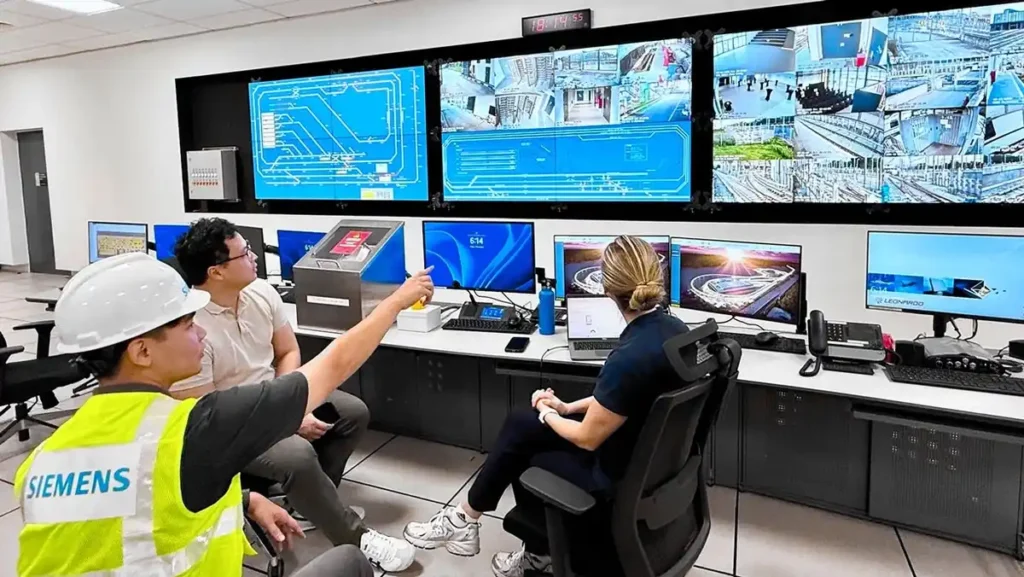
The Signaling X technology had its first live outing at a dedicated test site in Singapore, where Siemens Mobility showed how a fully digital architecture can, in real terms, reshape train control in modern metro networks.
This is reported by the railway transport news portal Railway Supply.
How the Signaling X technology shapes a new approach to signalling?
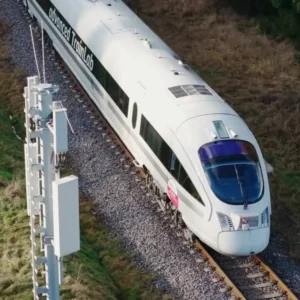
Siemens Mobility unveiled the Signaling X platform at the Singapore Rail Test Centre (SRTC), a facility used for trials in conditions that closely mirror day-to-day operation, during a live demo described in its official press release. For an industry that usually tests signalling systems out of the spotlight, the 12 November 2025 event drew an unusually broad mix of international operators and journalists.
Don’t miss…Amtrak advances major upgrades across its Wisconsin stations
During the run, engineers combined CBTC train control and interlocking functions within a single platform and operated them on commercially available COTS hardware. In practice, that showed metro operators they can move towards digital signalling without relying on bespoke, hard-to-replace equipment — a point also noted in independent coverage by International Railway Journal.
The system also ran in a cloud-ready architecture, so software updates and capacity upgrades can be rolled out from a central environment rather than rack by rack. For operators that are already consolidating data centres, this model really lowers the bar for deployment.
SRTC itself provides loops, tracks and equipment layouts that allow trainsets and signalling systems to be tested in realistic scenarios instead of purely theoretical simulations. Using that setting, Siemens Mobility could demonstrate how the platform behaves under different speed profiles, braking curves and service patterns.
At the core of the platform sits the Distributed Smart Safe System (DS3), which hosts safety-critical logic on standard IT servers instead of dedicated hardware racks. That shift opens the door to more flexible use of computing capacity and aligns signalling projects with mainstream IT procurement, much as Siemens summarizes on its Signaling X for urban mobility reference page.
Why the Signaling X technology points to the future of metro operations?
According to Siemens Mobility, the new architecture can raise operational efficiency by up to 20% and cut energy use by as much as 30%. For many operators, those are not abstract numbers but a way to run more trains through the same tunnels without pushing power demand to the limit.
The fact that international operators attended the SRTC demonstration underscores how interest in cloud-based signalling is already moving from conference slides to field tests. For them, solutions that run on COTS hardware and shared IT infrastructure promise lower lifecycle costs and fewer surprises in maintenance budgets.
Cloud integration also helps operators roll out new software in shorter cycles and keep performance stable when ridership spikes at peak hours or during major events. Over time, that makes it easier to migrate existing lines to digital signalling step by step, instead of waiting for large, one-off renewals.
Siemens Mobility’s experts argue that this approach supports the move towards more flexible and energy-efficient transport systems, especially in dense urban regions. The architecture fits into modern IT environments, can sit alongside other operational systems, and still meets the safety requirements that rail regulators expect.
Still, interest in the platform will depend on how projects perform beyond the test track. As one planner might put it, “we can see the cliff coming” if legacy systems stay in place too long, so trials like SRTC give decision-makers a concrete reference before they commit money and political capital.
News on railway transport, industry, and railway technologies from Railway Supply that you might have missed:
Find the latest news of the railway industry in Eastern Europe, the former Soviet Union and the rest of the world on our page on Facebook, Twitter, LinkedIn, read Railway Supply magazine online.Place your ads on webportal and in Railway Supply magazine. Detailed information is in Railway Supply media kit